
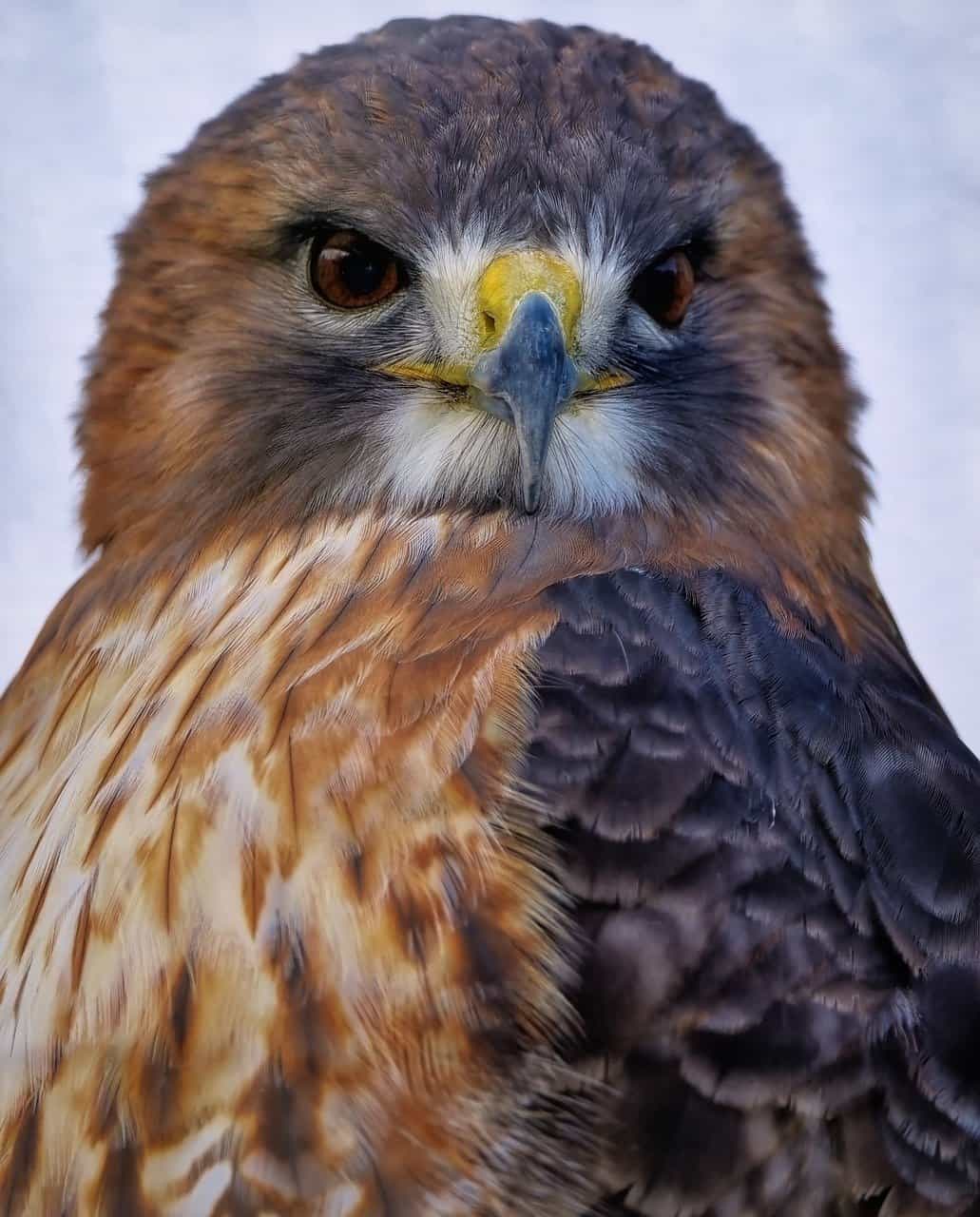
I’ve learned that red-tailed hawks can zip through the skies at speeds around 32.19 to 64.37 km (20 to 40 miles). Their rapid dives surprise prey at around 190 km (118 miles) and help them secure their meals swiftly. These birds are built to handle various wind conditions when they go into high-speed mode. Compared to other raptors, red-tailed hawks are known for their impressive velocity. Their speed, combined with precise hunting skills, makes them fierce predators. During my time in falconry, I witnessed these birds soar hundreds of times, so let me break down their speed and agility with the content laid out below.
Anatomy, Wing Morphology, speed, and agility.
Red-tailed hawks’ agility during flight is a marvel. Their anatomy and wing morphology play crucial roles in their ability to maneuver swiftly through the skies. Understanding these aspects sheds light on how these majestic birds navigate their environments gracefully and quickly.
Agility during flight
With their unique anatomy and specialized wing morphology, red-tailed hawks exhibit remarkable flight agility, enabling them to navigate diverse landscapes with precision and efficiency. Their aerial maneuvers are a testament to their adaptation to hunting strategies, allowing them to swiftly change direction and altitude while in pursuit of prey. The red-tailed hawk’s keen eyesight aids in prey detection from great heights, honed by their nesting behaviors that require precise flight control for building and maintaining nests. Additionally, their agility is crucial during territorial disputes, where they showcase impressive aerial displays to defend their nesting territories.
How fast do red-tailed hawks fly
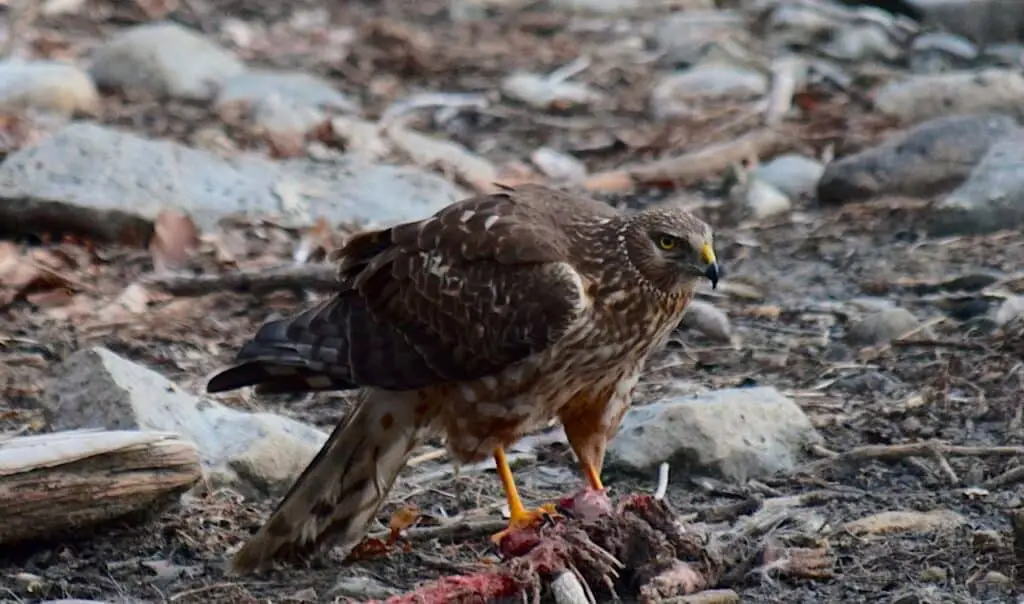
Red-tailed hawks can reach impressive speeds of up to 190km (118 miles) per hour when diving to catch prey; otherwise, they are usually gracing the skies at around 32.19 km to 64.37 km (20 miles to 40 miles). As they soar through the skies, their agility and speed are unmatched. Here are some key points to understand how fast red-tailed hawks can fly:
- Speed Comparison: Red-tailed hawks are known for their incredible speed compared to other raptors, making them formidable hunters in the avian world.
- Hunting Techniques: Their high-speed dives allow them to surprise their prey, and they use their velocity to swiftly capture animals on the ground.
- Wind Resistance: Despite their speed, red-tailed hawks are adapted to navigate through varying wind conditions, maintaining control even at high velocities.
How high do red-tailed hawks fly
Soaring gracefully through the skies, red-tailed hawks can reach impressive altitudes as they survey their surroundings. These majestic birds of prey are known to soar up to 10,000 feet or more above the ground, with the highest recorded height at 13000 feet. They use their keen vision to spot potential prey below. Red-tailed hawks exhibit territorial behavior, often selecting high perches to survey and defend their hunting grounds.
Their maximum altitude allows them to spot prey such as rodents, rabbits, and snakes with precision. When hunting, red-tailed hawks use a combination of soaring and diving techniques to ambush their target from above. Nest locations, such as tall trees or cliff ledges, are typically chosen at moderate heights, providing a strategic vantage point for hunting and protecting their offspring.
Depending on availability, red-tailed hawks’ prey selection is diverse, ranging from small mammals to birds. Their ability to fly at high altitudes not only aids in hunting but also serves as a defense mechanism against potential threats.
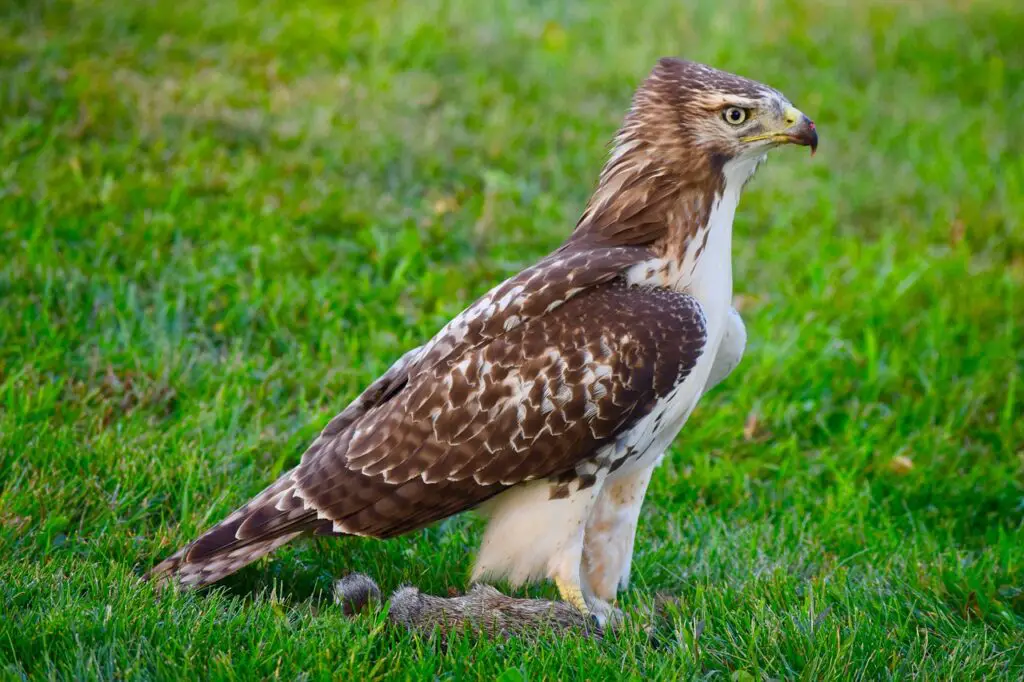
Red-tailed hawks are incredibly fast birds, reaching speeds of up to 118 miles per hour when diving for prey. Their impressive wing morphology allows them to soar to heights of over 10,000 feet, making them formidable hunters in the skies. These majestic birds are truly a marvel of nature, showcasing both speed and agility in their pursuit of food.