
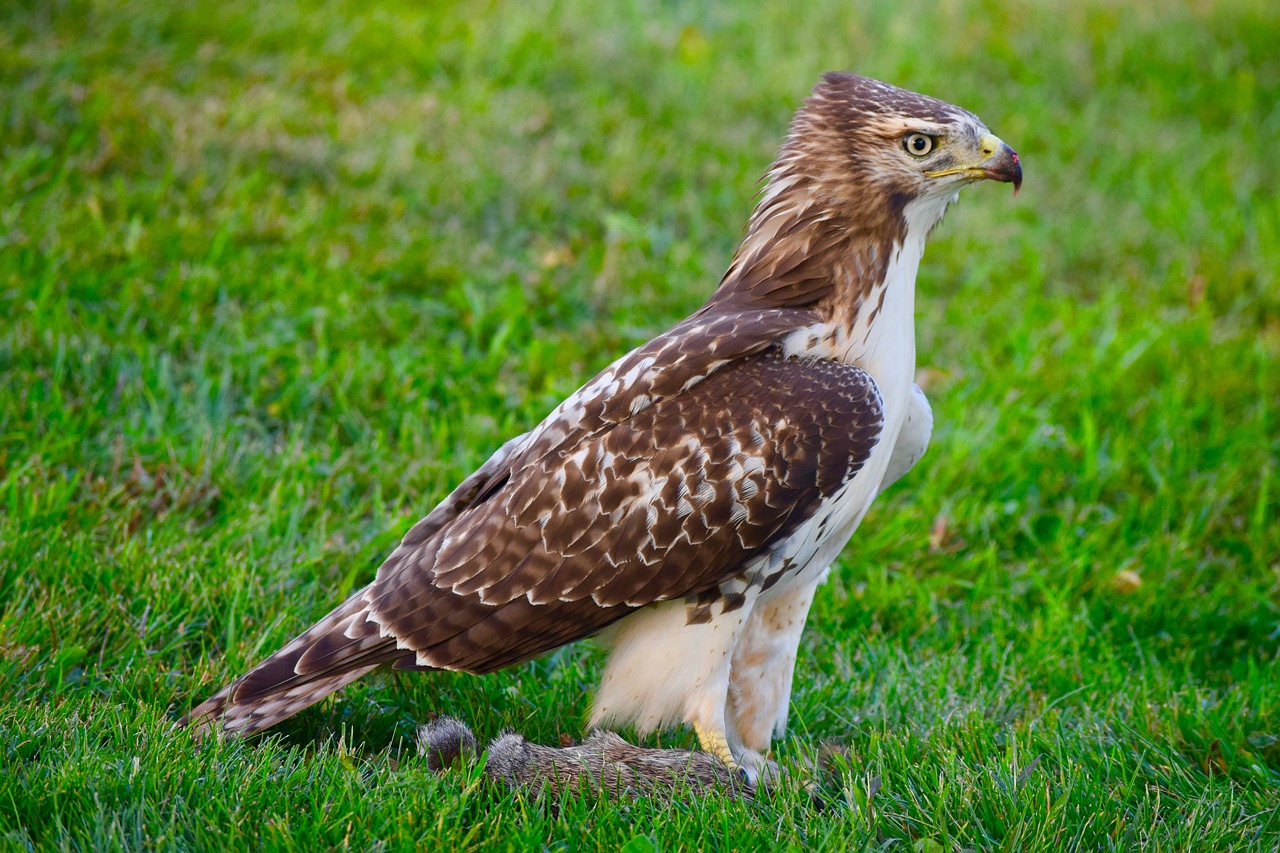
After keeping red-tailed hawks for many years, I can confidently tell you that a Red-tailed hawk can carry prey that’s nearly half its body weight. These impressive birds can lift animals such as squirrels, rabbits, or small birds weighing 1-2 pounds. Wind, temperature, muscle strength, and prey selection influence their carrying capacity. Red-tailed hawks usually target prey around 1/3 to 1/2 of their body weight, with the ability to take down animals weighing up to 2-4 pounds. Let’s explore how much weight they can carry and the factors affecting this.
How much weight can a red-tailed hawk carry?
When it comes to hunting or flying with prey, red-tailed hawks showcase their impressive hunting techniques and flight adaptations. They have a remarkable ability to carry prey that can be almost half of their body weight. This means they can lift and transport prey such as squirrels, rabbits, or even small birds that are up to 1-2 pounds. However, various factors come into play when determining the weight a red-tailed hawk can carry.
Prey selection is crucial; red-tailed hawks are selective hunters and will choose prey that they can comfortably carry without jeopardizing their flight abilities. These factors collectively determine the maximum weight a red-tailed hawk can successfully manage while hunting or flying with prey.

Factors Affecting Carrying Capacity
When considering the factors that influence a red-tailed hawk’s carrying capacity, environmental conditions and the bird’s physical attributes play significant roles in determining how much weight it can manage while hunting or flying with prey. Environmental conditions such as wind speed and terrain features affect a hawk’s ability to carry heavier prey. Flight dynamics come into play, influencing how well the hawk can maneuver with its payload.
The hawk’s physical condition and hunting strategy also impact its carrying capacity, with stronger, healthier birds able to handle larger prey. Additionally, hunting success and the cooperation of prey can affect the weight a red-tailed hawk can carry, as a successful hunt may provide the bird with more energy for transportation. Having a hunting partner can also influence carrying capacity, as cooperative hunting efforts can allow for the capture and transport of larger prey items.
Impressive Lifting Strength of Red-Tailed Hawks
Red-tailed hawks possess impressive muscle strength and adaptations that enable them to carry such heavy prey. These birds of prey have strong legs and talons specifically designed for gripping and holding onto their prey. Their powerful flight muscles also enable them to lift and carry heavier loads while flying. Furthermore, their hunting techniques and ability to dive rapidly also contribute to their lifting strength. These unique physical attributes make red-tailed hawks a formidable predator in the sky.
Red-tailed hawks are powerful birds of prey capable of carrying prey that can weigh up to 3 pounds, such as small mammals and reptiles. Factors such as the bird’s size, strength, and hunting techniques all play a role in determining its carrying capacity. With impressive lifting strength and hunting skills, the red-tailed hawk is a formidable predator in the sky.