

In falconry, red-tailed hawks face tough opponents like great horned owls, eagles, and raccoons, testing their skills and adaptability. These predators are cunning hunters, keeping hawks on their toes during training and flights. By understanding these threats, falconers can better prepare their hawks for the challenges ahead. I have had my fair share of incidents, and based on that, I will share with you the biggest threats that our red-tailed hawks will face during hunts and while caged up.
Natural Predators
When red-tailed hawks are housed in aviaries, they are relatively protected but not completely safe from natural predators. In these environments, determined predators such as snakes, raccoons, and even large predatory birds can pose a threat. These predators may attempt to infiltrate aviaries to steal eggs or attack younger, more vulnerable hawks. The construction and maintenance of secure aviaries are crucial for safeguarding these birds from such dangers.
During the flight, the scenario changes dramatically. The open sky exposes red-tailed hawks to a broader range of predators, including larger birds of prey like eagles and other hawks. Great horned owls, in particular, are formidable predators that can surprise red-tailed hawks. The agility and speed of red-tailed hawks serve as their best defense against aerial threats, showcasing a thrilling aspect of their natural behavior and survival instinct. This constant vigilance shapes their predatory skills and enhances their survival tactics, embodying the relentless cycle of predator and prey within their natural habitat.

Human Predators
Human predators are another significant threat to red-tailed hawks in falconry. Poaching, loss of habitat, and illegal hunting practices all contribute to the decline of red-tailed hawk populations. Falconers play a crucial role in protecting these birds by adhering to strict regulations and ethical practices, ensuring the conservation of these magnificent creatures for future generations.
Ground-based Predators
Ground-based predators, such as coyotes and foxes, are formidable hunters known for their stealth and cunning in capturing prey. In falconry, these ground predators pose significant threats to red-tailed hawks. Let’s delve into the dangers posed by these cunning hunters:
| Predator | Threat Level |
| Coyote | High |
| Fox | Moderate |
| Raccoon | Low |
Coyote attacks on red-tailed hawks are particularly concerning due to the coyote’s pack mentality, making them a serious threat. Fox ambushes, although less frequent, can catch hawks off guard, especially during nesting seasons. Raccoons, while generally less of a threat, can still pose dangers to young or injured hawks. Owl confrontations are rare but can turn fatal for a red-tailed hawk if the owl is larger. Bobcat encounters are also a concern, especially in areas where these agile predators are prevalent.
Unforeseen Threats
Unforeseen threats can arise unexpectedly, posing new challenges for red-tailed hawks and falconers alike. When it comes to the safety and well-being of these majestic birds, being aware of potential dangers is crucial. Here are some key points to consider:
- Unseen dangers: Red-tailed hawks may encounter toxins or pesticides in their environment, leading to poisoning if not carefully monitored.
- Unexpected risks: Urban areas can present hazards such as collisions with buildings or vehicles, jeopardizing the hawk’s survival.
- Hidden threats: Disease outbreaks among prey populations can indirectly affect red-tailed hawks, impacting their food supply and health.
- Unanticipated challenges: Climate change may alter the distribution of prey species, forcing hawks to adapt to new hunting grounds.
- Surprising vulnerabilities: Illegal wildlife trafficking poses a threat to red-tailed hawks, as they may be targeted for the illegal pet trade or other illicit activities.
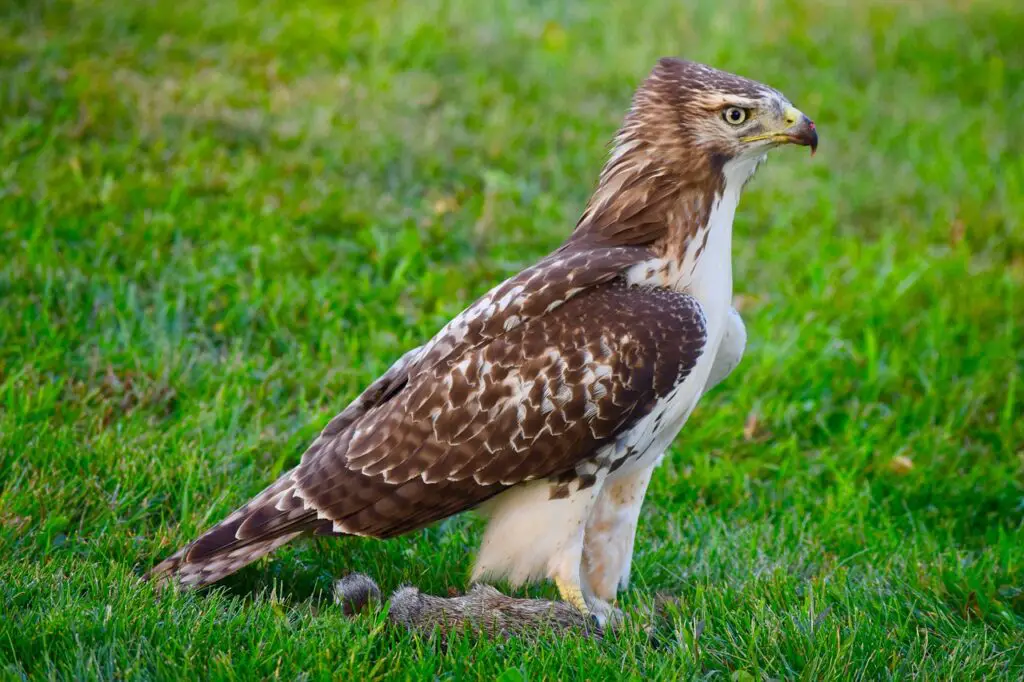
In conclusion, understanding the predators of red-tailed hawks in falconry is crucial for their protection and successful training. By being aware of natural predators, human threats, rival birds of prey, ground-based dangers, and unforeseen risks, falconers can better ensure the safety and well-being of their red-tailed hawks. It is essential to always be vigilant and prepared to mitigate any potential dangers that may arise while practicing falconry with these magnificent birds of prey.