

When red-tailed hawks hunt in falconry, they use their keen eyesight and sharp talons to capture prey in the wild. This ancient practice has been used by people for thousands of years and is still a popular form of hunting and sport today. Red-tailed hawks hunt uniquely and fascinatingly, making them one of the most sought-after birds in falconry. In this article, I will lay out how Red-tailed hawks hunt, what they hunt, the techniques used, and if they can hunt in pairs or groups.
How do red-tailed hawks hunt
With their unmatched precision, red-tailed hawks hunt primarily through soaring and stooping tactics. My red-tailed hawk exhibits an extraordinary hunting prowess that begins with elevated perches or aerial vantage points. From these heights, it scrutinizes the ground with its exceptional vision, capable of detecting prey from a considerable distance. Once a target is locked, the hawk enters a stoop; it folds its wings and dives swiftly toward its prey, striking with incredible speed and accuracy. The final moment sees the hawk extending its talons forward, securing the capture with a grip that rarely fails. This method showcases not just the physical attributes of the red-tailed hawk – its powerful build and sharp talons – but also its strategic intelligence in hunting.
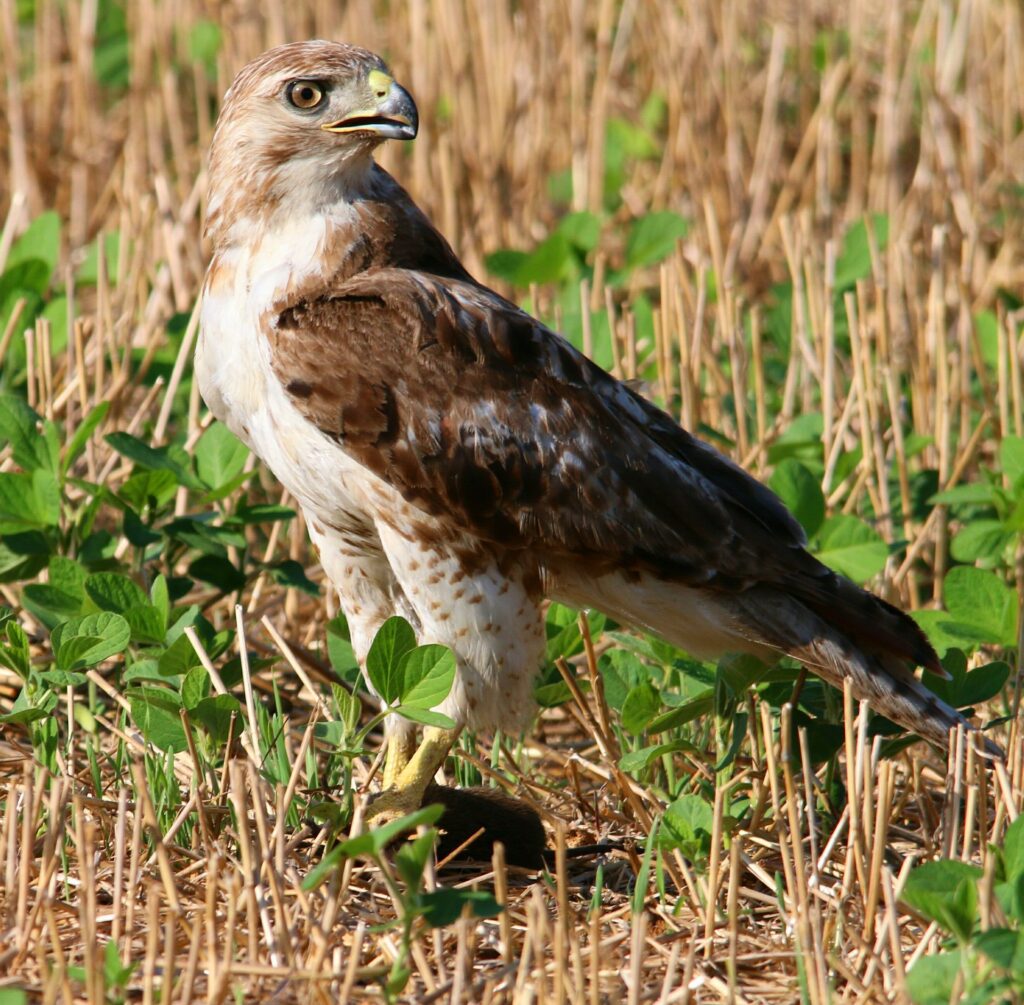
What do red-tailed hawks hunt in falconry?
As a part of its falconry training, my red-tailed hawk has been taught to hunt a variety of prey specifically tailored to match its hunting capabilities and ensure ethical practices. Below is a list of the common game my hawk pursues:
- Rabbits and Hares: These mammals are a favored target due to their size and speed, offering a challenging hunt that tests the hawk’s agility and precision.
- Pheasants: Known for their burst of speed and sudden flights, pheasants provide a dynamic hunting exercise, enhancing the bird’s aerial maneuverability and attack accuracy.
- Squirrels: Although a trickier prey due to their agility and tendency to stay close to trees, hunting squirrels aids in improving the hawk’s tactical planning and execution in complex environments.
- Quail: These birds are smaller and offer a quick and agile target, helping to refine the hawk’s speed and precision in capturing airborne prey.
- Rats and Mice: Generally used for training purposes, hunting these smaller rodents allows younger or less experienced hawks to practice their attack and capture techniques in a more controlled setting.
Each type of hunt provides unique challenges and learning opportunities, contributing to the overall skill and development of the hawk in the art of falconry.
How do red-tailed hawks kill their prey?
Red-tailed hawks kill their prey using a lethal combination of their powerful talons and beaks. The killing process is swift and efficient; upon capturing their target with their sharp talons, they use their strong grip to immobilize it. The hawk then delivers a fatal blow with its beak, usually aimed at the neck or head, to ensure a quick death. This method minimizes the suffering of the prey and demonstrates the hawk’s prowess as a predator.
In falconry, red-tailed hawks are sometimes used in tandem with other animals to take down larger prey. In these scenarios, the hawk’s role is typically to harass or injure the larger animal, weakening it for the final takedown by the falconer or a larger carnivore such as a dog. This technique allows falconers to hunt prey that would otherwise be too large or dangerous for a single red-tailed hawk to handle on its own. This cooperative hunting method showcases the adaptability of red-tailed hawks in falconry, which is capable of integrating their natural hunting instincts with the strategies that falconers employ for more challenging hunts.
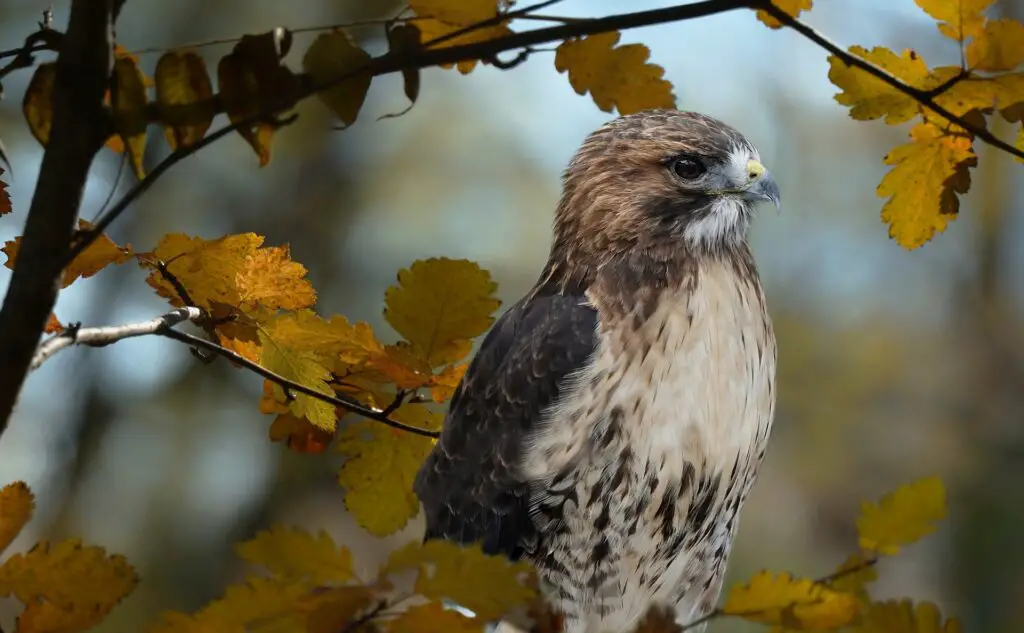
Do red-tailed hawks hunt in pairs?
In my experience with red-tailed hawks, they typically do not hunt in pairs or groups. They are solitary hunters known for their fierce independence and focused hunting strategies. These majestic birds of prey excel at solo hunting, using their keen eyesight and powerful talons to capture prey efficiently. Red-tailed hawks establish and defend territories, rarely sharing hunting grounds with others of their kind. Their hunting strategies are honed through years of practice, making them adept at stalking and ambushing their targets with precision.
While red-tailed hawks are not known for cooperative hunting behaviors, they have been observed engaging in territorial displays and aerial battles with other hawks to assert their dominance. Despite their solitary nature, red-tailed hawks have impressive hunting success rates, often securing prey such as rodents, rabbits, and small birds with remarkable skill and speed. Overall, their independence and focused hunting tactics set them apart as formidable hunters in the avian world.
Red-tailed hawks are skilled hunters that use their keen eyesight and powerful talons to capture prey. They typically hunt small mammals like rodents and rabbits, swooping down from above with precision and speed. While they are solitary hunters, they may occasionally hunt with other animals like ferrets or dogs to increase their chances of success. However, their hunting techniques and success rates are primarily honed through solo hunting, making them impressive predators in the wild and skilled companions in falconry.