
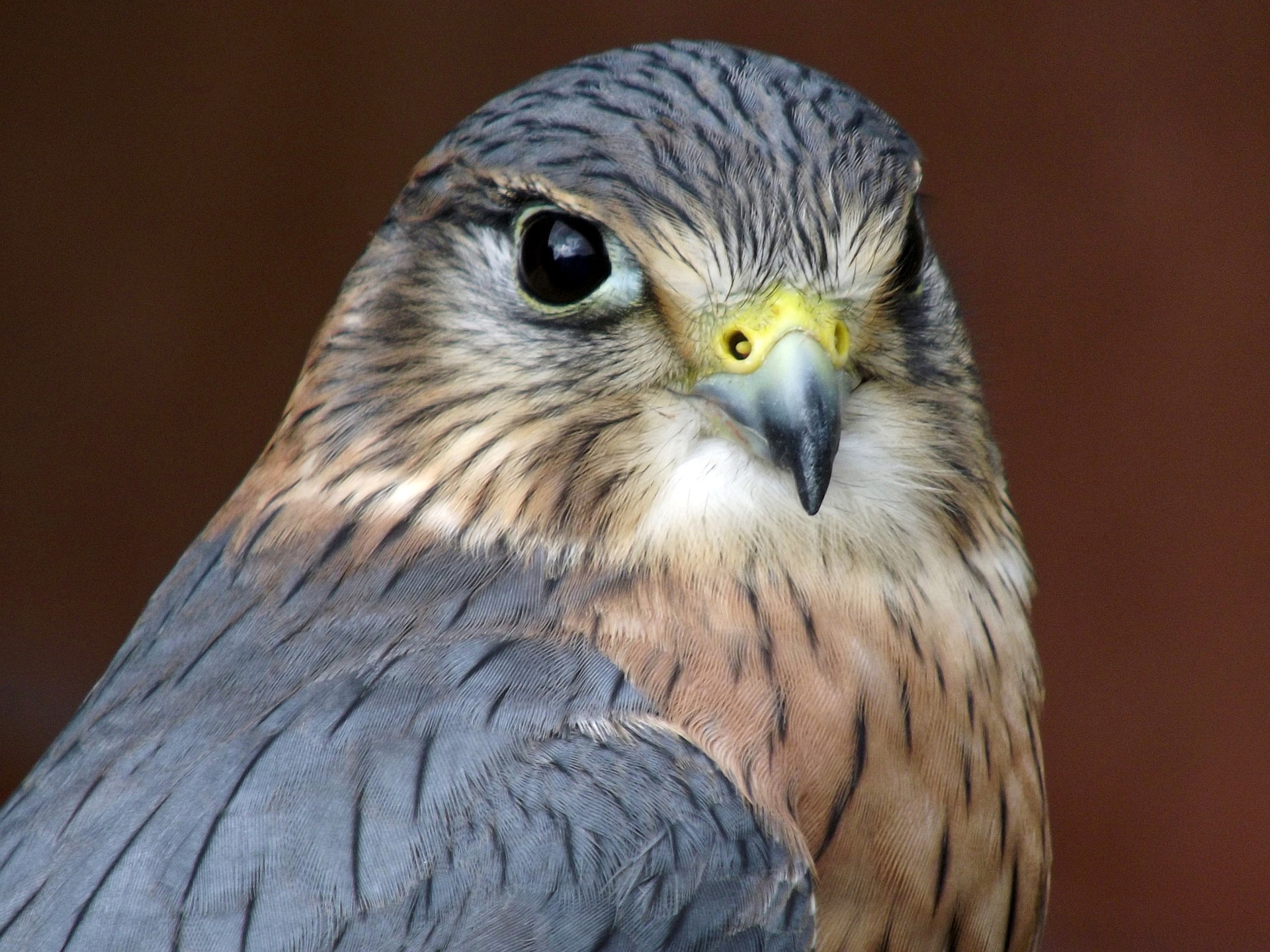
Merlins are known as the most accomplished of all falconers. They have long been bred in captivity for their hunting skills, but what do they hunt in the wild? Surprisingly, merlins don’t go after large prey like other falcons. Instead, they prefer to hunt small birds and mammals. This makes them a perfect choice for hunting with a falconer’s lure.
Falcons typically hunt alone, but merlins often hunt in pairs or small groups. They primarily eat small birds, such as sparrows and swallows, but they will also eat rodents, reptiles, and insects. When falconers first train their bird, they will often use a lure – a dead or wounded bird attached to a long line – to simulate hunting.
Once the falconer is confident that their bird is ready to hunt, they will take it out into the field, where it will be released to hunt for real. The falconer will use a special glove to protect their hand when releasing the bird, as the bird’s claws are very sharp. Once the bird has caught its prey, the falconer will recall it back to them using a special call. The bird will then be given its reward – usually a piece of meat – and taken back to its perch or aviary to rest until it is ready to hunt again.

Typical prey for a merlin
The merlin is a small falcon that is found throughout the northern hemisphere. These birds are typically between 9 and 12 inches in length, with a wingspan of 20 to 24 inches. Merlins are sexually dimorphic, meaning that males and females have different plumage. Male merlins are typically blue-grey above and white below, while female merlins are brown above and buff-coloured below. Hunting typically occurs by pairs or alone during the day for these birds. Merlins typically prey on small to medium-sized birds, but they will occasionally take larger prey such as pigeons or ducks. If Merlins live in an urban area, a common food source for them is the House Sparrow. In winter months, these predators often focus on small shorebirds for their meals. Merlins are popular birds for falconry and have been used in this sport for centuries. Falcons were traditionally used for falconry, but merlins became increasingly popular due to their smaller size and lower cost. Today, there are many falconers who keep merlins as pets and train them to hunt.
Does a Merlin require special equipment to hunt?
No, you don’t need special equipment to hunt with a merlin. All you need is a falconer’s glove, a perch, and a hood. Falconry is the ancient sport of hunting with birds of prey. Originating in Asia, but there is evidence that falconry was practised in Europe as early as the 8th century.
A falconer is someone who trains and hunts with falcons. The falconer’s glove protects the falconer’s feet from the falconer’s arm. The perch is used to keep the falcon from flying away when it’s not hunting. Finally, the hood is used to keep the falcon from seeing anything that would distract it from hunting. So, if you want to try your hand at falconry, all you need is a falconer’s glove, a perch, and a hood.
Understanding a merlin and its ability to hunt fish
To a falconer, the merlin is the perfect hunting partner. Small and fast, this bird of prey is capable of taking down even the swiftest of prey. But how does the merlin do it?
For starters, the merlin has incredibly sharp eyesight. It can spot a fish from high up in the sky and then dive down to snare it from the water at speeds of up to 200 kilometers per hour. But that’s not all; the merlin also has special feathers that help it to dive even faster. These feathers are stiff and pointed, and they act like mini spoilers that help to increase airflow over the bird’s body and give it an extra lift.
But perhaps the most impressive thing about the merlin is its brain. This small falcon is one of the smartest birds and uses its intelligence to hunt in very clever ways. For example, the merlin will often fly low over the water’s surface when pursuing prey. Doing this creates a “wave” of air that disturbs the water and makes it easier for the bird to spot any fish swimming below.
So next time you see a merlin in action, take a moment to appreciate all of the remarkable adaptations that allow this tiny falcon to take down such large prey.
Are merlins fast enough to hunt?
It is estimated that falcons are capable of reaching speeds of over 200mph, which makes them one of the fastest animals on earth. Their speed, along with their keen eyesight and sharp claws, make them excellent hunters. Falcons are often used in falconry, where they are trained to hunt game birds such as quail and pheasant.
The merlin is a small falcon about the size of a crow. Despite its size, the merlin is a formidable hunter. As one of the fastest birds in flight, it can reach speeds of 80 miles per hour. In falconry, the merlin is often used for hunting smaller prey such as sparrows and wrens.
While both falcons and merlins are fast enough to be effective hunters, falcons are generally faster and have a more comprehensive range of prey that they can successfully hunt.
How can you sharpen your merlin hunting skills?
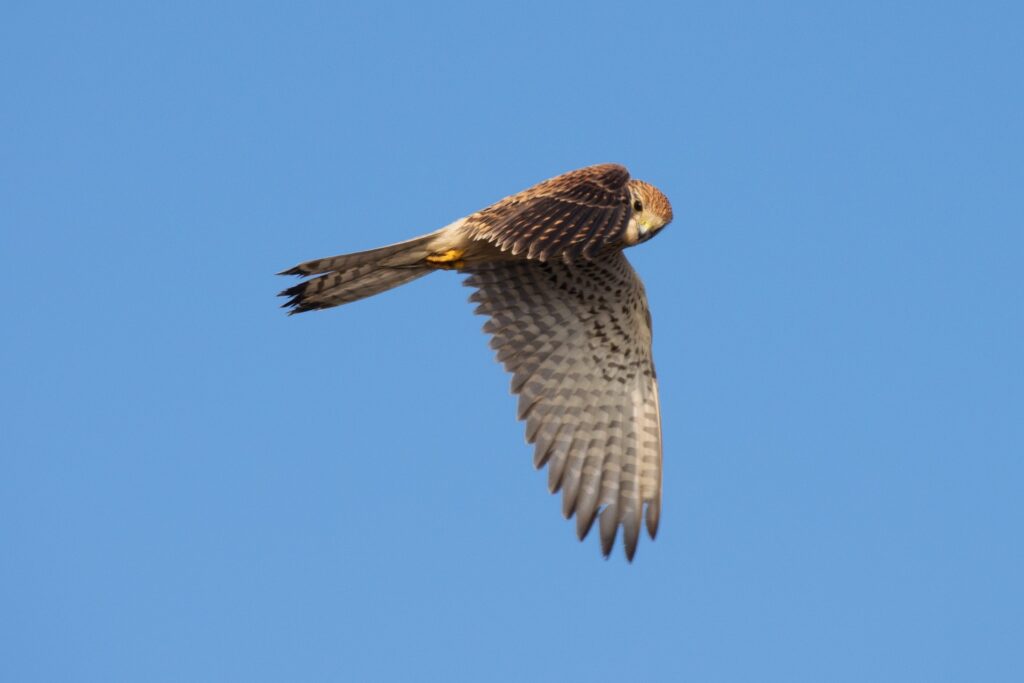
If you’re serious about becoming a master falconer, there’s no better way to sharpen your skills than by hunting with a merlin. These small falcons are known for their speed and agility, making them the perfect quarry for experienced falconers. To be successful when hunting with a merlin, it’s vital to have quick reflexes and good hand-eye coordination. You also need to be able to read the bird’s body language so you know when it’s time to strike. With practice, anyone can learn to hunt with a merlin. Nothing quite compares to watching your bird take down its prey, and the rewards are well worth the effort.
In captivity, what do merlin hunt with their falconers?
Traditionally, falconry was used as a way to hunt wild game. Falcons would be trained to capture prey, which would then be returned to the falconer. Today, however, falconry is often used for recreation, and falconers release their birds after the hunt. In captivity, merlins are commonly used in falconry. They are small falcons with pointed wings and long tails. They are known for their agility and speed, making them well-suited for falconry. Merlins typically hunt smaller prey, such as pigeons and doves. However, they have been known to capture larger prey, such as ducks and pheasants. In addition, falconers often use merlins for pest control, as they are effective at hunting rodents and other small animals.
How can I tell whether a merlin is hunting?
When it comes to hunting, falcons are among the most skilled predators in the animal kingdom. Thanks to their sharp eyesight and powerful wings, they can reach up to 200 miles per hour, making them more than a match for most prey. But how can you tell if a falcon is hunting?
In order to tell, you can look at how the falcon stands. If it’s standing upright with its head held high, it’s likely just surveying the area. But if it’s crouched down low with its head held close to its body, it’s probably getting ready to strike. Another clue is the falcon’s tail. The falcon is probably just resting if it’s pointing straight up in the air. But the falcon is likely on the hunt if it’s pointing down towards the ground.
Of course, the best way to tell if a falcon is hunting is to ask a falconer. Falconers are experts in all things related to falcons, and they can usually tell whether a falcon is hunting just by looking at it. So if you’re ever unsure, ask a falconer for their opinion.
Is it possible for a falconer to teach their Merlin to hunt new prey?
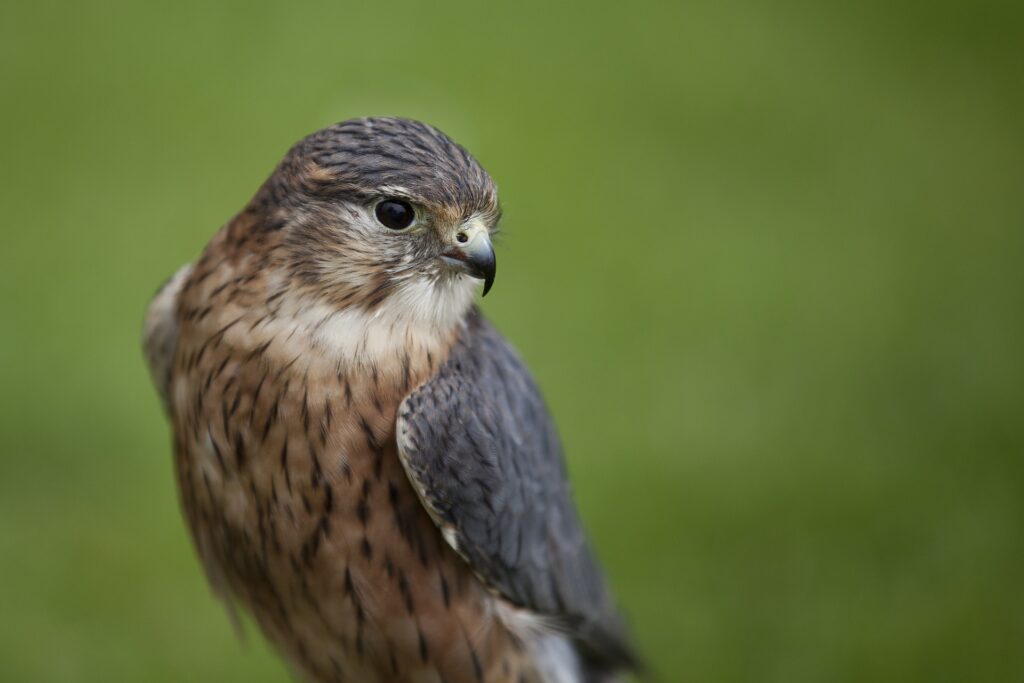
In falconry, the relationship between the falconer and the bird of prey is key to successful hunting. The falconer must train the bird to trust and follow them while also teaching it to hunt effectively. Some falconers specialize in training one bird species, such as a peregrine falcon or a merlin. Others focus on training birds of prey to hunt specific types of prey, such as rabbits or waterfowl. No matter their specialization, all falconers must deeply understand the birds they work with. This includes knowing how to read their behaviour and communicate with them effectively. As a result, falconers play an important role in shaping the hunting skills of their birds. While some falconers may hesitate to teach their birds to hunt new prey, others see it as an opportunity to expand their skills and deepen their bond with their birds.
How are wild American Kestrels different from captive merlin in terms of hunting abilities?
Wild American Kestrels are different from captive merlins in terms of hunting abilities. The use of falcons in falconry goes back hundreds of years, and ancient Egyptians used falcons for falconry as well. Falco columbarius, most commonly known as the American Kestrel, can be found throughout the United States. The kestrel is a small falcon about the size of a blue jay. Under optimal conditions, kestrels can take down prey larger than themselves. Members of the genus Falco are generally known as falcons, while those of the Accipiter genus are called hawks. There are 37 species of falcons worldwide. American Kestrels are considered to be a subspecies of the Eurasian Kestrel.
The Merlin Falco columbarius is a small falcon. It is also known as Pigeon Hawk and Squirrel Hawk. Merlins breed across much of the Northern Hemisphere. Adult males typically weigh between 200 and 350 grams, while females weigh between 250 and 400 grams. Male merlins are dark blue-grey above with black streaks on their back and wing coverts. The breast is orange-brown with black streaks. The belly and flanks are white with orange streaks. Females are brown above with pale grey streaks on their back and wing coverts. Captive merlin does not have the same ability to hunt as wild merlins. In terms of physical appearance, both birds have plumage that helps them camouflage while they are perched or in flight. There has been research demonstrating differences in behaviour between wild and captive birds, with captive birds being more aggressive than wild birds. There are also differences in diet, with captive birds being fed a diet of mice and quail, while wild birds eat a variety of smaller prey items such as insects and lizards. Overall, there are several significant differences between wild American Kestrels and captive merlins in terms of hunting abilities.
How often do merlins hunt?
Studies have shown that merlins typically hunt once or twice a day, with each session lasting around an hour. However, this can change based on seasonality and availability of prey. When there are more small birds around, merlins may hunt more often in the spring and summer. Food is scarce during the winter, so they may hunt only a few times a week in the winter.
No matter what the season, one thing is certain: watching a merlin in action is a truly mesmerizing experience. For falconers and birdwatchers alike, these fascinating creatures never fail to impress.
Is a merlin capable of hunting at night?
While most falcons are diurnal or active during the day, the merlin is one of a few species that are capable of hunting at night. This nocturnal hunting behaviour is most likely due to the merlin’s main prey being small birds, which are more active at night. Therefore, the falconer must take this into account when training a merlin for falconry, as the bird will need to be taught to hunt in low-light conditions. In addition, the falconer must be careful not to expose the bird to too much light during the day, as this can interfere with its natural circadian rhythms and make it difficult to hunt at night. However, a merlin can be an excellent nighttime hunter with proper care and training.
Does using merlin for falconry hunting raise any ethical concerns?
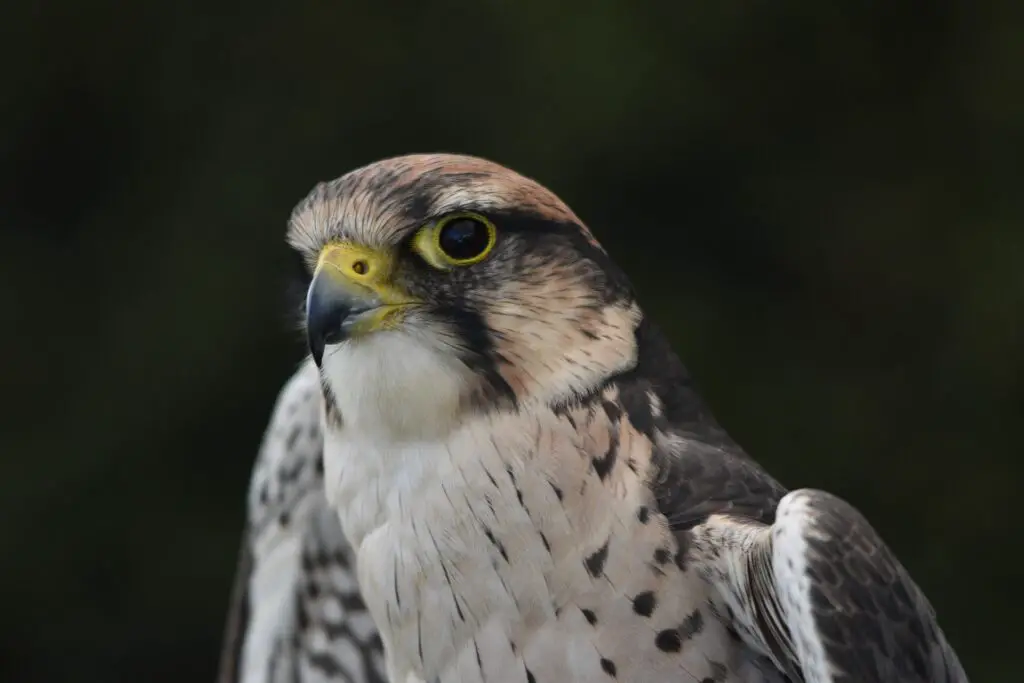
In the sport of falconry, also known as hawk hunting, spectators may watch as a falconer releases a trained falcon to pursue and capture a wild game. In falconry, the use of merlins, small falcons with a wingspan of two feet, has been on the rise in recent years. While some argue that this practice is cruel and unsportsmanlike, others contend that it is no different from other hunting forms.
Falconers must adhere to strict regulations set forth by state and federal wildlife agencies in order to obtain the necessary permits to hunt with a raptor. These regulations include ensuring that the falcon is well cared for and does not suffer undue stress or injury during the hunt. In addition, once captured, the prey must be dispatched quickly and humanely. For these reasons, many people argue that falconry is a humane and regulated way to hunt.
Merlins are particularly well-suited for falconry due to their small size, which allows them to manoeuvre quickly and easily in pursuit of prey. In addition, their diet consists primarily of small birds, making them less likely to cause suffering or injury to their quarry. Some argue that this makes falconry with merlins more humane than other types of hunting.
While some argue that using merlins for falconry hunting is unethical, others maintain that it is a humane and regulated way to hunt. Ultimately, this decision must be left up to the individual falconer.