

What do peregrine falcons hunt in captivity? Surprisingly, they don’t just feast on live quarries brought to them by their handlers. Instead, these birds of prey will also take advantage of food provided in the form of dead animals or carcasses. Learn more about what peregrine falcons eat and how they go about hunting in captivity.
Peregrine falcons feast on quail, pigeons, and ducks while in captivity. While not their natural prey, these birds are similar enough in size to provide the falcons with a good source of nutrition. A captive peregrine falcon’s diet can also be supplemented with protein-rich mice and rabbits, which helps keep them fit and healthy.
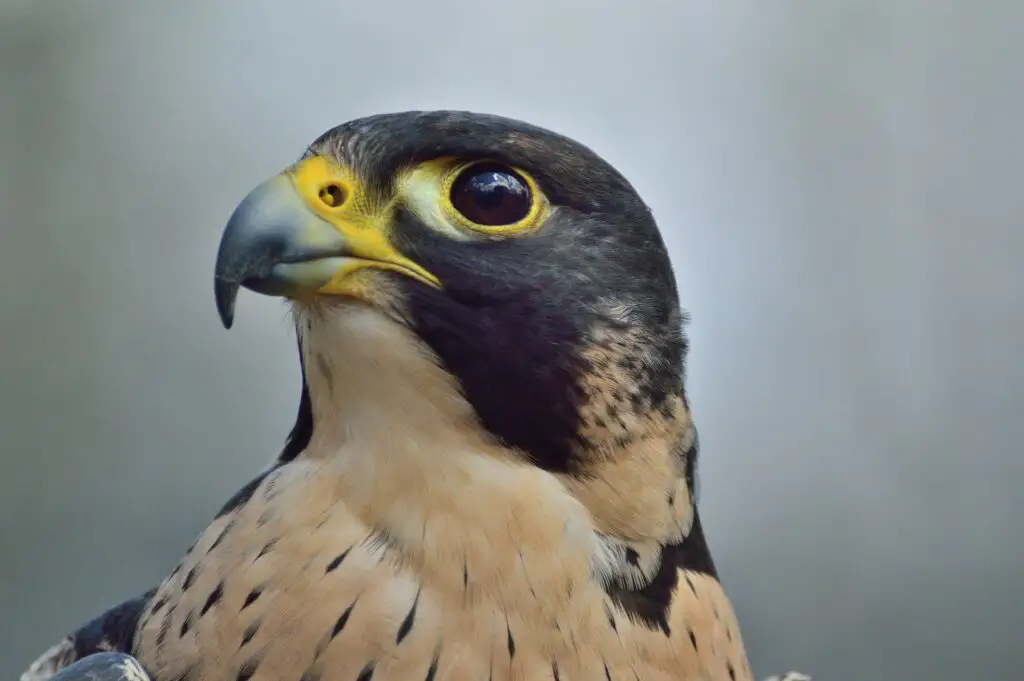
Captive peregrine falcons may become bored or restless if they are not given enough opportunities to hunt. As such, it is crucial for those who care for captive peregrine falcons to provide them with ample opportunities to exercise their natural hunting instincts.
What do peregrine falcons hunt in captivity with their falconers?
Peregrine falcons hunt in captivity with their falconers by flying to a perch that the falconer has predetermined. The peregrine will then wait for its prey to come into striking distance. When the prey is within range, the peregrine will use its speed and agility to catch it. It has been found that small mammals, such as mice, rats, squirrels and rabbits are among the common prey items that peregrines hunt in captivity. They may also hunt birds such as pigeons, starlings and doves. The goal of the peregrine falconer is to teach the bird how to hunt and survive in the wild. Falconers must also be sure that their birds are receiving an adequate amount of food, water, and exercise. This ensures that the peregrine is healthy and ready for hunting season! In addition to providing food and water, falconers must also provide their birds with a place to roost and nest. This can be either in a natural setting or in a man-made structure known as a mews. Peregrines typically lay three to four eggs per clutch, and the falconer’s responsibility is to ensure that these eggs are incubated properly. Once the chicks have hatched, it is up to the falconer to socialize them and teach them how to hunt. Over time, these chicks will grow into adult peregrines, and with any luck, they will be released back into the wild, where they can continue to thrive.
How can you tell if a peregrine falcon is hunting?
If you’re lucky enough to spot a peregrine falcon in the wild, you may be wondering if it’s hunting or just resting. The following are a few things to keep an eye out for: In the first place, make sure to check to see if the falcon is in sight of its prey bird. Peregrines typically hunt alone, so they’re likely watching for prey together if you see more than one bird. Second, watch for rapid wingbeats followed by a glide. The falcon’s typical hunting pattern is stooping down on its prey. Finally, listen to the sound of wings beating against the air. Peregrines are notoriously silent hunters, so this is a good way to tell if one is nearby. If you see all of these signs, there’s a good chance you’re watching a peregrine falcon on the hunt!
What kind of prey do peregrine falcons typically hunt in the wild?
Peregrine falcons are powerful predators that typically hunt birds in the wild. Their diet consists mainly of medium-sized birds such as doves, pigeons and ducks. However, they are also known to take down small mammals such as rabbits or squirrels. Peregrine falcons typically hunt by perch and wait until their prey is within range before attacking. They will ensure that once they have caught their prey, that they are able to kill it quickly with a sharp blow to the head. These magnificent birds of prey are some of the most skilled hunters in the animal kingdom.

Can a falconer teach their peregrine to hunt new prey?
A falconer is someone who uses trained birds of prey to hunt small game. Peregrine falcons are a type of bird often used in falconry, as they are fast and agile hunters. While peregrine falcons typically hunt smaller birds, it is possible for a falconer to teach their bird to hunt new prey. This can be done by providing the bird with opportunities to practice hunting new types of animals. For example, a peregrine falcon might be given live prey that is similar in size and behaviour to its typical quarry. With enough practice, the bird will eventually learn how to adapt its hunting techniques to different types of prey. The process of teaching a peregrine falcon to hunt new prey can be challenging, but it ultimately allows the bird to lead a more varied and interesting life.
Are wild peregrines better hunters than captive peregrines?
There is no simple answer to this question. Both wild and captive peregrines are capable hunters, but there are some significant differences to consider. For one, wild peregrines have a much larger territory to hunt in, which gives them access to a greater variety of prey. They also face more competition from other predators, which can often force them to take riskier hunting strategies. On the other hand, captive peregrines are typically provided with a steady diet of easy-to-catch prey, which can lead to them becoming less skilled hunters. In addition, captive peregrines typically do not have to worry about competition from other predators, which can allow them to take a more relaxed approach to hunt. Ultimately, wild and captive peregrines have their own strengths and weaknesses as hunters, and it is difficult to say which is better.
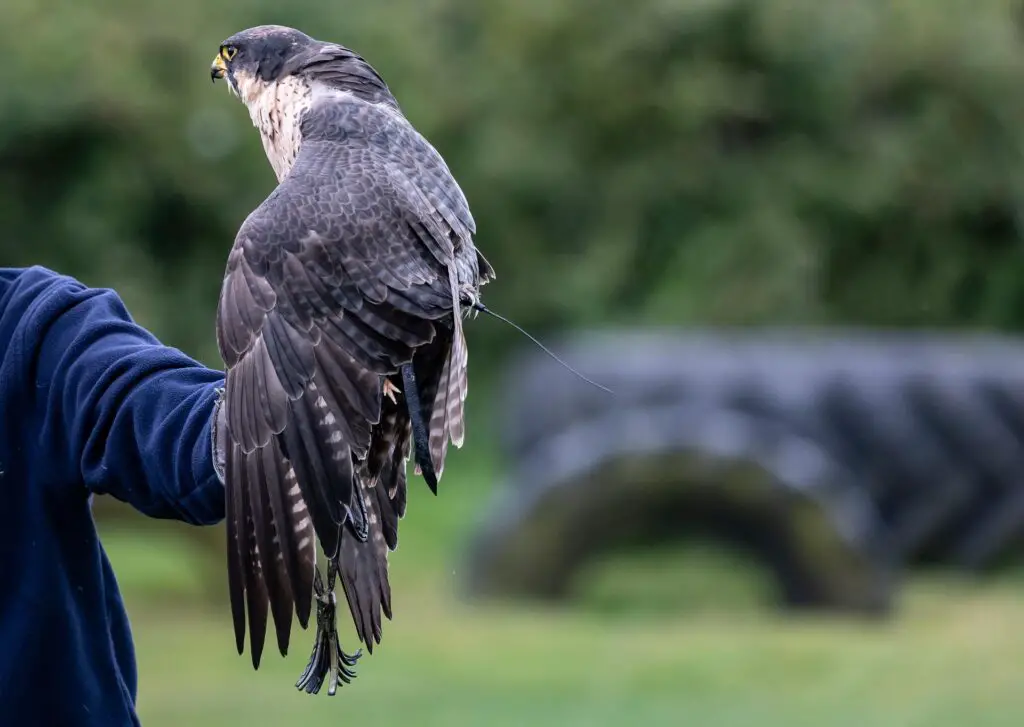
In conclusion, peregrines are versatile predators that can take down a variety of prey with the help of their falconer. This makes them an excellent choice for hunting expeditions. So if you’re looking to bag yourself some game, consider using a peregrine as your hunting partner.