
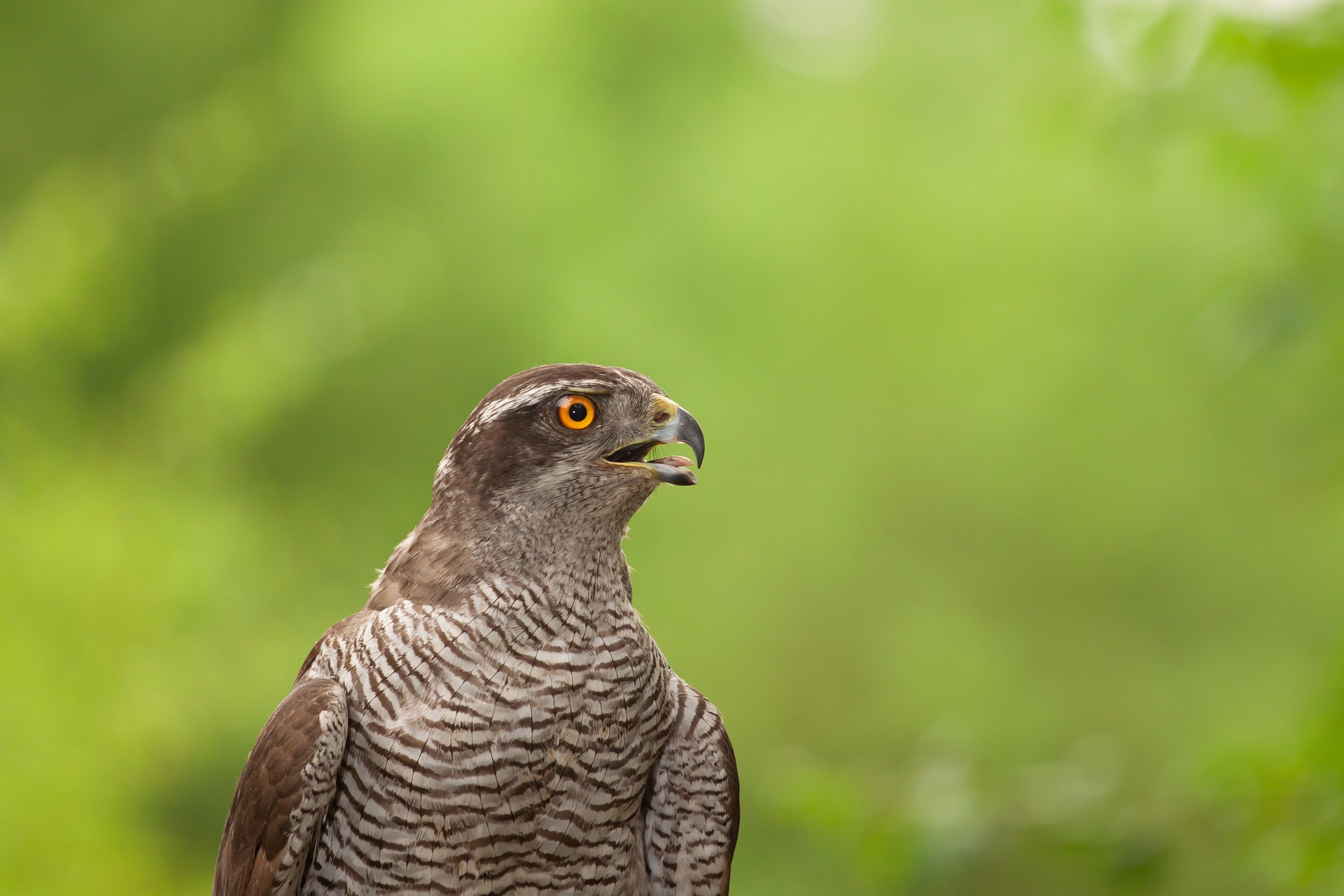
The Goshawk is a predatory bird of the Accipitridae family. They are diurnal birds of prey, which means they hunt during the day. They eat a variety of different things, depending on what is available in their environment. As a result, goshawks are very versatile predators and can be found in a variety of habitats.
Goshawks typically eat small mammals, such as rabbits and squirrels, as well as a variety of birds. In fact, the Goshawk is one of the few predators that will actively hunt birds as large as ducks and pheasants. However, because they are not as fast or agile as other raptors, goshawks will sometimes take prey that is already injured or weaker.
As a result, goshawks are opportunistic hunters that will take whatever prey is available. While the diet of a wild goshawk may vary depending on the location and availability of food, falconers often feed their birds a diet of raw meat to ensure that they receive all the nutrients they need.

How much food do they need?
When it comes to feeding a hawk, there is no one-size-fits-all answer. The amount of food a hawk needs will depend on a number of factors, including its age, size, and activity level. A young hawk, for example, will need more food than an adult hawk because it is still growing and developing. Similarly, a hawk that is actively hunting will require more food than one that is not. As a general rule of thumb, however, a falconer should provide their bird with about 1 to 1.5 ounces of food per day. If the hawk is being trained or used for falconry purposes, the amount of food may need to be increased to 2 ounces or more per day. Ultimately, it is up to the falconer to determine how much food their bird needs on a daily basis.
How often do goshawks need to eat?
In the ancient world, falconry was the practice of training birds of prey to hunt with them. Falconers use a variety of birds for falconry, but the Goshawk is one of the most popular falconry birds. Goshawks are known for their speed, strength, and accuracy, making them ideal for falconry. But how often do goshawks need to eat?
In the wild, goshawks typically hunt once or twice a day. However, when they are being used for falconry, goshawks typically hunt 4-5 times per day. This is because falconers want their birds to be in peak condition when they are hunting. To keep their goshawks in top form, falconers usually feed them smaller meals. So while a wild goshawk might eat one or two rabbits per day, a falconer’s Goshawk might eat rabbits spread out over the day.
There is no doubt that every Goshawk is unique in its appetite, and each does so for its own reasons. For example, some goshawks might be content to only hunt once or twice a day, while others may be happier with 4-5 meals. As a result, it’s important for falconers to get to know their birds and understand their individual needs. It is by doing so that they will ensure the health and happiness of their goshawks.
Is the Goshawk a carnivore?
The Goshawk is a large hawk belonging to the Accipitridae family, including eagles, kites, and Harriers. Goshawks are widespread across the Northern Hemisphere and can be found in forests, woodlands, and even urban areas.
Goshawks are carnivores, which means that their diet is mainly composed of small mammals like rabbits and squirrels. When falconry was popular in Europe during the Middle Ages, goshawks were highly prized by falconers for their hunting abilities. Today, goshawks are still used in falconry in some parts of the world.
While goshawks will occasionally eat birds, they are not as specialized in this area as true falcons such as the Peregrine falcon. Goshawks typically hunt by perching in a tree, observing their prey as they come closer to the area, at which point they will swoop down and capture their target with their sharp talons.
Overall, the Goshawk is an impressive bird of prey that falconers have revered for centuries. Thanks to its hunting skills and adaptability, the Goshawk will continue capturing bird enthusiasts’ imaginations for years to come.
Can I feed my Goshawk other foods like fruits, vegetables or bird seeds?
No, the only thing you should be feeding your Goshawk is raw meat. While other foods may appeal to a goshawk, they are not nutritionally balanced and can harm the bird. For example, fruits and vegetables are high in sugar and can cause liver problems in hawks. Similarly, bird seeds are not as nutrient-rich as raw meat and can lead to malnourishment.
Falconers working with captive-bred goshawks are the only exception to this rule. In this case, the falconer can experiment with different types of food to find what their bird likes best. Nevertheless, not all birds will eat the same things, so it’s important to keep this in mind. So it’s important to monitor a hawk’s diet closely and make necessary adjustments.
What kind of prey does goshawk hunt?
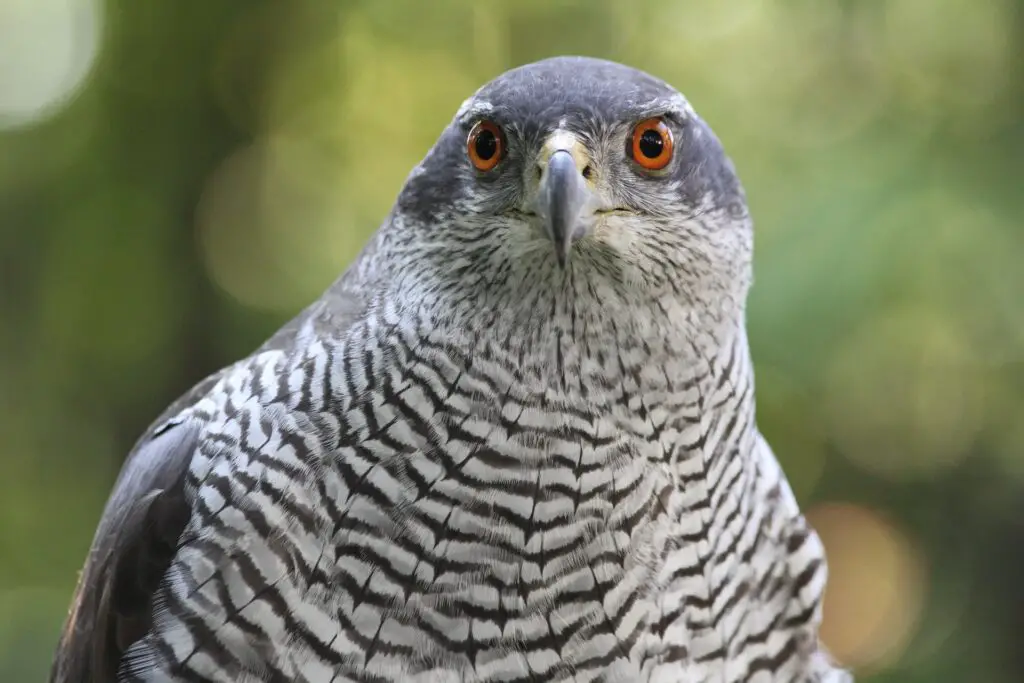
The Goshawk is a medium-sized hawk that is popular among falconers due to its high level of intelligence and willingness to hunt. Falcons, on the other hand, are known for their speed and power. As a result, goshawks are often used for hunting game birds such as quail, pheasant, and grouse. However, the Goshawk can also take down larger prey, such as rabbits and hares. In fact, the Goshawk is one of the few raptors that can successfully hunt and kill a fox. Goshawks have even been known to take down deer when hunting in pairs. As a result, the Goshawk is an incredibly versatile hunter that can provide an enjoyable and challenging hunt for any falconer.
Do goshawks eat pigeons?
One of the most common questions falconers get asked is whether or not goshawks eat pigeons. Generally, yes, but there are some nuances involved. Goshawks are typically found in wooded areas, where they hunt small mammals like squirrels and rabbits. However, they will also take birds as prey, including pigeons. In falconry, goshawks are often used to target game birds like pheasants and quail. As such, they can be very effective at taking down pigeons. When hunting pigeons, goshawks will typically go after juveniles or sick birds. This is because adult pigeons can be quite large and difficult to take down. In addition, goshawks typically hunt in pairs, which gives them an advantage when taking on larger prey. Consequently, a goshawk can be your best choice if you need a falconer who can help you take down some nuisance pigeons.
Do goshawks eat chickens?
One of the most common questions falconers get asked is whether or not goshawks will eat chickens. The answer, unfortunately, is that it depends. In general, goshawks are more likely to go after larger prey, such as rabbits or squirrels. However, if a goshawk is feeling particularly hungry or desperate, it may take on smaller prey, including chickens. This is one of the reasons why falconers typically only use goshawks for hunting more giant games. While they are capable of taking down a chicken, their tendency to go after larger prey means that they are less likely to cause damage to a farmer’s flock.
Do goshawks eat cats?
The debate over whether or not goshawks eat cats is a long-standing one, and there is still no definitive answer. Falconry is the ancient practice of using birds of prey to hunt small animals. Falconers have observed goshawks hunting and killing a variety of small creatures, including rabbits, squirrels, and even mice. However, there have also been reports of goshawks ignoring cats altogether, despite being presented with the opportunity to capture them when the chance is presented to them. The truth is that we don’t know for sure whether or not goshawks eat cats. The consensus among experts is that they do, while the consensus among others is that they do not. Ultimately, only further observation and study will reveal the truth.
Do goshawks eat owls?
Falconry is the art of hunting with trained birds of prey, and falconers have been using goshawks for hunting for centuries. But do goshawks actually eat owls? The answer is a little complicated. Goshawks are known to kill and eat smaller birds, but they typically avoid larger birds like owls. That said, there have been cases where goshawks have killed and eaten owls. In one case, a goshawk killed an owl by clasping its talons around the owl’s head and suffocating it. In another case, a goshawk killed an owl by piercing its brain with its beak. So while goshawks typically don’t eat owls, they may do so under certain conditions.
Do goshawks eat crows?
Goshawks are large birds of prey belonging to the Accipitridae family, including eagles and hawks. Goshawks are known for their aggressive hunting style and have been used in falconry for centuries.
As far as what goshawks eat, they are very versatile hunters and will feast on a variety of small to medium-sized prey, including rodents, reptiles, and birds. In fact, crows are among the most common types of birds that goshawks hunt.
Since goshawks are so skilled at hunting birds, falconers often use them for training other raptors for falconry. Goshawks are also popular among amateur falconers because they can be relatively easy to train compared to other raptors.
Consequently, it is not uncommon to see a goshawk hunting and eating a crow in the wild.
Do goshawks eat snakes?
Many people are surprised to learn that goshawks are one of the few types of birds of prey that will actively hunt and eat snakes. This behaviour is most often seen in wild goshawks, but it has also been observed in captive birds. Falcons have long been used in falconry, and goshawks were traditionally one of the most popular choices for falconers. Their ability to take down large prey, including snakes, made them highly prized hunting partners. While not all goshawks will eat snakes, those that do often develop a taste for them at a young age. JUvenile goshawks typically begin experimenting with different types of prey, and those that show an interest in snakes are often encouraged to pursue them by their falconers. As a result, some goshawks develop a lifelong preference for snake meat.
Should I not feed my Goshawk before hunting?
Most falconers prefer to starve their birds before a hunt, as it makes them more aggressive and eager to kill. However, there is some debate among falconers as to whether this practice is cruel or necessary. Some argue that it is more humane to keep the bird well-fed, as it reduces the chance of injury during the hunt. Others believe that hunger makes the bird more determined to succeed and, therefore, more likely to make a successful kill. Falconers are ultimately responsible for deciding whether or not to feed their goshawks.