
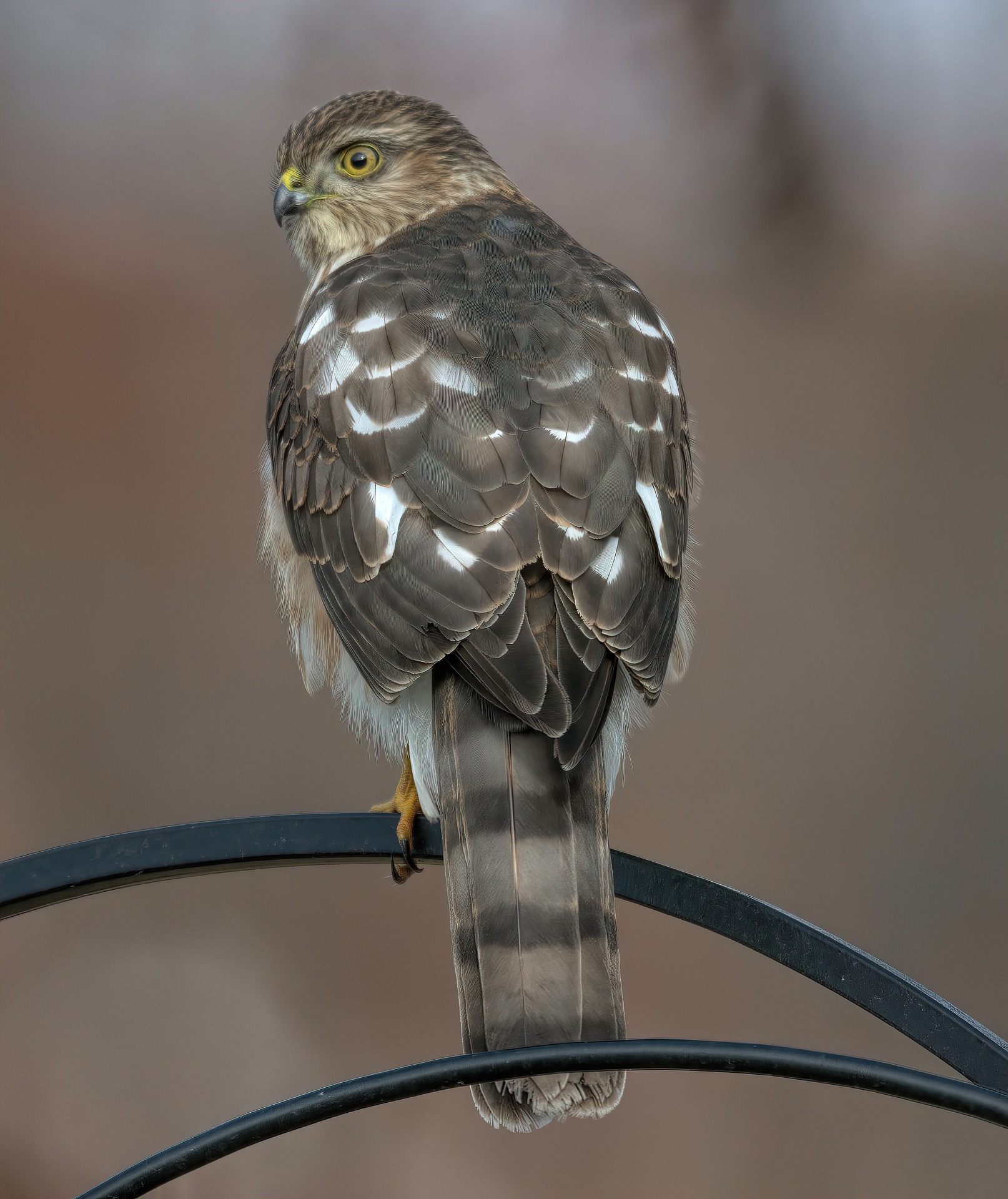
Hunting with a hawk is an ancient practice that is still used today. A coopers hawk can be an effective way to take down small game or birds. They are agile and powerful, making them perfect for the hunt. When hunting with a hawk, it is important to know their behaviour and how to work with them. In this article, we aim to equip you with all the information you require to be prepared to hunt with a cooper’s hawk by providing all of the information we have available to us.
The majority of what coppers hawk hunt are small to medium-sized birds. This includes species like the rock dove, common grackle, banded pigeons, and squirrels. They will also target small rodents on occasion.
There will be a number of topics covered in this blog post about using the coopers hawk as a hunting weapon, including the training of your hawk and what supplies you will need. This article will also discuss some of the advantages and disadvantages associated with hunting with a hawk. In the event that you are interested in learning more about using a cooper hawk to hunt, keep reading or click the link to see exactly what these birds eat.
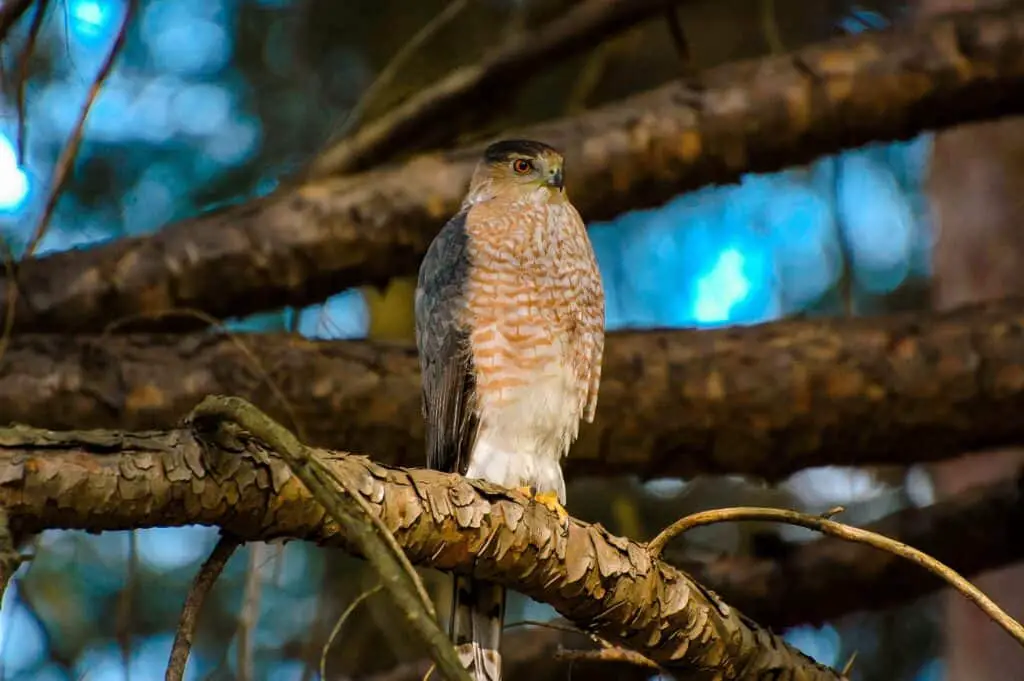
Cooper’s hawks commonly prey on.
Cooper’s hawks are common predators in North America. They typically prey on small to medium-sized birds, such as sparrows, robins, and jays. In addition to birds, Cooper’s hawks will also hunt small mammals, such as squirrels and rabbits. They have even been known to kill snakes and bats. While they will eat just about anything they can catch, Cooper’s hawks prefer to hunt live prey. This means that they will often stalk their prey before attacking, sometimes waiting for hours in order to get the perfect opportunity to strike. In spite of the wide range of habitats that Cooper’s hawks are able to live in, the species survives because of its exceptional hunting skills. They can be found in forests, wetlands, deserts, and even urban areas.
Do you need any special equipment to hunt with a cooper’s hawk?
For you to be able to hunt with Cooper’s hawks, you will need a few specific items in order to have a successful hunt. First, you will need a trained hawk. While these birds are naturally skilled hunters, they require extensive training in order to work with humans. Once you have a trained hawk, you will need to purchase a hood and gloves. The hood helps to keep the hawk calm and prevents it from seeing distractions. The gloves protect your hands from the hawk’s sharp talons. Finally, you will need a perch for the hawk to rest on while not in use. With the right equipment and knowledge of how to hunt with these birds, you can enjoy a successful hunting experience with Cooper’s hawk by your side.
Is the Cooper’s hawk fast enough to hunt with for falconry?
The Cooper’s hawk is a fast and agile bird of prey, capable of reaching speeds of over 50 miles per hour. This makes it an excellent hunter, able to quickly and efficiently down small prey. For this reason, the Cooper’s hawk has long been used in falconry, a sport in which birds of prey are trained to hunt for their human handlers. While the Cooper’s hawk is not the fastest bird of prey, its speed and agility make it more than capable of hunting with a human partner. As a result, Cooper’s hawk is an excellent choice for those interested in falconry.
Can Cooper’s hawks hunt in packs?
Although most hawks are solitary hunters, a few species hunt in groups. One of these is the Cooper’s hawk, a small but ferocious bird of prey. Cooper’s hawks typically hunt in pairs, but sometimes they will team up with other birds to take down larger prey. When hunting in a group, Cooper’s hawks will use their speed and agility to flush out prey from cover, then take turns striking at the animal until it is brought down. Although they are not the largest hawks, Cooper’s hawks are deadly predators that can take down animals much larger than themselves. Thanks to their teamwork, they are able to take on prey that would be too much for a single bird.
Is it more successful for a cooper’s hawk to hunt alone or in a pack?
Cooper’s hawks are skilled hunters, preying on small birds and mammals. They are opportunistic hunters, meaning that they will often hunt whatever prey is most readily available. However, when given a choice, Cooper’s hawks are more successful when hunting alone. This is because Cooper’s hawks are very territorial and will not tolerate another hawk invading their territory. When two hawks hunt together, they are often forced to share their skills, which can lead to conflict. In addition, Cooper’s hawks have difficulty coordinating their hunts when working in pairs, as they each have their own preferred hunting techniques. As a result, it is generally more successful for a cooper’s hawk to hunt alone. However, there may be some benefits to hunting in pairs during the breeding season, when food is scarce, and cooperation may be necessary in order to raise young successfully.

Cooper’s hawk hunting benefits
While some people may view Cooper’s hawk as a nuisance, these birds can actually provide some benefits to humans. For example, by hunting rodents, Cooper’s hawks can help control these pests’ populations. Additionally, Cooper’s hawks can help keep these species’ populations in check by eating small birds. In fact, studies have shown that areas with a healthy population of Cooper’s hawks tend to have more balanced ecosystems. As a result, Cooper’s hawk plays an important role in the environment and should be protected.
What is the best way to recognize a cooper’s hawk when it is hunting?
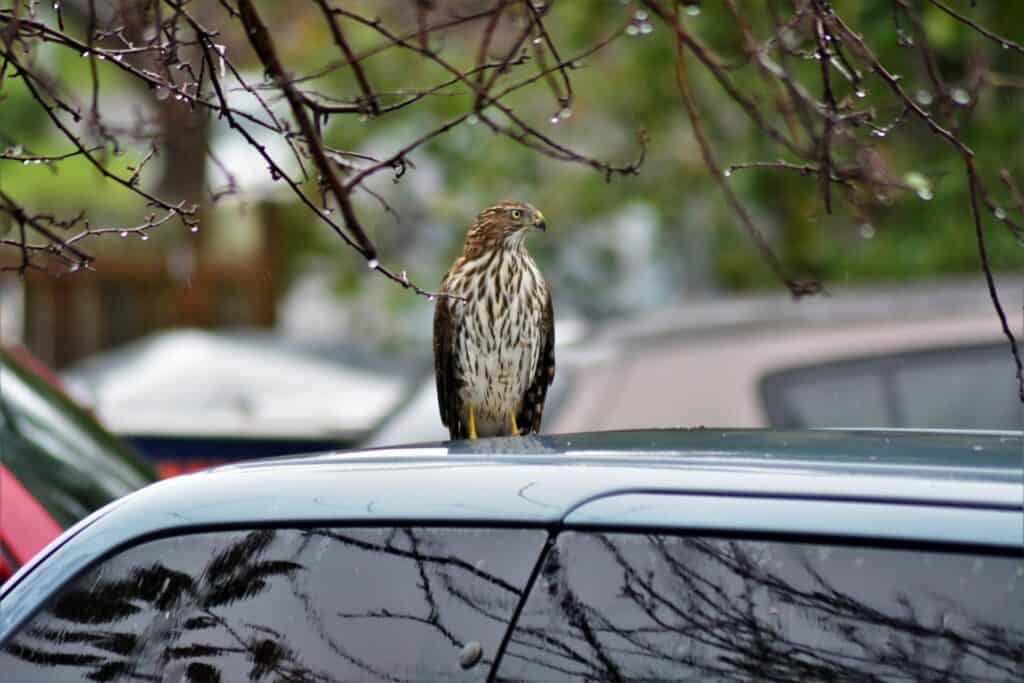
When hunting, these birds typically perch in a high location and scan the ground for potential prey. They will then swoop down and capture their victim with their sharp talons. Cooper’s hawks are most often seen hunting small birds, but they will also eat rodents, lizards, and snakes. The best way to recognize a cooper’s hawk when it is hunting is to look for its characteristic hunting behaviour. Another good way to identify these birds is by their size, colour, and shape. Cooper’s hawks are about the same size as a crow and have a reddish-brown back with a white chest. Their tail is long and square-shaped, and their wings are relatively short and rounded. When seen from below, Cooper’s hawks have a distinctive “bowtie” pattern on their chests. This pattern can be helpful in identifying these birds when they are in flight.
Are falcons capable of teaching their Cooper’s hawks to hunt new prey?
While it is true that falcons are natural predators, they are not born knowing how to hunt. Instead, they must be taught by their parent or another experienced hunter. This process, known as imprinting, begins when the young falcon is about two weeks old. Once imprinted, the falcon will continue to hunt the same type of prey for the rest of its life. However, if a falconer wants their Cooper’s hawk to hunt new prey, they may be able to teach it using a process known as conditioning. This involves gradually exposing the hawk to new types of prey and providing positive reinforcement when it shows interest in hunting them. With enough time and patience, a falconer may be able to expand its hawk’s diet and help it become a more versatile hunter.
Does the Cooper’s hawk hunt fish?
Flying fast and agile are many of the characteristics that distinguish Cooper’s hawks. Though they are often seen hunting small birds, they are opportunistic hunters and will prey on whatever is available. This includes rodents, reptiles, and even insects. In addition to their regular diet, the Cooper’s hawk has also been known to hunt fish. When the opportunity arises, they will still try to catch fish, even if they are not as skilled as some other birds of prey. As a result, the Cooper’s hawk is a versatile hunter who can take advantage of any food source that may be available to him at any given time.
What is the most common prey of a cooper’s hawk?
The most common prey of Cooper’s hawk is a bird. These small to medium-sized hawks hunt by perching on a high branch and watching for their prey below. Their sharp talons allow them to swoop down and capture animals as they pass. Birds are not the only animal’s Cooper’s hawks will eat, but they make up most of their diet. Other common prey items include squirrels, mice, lizards, and snakes. The specific prey type will vary depending on the season and location. For example, in winter months when birds are less active, Cooper’s hawks in North America have been known to eat more small mammals such as voles and lemmings. No matter the season or location, birds remain Cooper’s hawks’ primary food source.
Is there a way to sharpen Cooper’s Hawk hunting skills?
There’s no question that Cooper’s Hawks are skilled hunters. These small raptors are equipped with powerful talons and sharp beaks that allow them to easily take down their prey. But is there a way to sharpen their hunting skills even further?
Interestingly, research has shown that Cooper’s Hawks are able to improve their hunting skills by watching other hawks hunt. By observing experienced hunters in action, these birds can learn new techniques and strategies they can use when they’re out hunting on their own. Additionally, Cooper’s Hawks seem to be particularly good at using aerial displays as a way to hone their skills. By engaging in this type of coordinated flying, they’re able to develop better coordination and teamwork, both of which are essential for successful hunting.
As a result, if you want to help your Cooper’s Hawk become even better at hunting, encouraging them to watch other hawks and engage in aerial displaying may be a good place to start. Who knows, you may end up with a bird that’s the envy of all the other Cooper’s Hawks in the area!
Is it good not to feed my Cooper’s hawk before hunting?
Before heading out for a day of hunting, many falconers choose not to feed their Cooper’s hawk. There are a few reasons for this:
- A full stomach can make the bird sluggish and less able to hunt effectively.
- Hunger can make the bird more aggressive and more likely to take risks.
- By not feeding the bird beforehand, the hunter can be sure that the hawk will be eager to hunt and will be less likely to head back to the perch prematurely.
Of course, there is no right or wrong answer when it comes to whether or not to feed a cooper’s hawk before hunting. Each hunter must weigh the pros and cons and decide what is best for their particular situation.
Which kind of terrain does the Cooper’s hawk prefer to hunt on?
This bird of prey is particularly well adapted to hunting in wooded areas. It can use its powerful talons to grip onto branches and its sharp eyesight to spot potential prey. The Cooper’s hawk will often perch on a high branch and watch for movement below before swooping down to make the kill. In open areas, such as fields or grasslands, Cooper’s hawk will also hunt by watching for movement from a distance. When it spots an animal, it will quickly fly towards it and capture it with its talons. As a result of this hunting behaviour, Cooper’s hawk typically prefers to live in habitats with plenty of trees and shrubs.