

Falconry is an ancient sport that involves training a raptor, or bird of prey, to hunt. Training a falcon is time-consuming and patience-demanding, but it’s worth the effort! Peregrine falcons are some of the most sought-after birds for falconry because they are so fast and agile, but how easy is it to train a peregrine falcon? Can they even be trained at all?
A peregrine falcon can be trained, although it may take a little longer than it would an easier raptor like the kestrel or harris hawk. Training these majestic raptors is an ancient art that requires diligence, time and patience, but once your falcon is prepared, you will have a hunting partner (The fastest in the world) for many years to come.
Training a peregrine is not easy, and this is why many people who eventually keep these birds keep them after gaining experience with another easier raptor. However, if you follow the guidance below, you should have an idea of how to train and what you should and shouldn’t do.
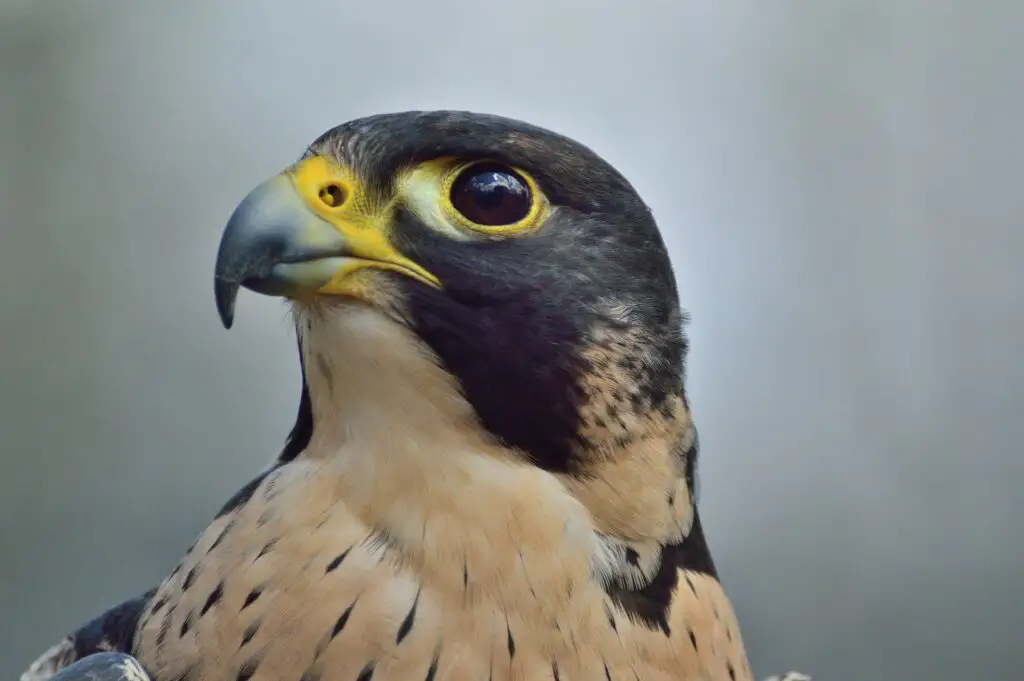
How intelligent are peregrine falcons, and can they be trained to hunt the prey for humans?
Peregrine falcons are one of the most intelligent bird species. They have large brains relative to their body size and can learn new behaviours quickly. In addition to their hunting abilities, peregrine falcons possess excellent flight abilities. They are able to spot their prey from great heights, and they can swoop down at incredible speeds to catch their game. While peregrine falcons are not typically trained to hunt for humans, there have been some cases where they have been successfully trained to do so. This is usually done in cases where the peregrine falcon is used to help control a population of pests, such as pigeons or rodents. In these cases, the peregrine falcon is typically given a live target to chase and is rewarded with food when it catches the prey. While peregrine falcons are generally not considered to be domesticated animals, their intelligence and hunting abilities make them well-suited for training.
Are there any challenges trainers face when working with peregrine falcons?
A peregrine falcon’s hunting skills are legendary, and the bird is among the world’s fastest birds. As a result, humans have prized them for centuries, and falconry is still practised today. However, training peregrine falcons has its challenges. First of all, they are incredibly high-energy birds and require a great deal of exercise. In addition, they are brilliant and can quickly become bored with repetitive tasks. As a result, trainers must constantly come up with new ways to keep their Falcons engaged. Finally, peregrine falcons are wild animals and can be unpredictable. Even the most experienced trainers can sometimes be taken by surprise by their behaviour. Despite these challenges, however, working with peregrine falcons can be an enriching experience. There is nothing quite like watching these magnificent birds take to the sky.
How much does it cost to train a peregrine falcon?
Peregrine falcons are among the most popular birds of prey for falconry, prized for their hunting ability and striking appearance. However, before a peregrine falcon can be used for falconry, it must undergo a training process known as imprinting. During imprinting, the bird forms a bond with its trainer and learns to respond to commands. This process can take several months and require a significant investment of time and money. The cost of training a peregrine falcon will vary depending on the individual bird and the trainer’s experience. However, it is common for the cost of training to exceed $1,000. As a result, those considering falconry should be prepared to make a significant financial investment.

Is it better to buy a trained falcon or to train one from birth?
You should take these factors into account as you decide whether to purchase a trained peregrine falcon or to train one from birth:
- Consider the time commitment involved in preparing a raptor. Time and patience are both required to raise and train a bird of prey, and it is not a task to be undertaken lightly. If you need more time or the inclination to devote yourself to training, then it is better to purchase a trained bird.
- Consider the cost of training versus the cost of buying a trained bird. While the initial investment for a captive-bred falcon may be higher, the ongoing costs of food, housing, and medical care will be significantly lower than those associated with wild-caught birds.
- Think about your experience level and comfort working with birds of prey.
Training a raptor is only for some, and it is crucial to be honest with yourself about your capabilities. If you need more confidence in successfully teaching a raptor, then purchase a trained bird.
If you are willing to dedicate time and perseverance to the course, then it would be a swell idea to imprint on the raptor from birth so that the bond is strong and tight between the bird and its trainer. This would be a better solution in the long run as it provides an opportunity for life-long learning and also allows for solid trust to develop, which is essential in successful raptor training. Furthermore, imprinting from birth ensures that your peregrine falcon develops according to your needs.
How long training is required before a peregrine can fly freely
A peregrine falcon typically requires about six weeks of training before flying freely in falconry. The first step is to imprint the falcon on its handler, which means that the bird becomes accustomed to human presence and recognizes the handler as a source of food. Once the imprinting process is complete, the handler can begin training the falcon to fly to a glove. This is done by using food rewards to encourage the bird to land on the glove. With patience and consistent training, most peregrine falcons will be able to fly freely in falconry after about six weeks. However, some birds may require additional training, depending on their individual temperament and behaviour.
Looking for additional information on how to train a peregrine falcon for falconry, please reach out to your closest falconry centre; they can provide you with further details and resources. Thank you for being so interested in this fascinating sport!