
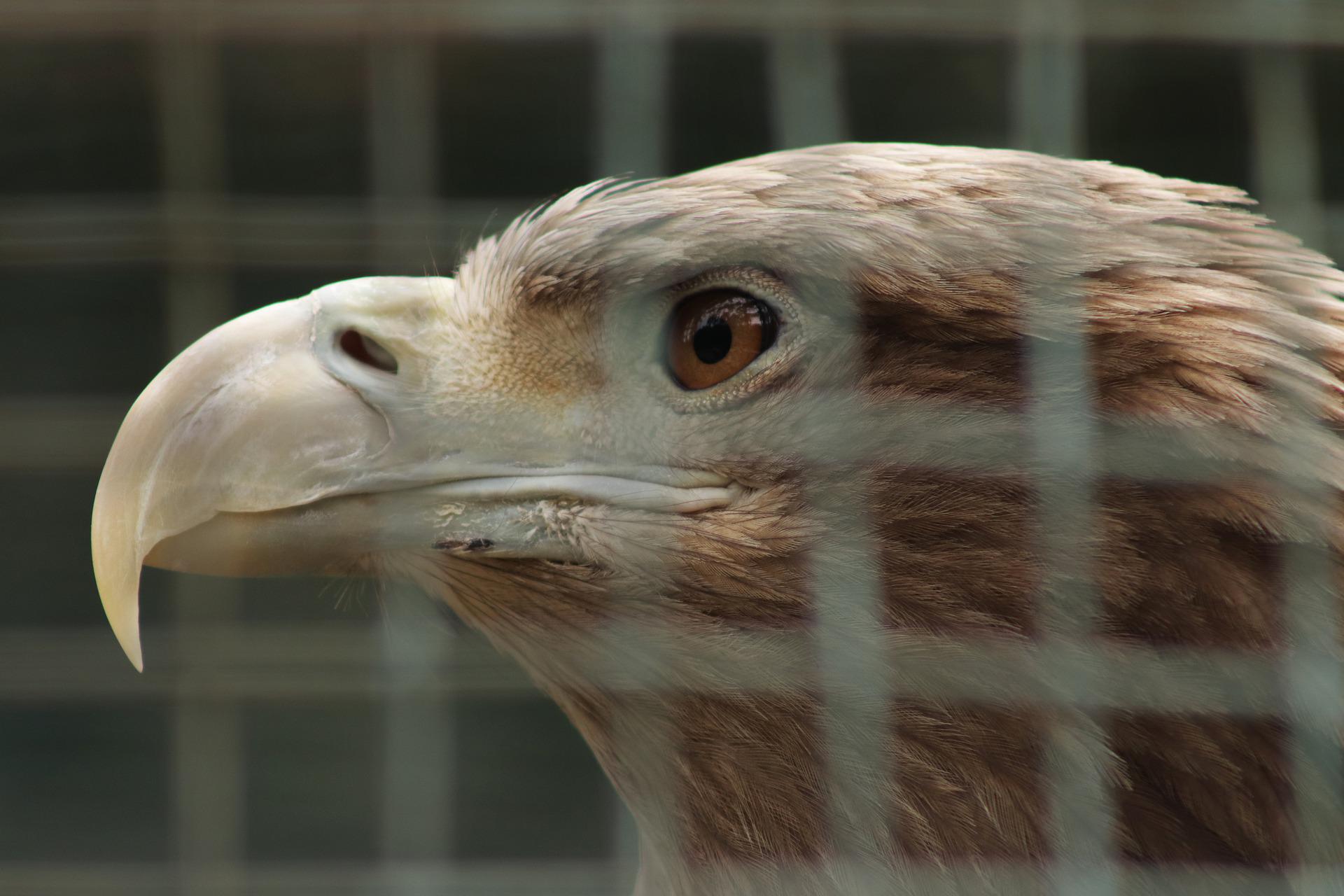
Birds of prey are large predators, and falconers develop a strong bond with these animals, but where do they leave them when they are not hunting?
It is a common misconception that falconers keep their birds in cages. The truth is that these birds are usually only kept in their mews when they are not being used for hunting, and in some cases, falconers keep them indoors, even in garages or large separate enclosures outdoors.
Many falconers prefer to avoid locking up their birds as much as possible, and they are also split when it comes to how long the bird should be caged, so we will let you decide. Read on and let the information help you make your decision.

Birds of prey and their cages
As any falconer knows, keeping birds of prey is a serious responsibility. These animals are wild, and they need special care and attention in order to thrive. Therefore, one of the most important considerations for any falconer is where to keep their birds. Most falconers build a unique structure called a mew to house their birds. A mew is typically large enough to allow the bird to stretch its wings and move around, and it is usually outfitted with perches, perches, and other features to keep the bird comfortable.
The average mew is typically between 10 and 20 feet long. In addition to the size of the mew, it is also essential to consider how many hours a day the bird will be kept in the mew. Falconers typically keep their birds in the mew for 4-6 hours a day, but this can change depending on the species and the falconer’s schedule. It is also essential to make sure that the mew is safe for the bird. The bird cage should have no sharp edges or exposed wires, and the door should be secure enough to prevent the bird from escaping. By taking these factors into consideration, any falconer can provide their bird with a safe
Can a falconers bird escape it’s cage
When a bird escapes, every moment counts. The bird may be disoriented, injured, or lost; the sooner it is found, the better. That’s why falconers take such care to prevent their birds from escaping in the first place. These birds are bred in captivity and are well-trained. In addition,
falconers typically use bells and GPS tracking devices to help keep track of their birds. If a bird does happen to escape, the falconer will usually go into search mode to find it. This may involve contacting other falconers in the area, setting up a search grid, or even enlisting the help of a canine search team. Time is of the essence when a bird is lost, but with careful planning and quick action, there’s a good chance that the bird will be safely reunited with its owner.
Do you need a large space to house falcons?
Falcons are remarkable birds of prey, renowned for their speed, agility, and keen eyesight. Though they have been hunted for centuries, today, they are primarily used for sport. If you are considering training a falcon, you should know a few things about their housing requirements. Falcons do not require a large amount of space to be housed and can be kept in a variety of different cages. However, providing them with plenty of room to move around and exercise is vital. If you are not able to provide your falcon with enough space, then it may be best to find another bird to train and hunt with.
Falcons are also very social creatures and need companionship to stay healthy and happy. So, suppose you’re not able to provide your falcon with another bird as a companion. In that case, you’ll need to spend extra time interacting with your bird on a daily basis. By understanding falcons’ housing and social needs, you can provide your bird with the best possible care and ensure a long and prosperous life together.
Can birds of prey survive in confined spaces?
Raptors are, without a doubt, some of the most magnificent animals in the world. Unfortunately, they are also some of the most dangerous, and as a result, they require a great deal of space in which to roam. If you are considering training a bird of prey, it is crucial to make sure that you have enough space to provide for the animal.
Falcons, for example, need at least two hundred square feet of space in which to hunt and exercise. If you cannot provide this level of space, you may need to consider finding another animal to train and hunt with. While smaller birds of prey can survive in smaller spaces, they will not thrive and may eventually become sick or even die. It is therefore important to know these animals’ space requirements before committing to take one on.

What is a raptors cage called?
A mews is a structure that is specifically designed for housing birds of prey. It is typically made out of stone or brick and has a slanted roof to keep the birds dry. There are generally several perches in the mews, as well as nesting boxes and a water dish. Birds of prey are captive birds that are used in falconry, which is the sport of hunting with trained raptors.
Raptors are typically hooded and flown from a falconer’s glove, who uses them to take down game. The mews provide a safe and comfortable place for the birds to rest when they are not being used for hunting. The mews not only keep the birds protected from the elements but also keep the birds away from animals that could harm them.
How many hours per day are raptors kept locked up
While some people may think that falconers keep their birds locked up in cages all day, the truth is that they only do this when the birds are not being used for hunting. In most cases, falconers allow their birds to roam free when they are training or hunting with them. By doing this, they keep the birds healthy and happy by providing activity. When these raptors are not used they are caged and kept away safely.
Birds of prey, such as falcons, are too big for standard cages, and their home is called a mew. A small backyard may mean that you do not want to pursue bird of prey ownership as this will affect your bird negatively.