
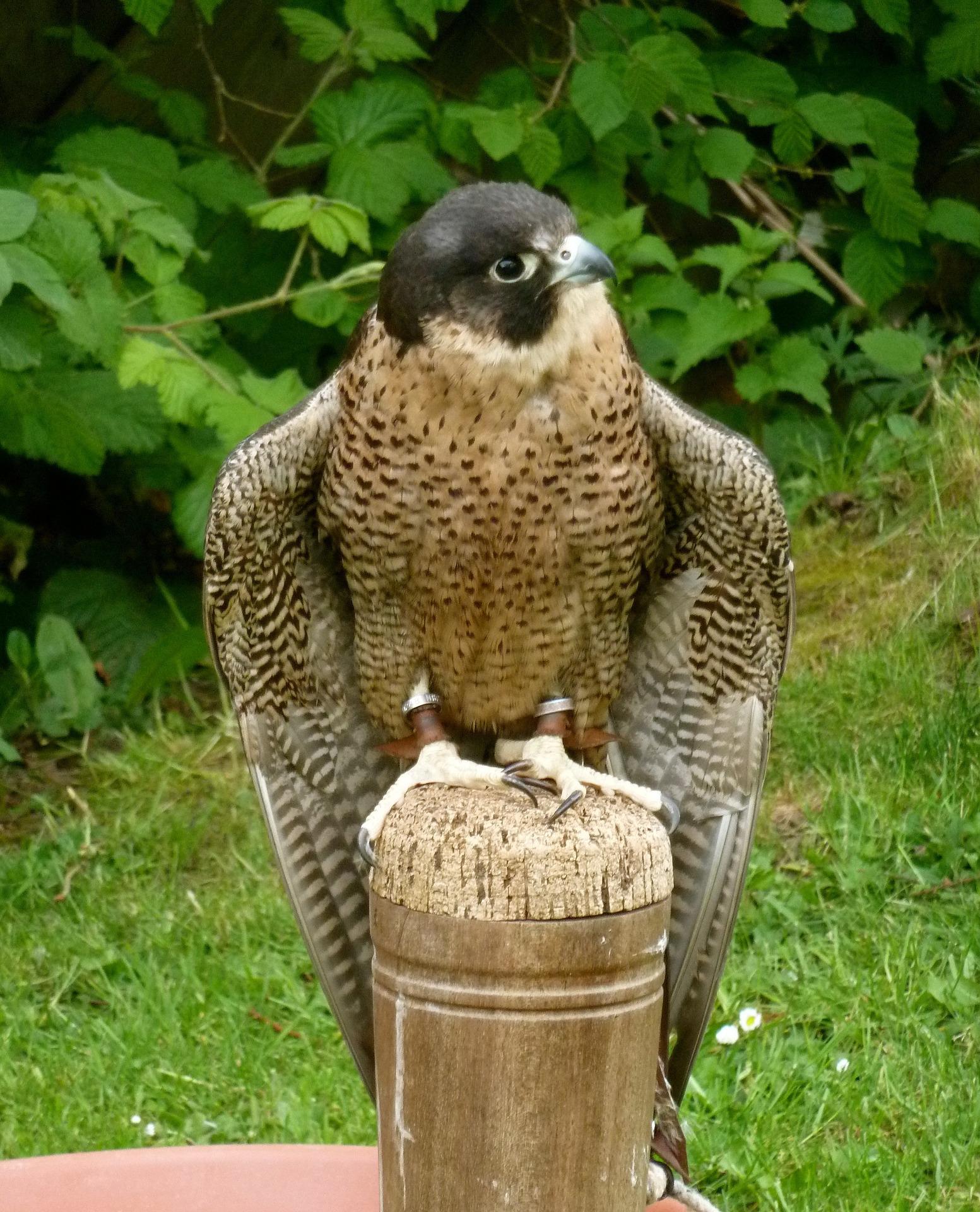
Many types of peregrine falcons are found worldwide, including the beautiful peregrine falcon. These birds have amazing hunting skills and can dive at speeds up to 200 miles per hour to catch their prey. Peregrine falcons are also remarkable breeders and can successfully raise chicks in captivity.
In order to breed peregrine falcons in captivity, one can either opt for natural pairings or artificial insemination. Artificial insemination is the process of inseminating a female bird with sperm from a male bird that she is not paired with. This is typically done using a syringe. On the other hand, natural pairings involve letting the birds choose their own mates.
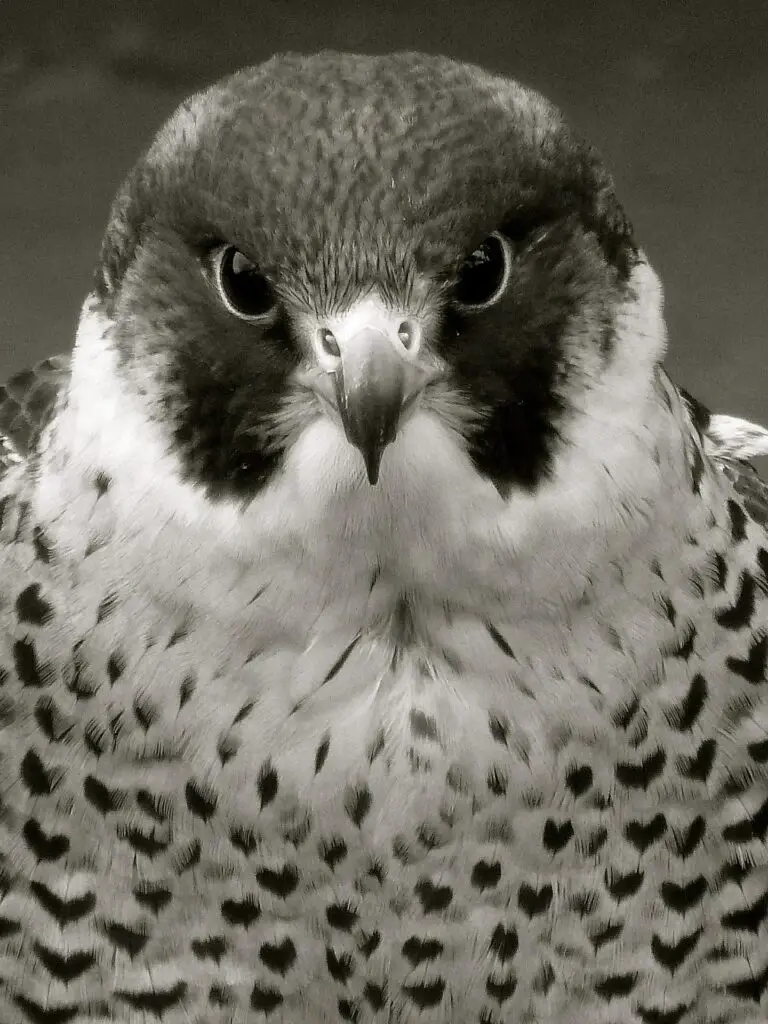
This blog post will closely examine how peregrine falcons breed in captivity. We will explore the unique methods that zoos use to ensure the success of these breeding programs, and we will learn about some of the challenges that zoo staff face when trying to breed these birds. Stay tuned for more information!
Do falconers like to breed their peregrines?
While some falconers breed their peregrines, it is not a sports requirement. Peregrine falcons are wild birds, and as such, they are not easy to train or manage. For this reason, many falconers prefer to work with birds that have already been trained. However, breeding peregrines can be a rewarding experience and provide falconers with a greater sense of connection to their birds. Additionally, breeding peregrines can help ensure the species’ long-term viability. Peregrine falcons were once endangered, but their numbers have begun to recover thanks to captive breeding programs. As a result, breeding peregrines has become an important conservation effort. Although, at the same time, not all falconers breed their birds, those who do often find it to be a gratifying experience.
How do falconers introduce male and female peregrines for reproduction?
When it comes to reproducing peregrine falcons, things are a bit different than your typical animal. For animals like sheep and chickens, the female is often Socialized with the male for a certain period before they breed so that the process can be more successful and less aggressive. However, with peregrine falcons, it’s actually quite the opposite. It’s recommended that male and female peregrines should NOT be socialized with each other prior to breeding because it can result in a much more aggressive environment. Instead, what most falconers do is they’ll introduce the two birds to each other in what’s called “the Eyrie,” or the place where the female builds her nest (usually on a cliff face). The male will usually be introduced first and establish himself in the area. After a few days, the female will then be introduced. And once she arrives, the two will go through a courtship ritual that often involves lots of screeching and chasing (but no physical contact). After a few days of this, they will finally mate. And once they’ve mated, they will usually remain together for life.
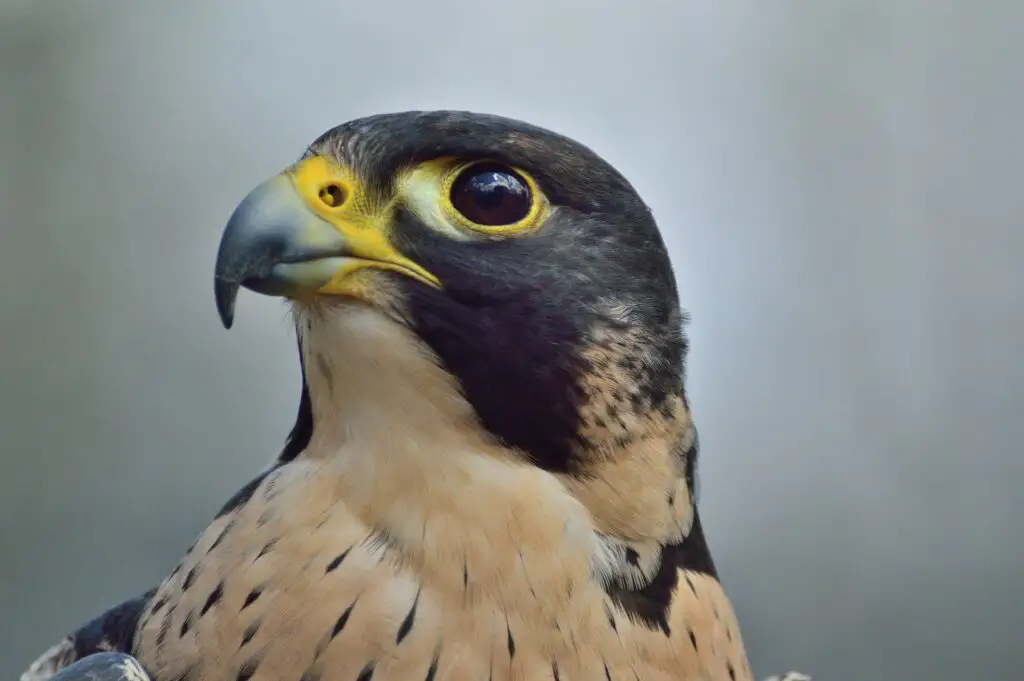
The breeding season for peregrines
The peregrine breeds extremely early in the year, with most clutches being laid in February and March. The female will scrape out a small shallow depression in the substrate in which to lay her eggs, or if no appropriate site is available, she will use an old stick nest or building ledge. Four or five eggs are usually laid and incubated for 29-32 days before hatching. The chicks are born covered in downy feathers, and their eyes are closed. They grow rapidly, fledging at around 42 days old. Peregrines reach sexual maturity at one to two years old. In England, the breeding season is from March to August, with two broods often raised. However, in Scotland, where there is a longer period of daylight, peregrines can breed throughout the year. Birds that breed later in the season often have more success as they can take advantage of an abundance of prey items deposited by earlier nesters. This results in them fledging larger young, giving them a greater chance of survival during the first winter.
Experienced pairs of peregrines often have higher rates of successful reproduction than first-time breeders. Breeding habitat includes coastal cliffs, river gorges and rocky outcrops inland, as well as urban areas such as bridges and tall buildings. Non-breeding birds can be found throughout Europe, Asia, and parts of Africa and North America. Peregrines are generally monogamous, although extra-pair copulations do occur. Pairs usually remain together for several years, but if one partner dies, another will quickly be found to take its place. Both sexes participate in nest site selection, and both help build the nest, although the male does most of the hunting to bring food back to the female and chicks during the breeding season. Outside of the breeding season, peregrines are highly sociable birds and can often be seen hunting in small groups or roosting communally. Although they don’t migrate over long distances like some other bird species, they will often move to lower altitudes in winter when prey becomes scarcer at higher levels.
Do falcons lay eggs?
Falcons are a type of bird of prey, and like all birds of prey, they lay eggs. Falcons generally lay between two and four eggs at a time, and the incubation period is around 32 days. The female does most of the incubating, although the male will take over for short periods of time so that she can eat and stretch her wings. Once the chicks hatch, they are covered in downy feathers and have closed eyes. They will stay in the nest for around six weeks before leaving to fend for themselves. Falcons typically live for around 15 years in the wilderness but can live up to 20 years old.
How many eggs do peregrine falcons lay?
Females lay between 2 and 4 eggs per clutch and usually produce 1 or 2 clutches per year. Approximately 33 days after the eggs hatch, the young birds fledge (leave the nest). Peregrine falcons have a lifespan of 15 years in the wild, though the average lifespan is only about five years.

Do female peregrines incubate their eggs, or does the falconer take them away and keep them in a hatcher?
The female will do most of the incubating, though the male will occasionally take over for short periods. Once the eggs hatch, the chicks are altricial, which means they are born naked and helpless. Both parents will help to care for the young, though the female will do most of the hunting while the male stands guard. If the eggs are taken away by a falconer, they will be placed in a special incubator that mimics the conditions of a nest. The falconer will then take on the role of parent, providing food and shelter for the chicks until they are ready to be released into the wild.