

Do you know why peregrine falcons scream? I didn’t either until I did some research on the matter. There are a few reasons why these birds might let out a loud screech. This piercing noise can be heard from a distance, but what exactly causes them to make it?
One reason is to startle their prey before they catch it. Another reason is to communicate with other falcons. They also scream when they’re angry or frightened. Another reason could be to announce their presence in a particular area. By screaming, they are letting other birds know that this is their territory and to stay away.
Peregrine falcons also use this loud sound to establish dominance over others. They want to make sure everyone knows who is the flock’s leader, so we will explore why these birds make this noise and what it means for them.

What causes a falcon to scream
Falcons are known for piercing screams, reaching up to 140 decibels. Though it might sound like the falcon is in pain, this is actually its way of communicating. Falcons use their screams to communicate with other falcons and warn off potential predators or competitors. When a falcon screams, it essentially says, “I’m here, and I’m not afraid to defend my territory.” The louder and more frequent the screams, the more likely it is that the falcon will be triumphant in defending its territory. In addition to being used as a form of communication, screaming also helps falcons release excess energy and frustration. So next time you hear a falcon’s scream, remember that it’s just the bird’s way of expressing itself.
Do captive-bred falcons scream more than wild falcons?
According to a study published by experts of Raptor Research, captive-bred peregrine falcons are more likely to scream than their wild counterparts. The study found that captive-bred falcons in falconry were likelier to emit a high-pitched scream, known as “keening,” when placed in a new environment. The researchers believe that this behaviour may be due to the fact that captive-bred falcons are less accustomed to the presence of humans and other animals. As a result, they may be more likely to view anything new as a potential threat. While the study did not specifically address why wild falcons are less likely to scream, they may have more experience dealing with new situations. Regardless of the reason, it is clear that captive-bred peregrine falcons are more likely to scream than their wild counterparts.
How far away can you hear falcons scream?
Peregrine falcons are one of the most vocal birds of prey, and their screams can be heard from quite a distance away. While they typically use vocalizations to communicate with each other, they will also scream when they are feeling threatened or excited. Peregrine falcon screams can reach up to 115 decibels, comparable to a loud motorcycle’s noise level. This makes them one of the noisiest birds in North America. While peregrine falcons can be heard from up to 1.5 miles away, their screams are usually only audible to humans from about 0.3 miles away. However, suppose you are lucky enough to hear a peregrine falcon scream in person. In that case, it will surely be an unforgettable experience.
Does a falcon scream when hunting, and does this affect their hunts?
Falcons are known for their screeching cries, which can often be heard long before the bird is seen. But many people need to realize that these cries serve an essential purpose. Falcons use their calls to communicate with one another and startle and disorient their prey. When a falcon screams while hunting, it is often trying to locate its prey or signal to another bird that it is around and not afraid. While the screech may seem like a hindrance, it helps the falcon become a more effective hunter. In addition, the cry can also help to scare away other predators that may be competing for the same food source. As a result, the falcon’s screech is an integral part of its hunting strategy.
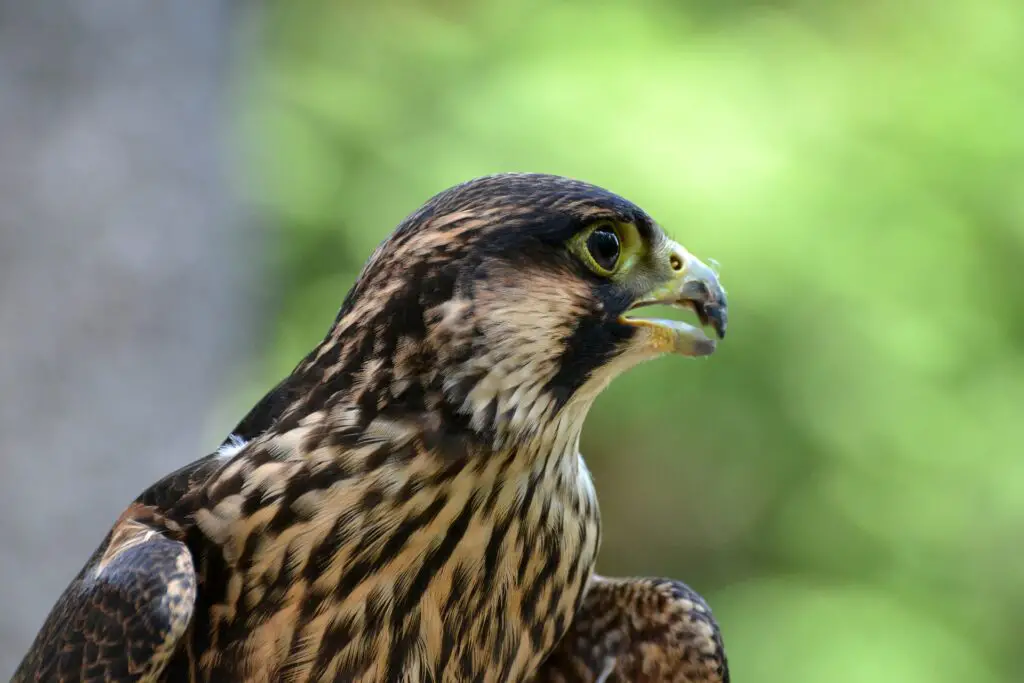
Do falcons scream to assert dominance?
While the cry of a falcon is often associated with power and fear, the reasons for this vocalization are more complex. Falcons are predator birds, and their screams are thought to serve two primary purposes: stunning prey and asserting dominance over other predators. When hunting, a falcon will often scream just before striking its game. The loud sound is believed to disorient the animal, making it easier for the falcon to make a successful kill. In addition, falcons are known to be highly territorial, and their screams can be directed at both intruding animals and potential mates. By screaming, a falcon is able to show strength and assert its dominance over others. While the cry of a falcon may seem intimidating, it actually serves an essential purpose in the survival of these magnificent birds.
Does separating young peregrines from their parents too early make them scream more?
Every year, young peregrine falcons are taken from their nests and placed in captivity with falconers to be trained for hunting. However, some experts have raised concerns that this process may be harmful to the birds. For example, one study found that separating young falcons from their parents too early can lead to increased stress and anxiety levels, which manifests in excessive screaming. The study’s authors suggest that this type of stress may negatively impact the birds’ health and make them more challenging to train. While more research is needed to confirm these findings, it is clear that separation from their parents can be detrimental to young peregrine falcons.
Do falcons cry
It’s well known that many birds vocalize, but whether or not falcons cry has been more difficult to determine. Falcons are notoriously tricky to study in the wild, so there is still much that we don’t know about their behaviour. However, there have been a few reports of falcons crying or appearing to cry. In one instance, a captive bird was reported to have teardrops on its face after being separated from its mate. These reports may be simple cases of birds misting up due to emotional stress, but it’s also possible that falcons do indeed cry. More research is needed to confirm one way or the other.
The Peregrine Falcon can see a lot further than we can. This fantastic ability allows them to spot their prey high in the sky. We should all be amazed by this and learn more about these birds to protect them if your are interested in falconry, there is a registered centre just around the corner from you so speak a a qualified falconer for more information