
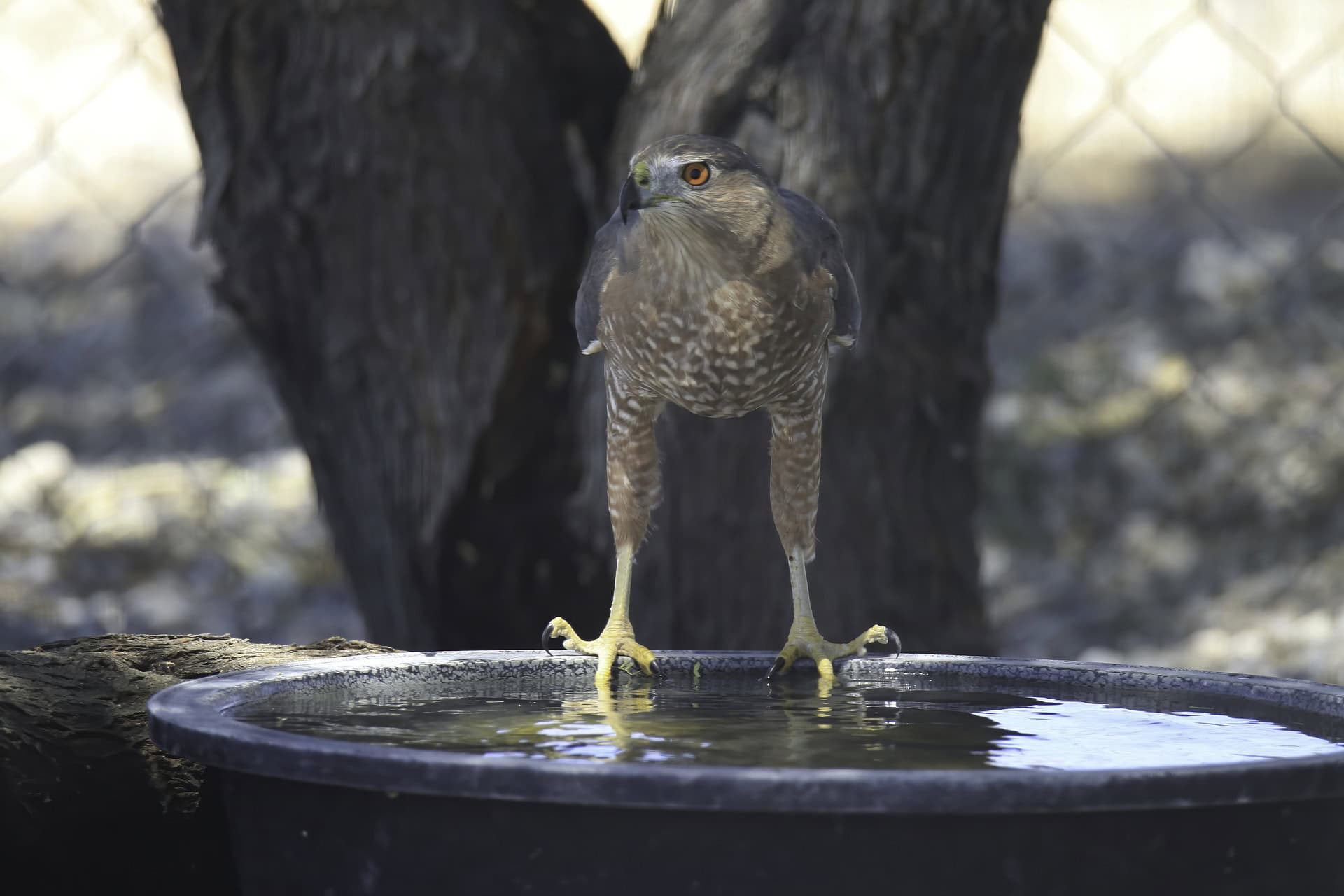
Bathing is an essential part of the grooming regime for birds of prey. Not only does it keep their feathers clean and looking shiny, but it also helps to maintain their health. However, bathing a bird of prey can be quite a challenge, as these majestic creatures are not particularly fond of water. In this guide, we will discuss the methods I use to bathe my birds of prey.
Bathing birds of prey
When bathing birds of prey, I gently spray them with lukewarm water to relax them and prepare their feathers. Birds of prey have specialized feathers that require regular cleaning to maintain functionality. Lukewarm water helps remove dirt, dust, and debris from their feathers. I spray the water from a distance to avoid distressing the birds, then use a soft brush to scrub their feathers, paying extra attention to areas around their beaks and talons.
When bathing your raptor, on the odd chance, you should only ever use avian shampoos. Avoid using too much, try to keep the process as natural as possible and ensure that any soap or shampoo are thoroughly rinsed before moving on.
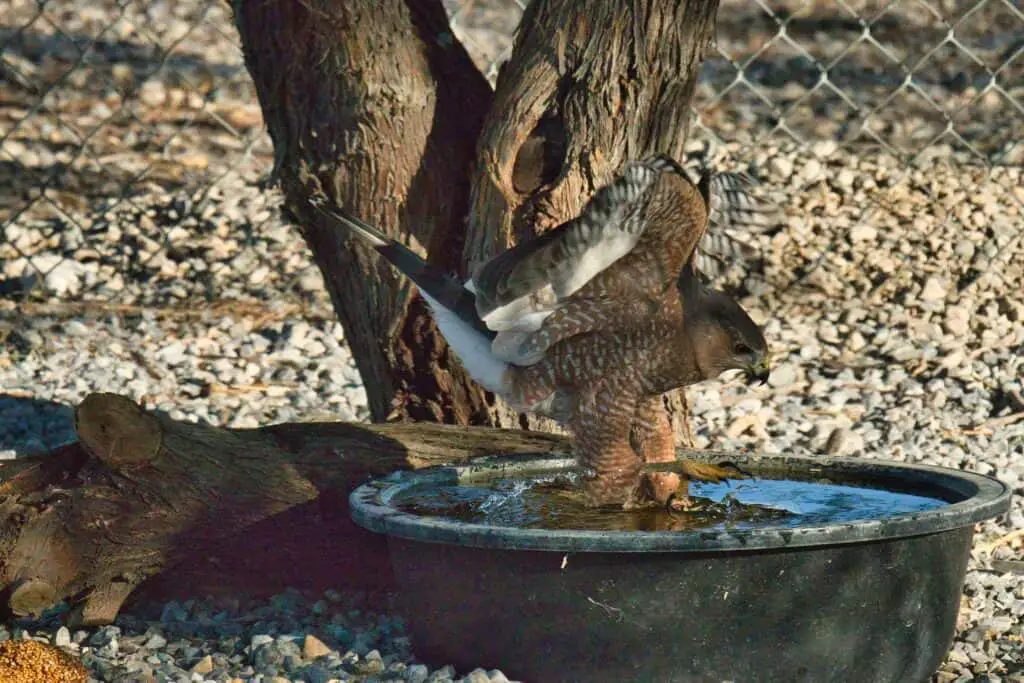
You should keep in mind that this process is a natural process, and raptors should be provided the equipment to do this on their own. But circumstances can arise, and your bird can become dirty, or maybe during the molt if you wish to dislodge feathers easily or soothe itching skin. In some cases, your raptor may have excessive debris or dirt built up from a hunt or routine training. Only then should you consider bathing on your own; otherwise, let the raptor do it itself.
Why is Bathing Important for Birds of Prey?
Birds of prey have a unique oil gland near the base of their tail feathers. This gland produces an oily substance that the bird spreads over its feathers during grooming. In this way, this oil prevents the feathers from becoming wet, aiding in flight and protecting them from the elements. However, this oil can build up over time and make the feathers look dull and dirty. Keeping the feathers clean and healthy requires regular natural bathing to remove excess oil.
Tips for Bathing Birds of Prey
- Always use lukewarm water, as birds of prey are sensitive to extreme temperatures.
- Avoid using any harsh chemicals or soap when bathing a bird of prey. Plain water is sufficient for cleaning their feathers.
- Use a soft brush or even your fingers to gently scrub the feathers and remove any dirt or debris.
- Keep the bathing experience short and sweet to avoid stressing out the bird. A few minutes is usually enough time for them to get clean.
- Always monitor the bird’s body language and behaviour, and stop if they show signs of distress.
- Allow them to this on their own as much as possible.
- Bathing should be done at the warmest part of the day.
Grooming techniques for birds of prey
Grooming is essential to caring for birds of prey, as it helps prevent feather damage, promote feather health, and maintain overall hygiene. Here are some grooming techniques that I find helpful:
- Regular feather inspection: I carefully examine their feathers for signs of damage, such as broken or frayed edges, and take necessary steps to address any issues.
- Feather cleaning: Dirt and debris should be gently removed from the feathers using a soft brush or cloth, being cautious not to damage the delicate plumage.
- Nail trimming: I regularly trim my bird’s nails to prevent them from becoming overgrown, which will lead to discomfort and difficulty perching.
- Beak maintenance: Your bird should have appropriate chewing materials to help keep its beak in good condition, as a well-maintained beak is crucial for hunting and feeding.
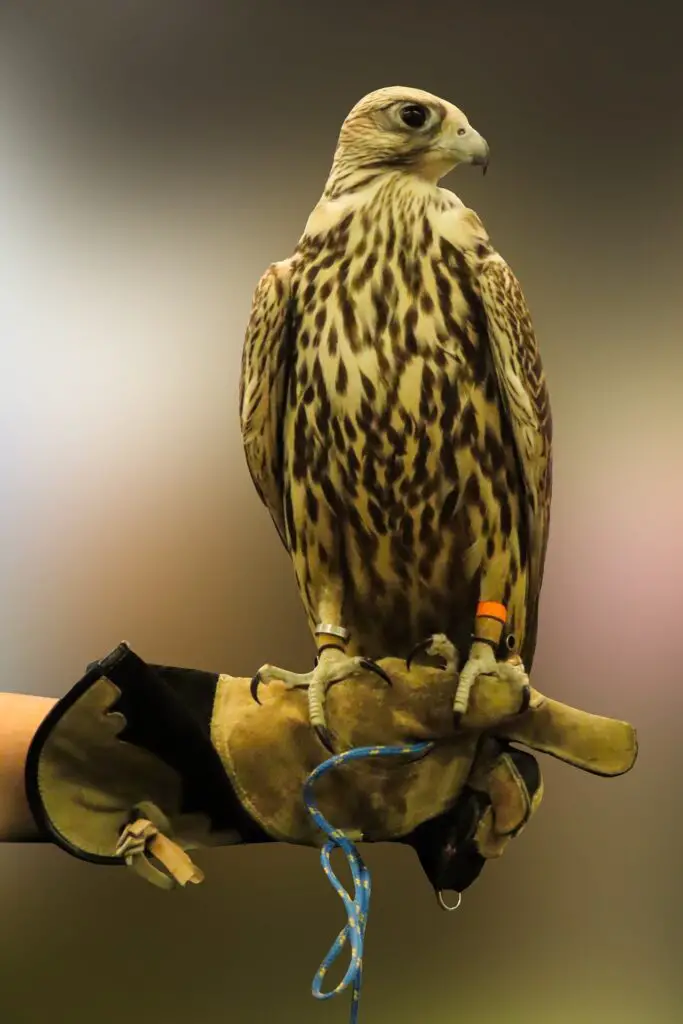
Bathing for birds of prey is a crucial part of their health and care routine, ensuring their feathers remain healthy and free from dirt and debris. By following proper grooming techniques, such as using a gentle spray of water and avoiding strong shampoos, owners can maintain the well-being of their feathered companions.
Frequently Asked Questions
Can Birds of Prey Be Bathed Indoors?
- Yes, birds of prey can be bathed indoors. However, it is important to create an environment that simulates their natural surroundings. Providing a shallow basin with lukewarm water and a perch for the bird to stand on is recommended.
Are There Any Specific Products or Shampoos Recommended for Bathing Birds of Prey?
- There are specific products and shampoos recommended for bathing birds of prey. These products are formulated to be gentle on their feathers and skin, ensuring a proper and safe cleaning.
Can Birds of Prey Be Bathed in a Regular Bird Bath, or Should a Specialized Bathing Area Be Provided?
- It is recommended to provide a specialized bathing area, such as a shallow dish with a rough surface for grip, to ensure their safety.
Are There Any Precautions or Safety Measures to Keep in Mind While Bathing Birds of Prey?
- There are several precautions and safety measures to remember while bathing birds of prey. It is important to handle them carefully, avoid getting water in their eyes, and ensure their feathers are properly dried to prevent health issues.
Curious to learn more about falconry? Dive into our related topics below: