

When training a bird of prey, such as a hawk or falcon, the use of jesses is essential. Jesses are thin strips of leather or nylon that are attached to a bird’s legs and used to secure them during training and handling. They serve as an important tool in both the safety of the bird and the handler. Let’s explore the significance of these seemingly simple yet essential tools.
The Purpose of Jesses in Training
In falconry training, the use of jesses serves as essential tools for handling and controlling birds of prey effectively. Jesses are leather straps attached to a bird’s legs, providing a means of control during training sessions. These straps allow the falconer to maintain a secure hold on the bird without causing harm. By using jesses, we can guide the bird onto our gloved hand, ensuring a safe and controlled interaction. Additionally, jesses aid in preventing the bird from flying away during training exercises, giving the falconer a level of influence over the bird’s movements.
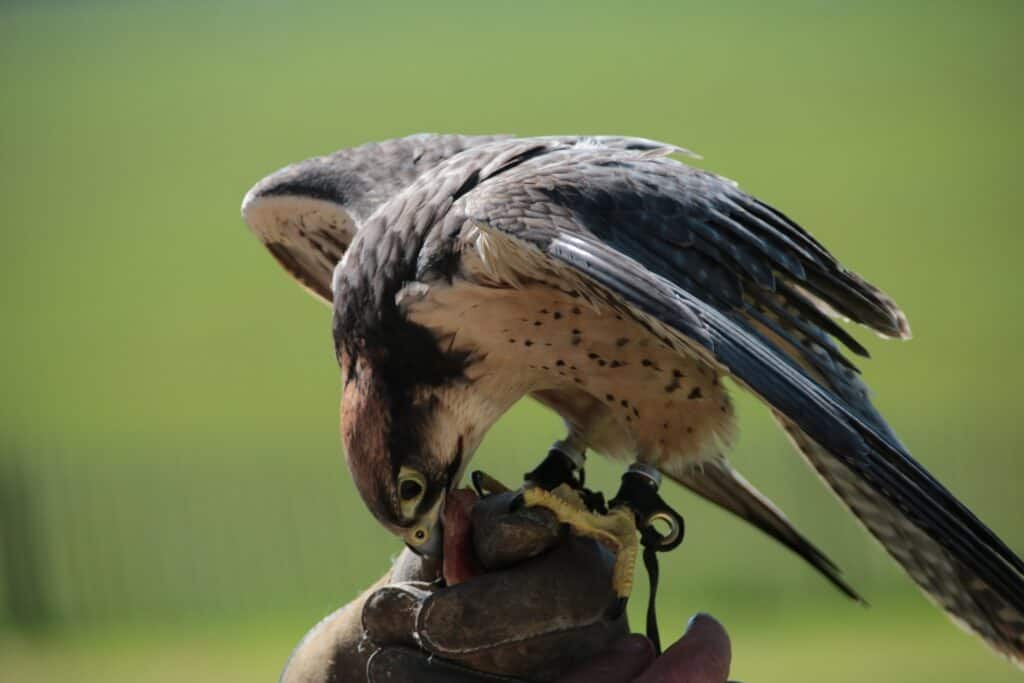
Through my years of experience in falconry, I’ve found that jesses are crucial for training. The use of jesses instils trust and confidence in the bird as it learns to rely on the falconer for guidance and support.
Safety Measures With Jesses
Implementing proper safety measures when handling birds of prey with jesses is paramount for both the falconer and the bird’s well-being. When working with these magnificent creatures, ensuring safety is paramount when aiming to prevent accidents and promote a positive training experience. Here are some vital safety measures to take into account:
- Always use high-quality jesses made from durable materials to prevent breakage or tearing.
- Ensure that the jesses are appropriately sized for your bird, as poorly fitted jesses can cause discomfort and potential harm to the bird’s legs.
- Ensure to consistently inspect the jesses’ condition and promptly replace them at the first signs of wear and tear.Practice proper handling techniques to avoid any potential harm to the bird or yourself.
By following these safety measures, we can ensure that jesses are used effectively and safely during training sessions.
Jesses for Different Bird Species
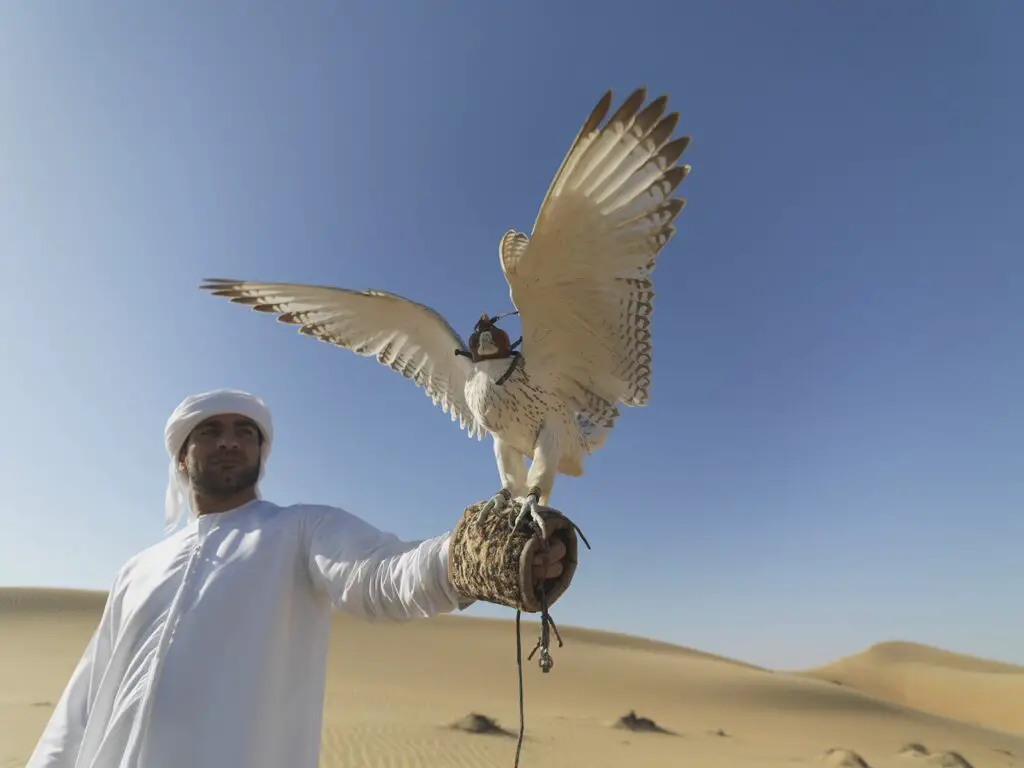
When considering jesses for different bird species, it is crucial to understand the variations in size and behaviour among the raptors to ensure the proper fit and functionality. Different birds have unique characteristics that must be taken into account when selecting jesses. For example, larger birds such as eagles require sturdier and wider jesses to support their weight and power, while smaller birds like kestrels need lighter and more delicate jesses to prevent hindering their movements.
Below is a table outlining the general Jesse recommendations for common bird species:
| Bird Species | Jesse Material | Jesse Width |
| Eagle | Leather | 1/2 inch |
| Falcon | Braided Nylon | 1/4 inch |
| Hawk | Kangaroo Leather | 3/8 inch |
Understanding the specific needs of each bird species is essential to their comfort and safety during training sessions.
Importance of Proper Jesse Fit
As mentioned earlier, proper fit is crucial for jesses to function correctly. Ill-fitted jesses can cause discomfort and even injury to the bird’s legs, hindering its ability to train effectively. Here are some key points to consider for proper Jesse fitting:
- The jesse should be snug enough to prevent slipping off the bird’s leg but not too tight to restrict blood flow.
- Leave enough room for the bird to flex its legs and move freely without any obstruction or discomfort.
- Avoid attaching jesses too low on the leg, as this can cause pressure on the bird’s joints and affect its balance during flight.
In conclusion, the use of jesses is essential in training a bird of prey. They serve as a means of control and safety for both the bird and the handler during training sessions. By implementing proper safety measures and understanding each bird species’ unique needs, we can ensure that jesses are used effectively and comfortably for our birds.
Frequently Asked Questions
Can Jesses Be Used on All Types of Birds of Prey, or Are There Certain Species That Shouldn’t Wear Them?
- Like a tailored glove, jesses should suit each bird. Certain species, smaller or with different hunting styles, may not benefit from jesses. It’s crucial to consider a bird’s nature and needs before utilizing them.
How Often Should Jesses Be Replaced or Adjusted to Ensure They Fit Properly?
- I replace or adjust jesses regularly to ensure proper fit. This maintenance is crucial for the safety and effectiveness of training sessions.
Are There Any Alternative Methods for Training Birds of Prey That Don’t Involve Using Jesses?
- While it’s possible to train birds of prey without jesses, it’s essential to consider the safety and control they provide. Alternative methods like free-flight training require extensive expertise, time, and trust-building with the bird.
Check Out Our Related Articles below:
Behavioural Issues Among Birds of Prey – How to Fix It
The Step-by-Step Manning Process for Raptors in Falconry
Training Birds of Prey with Positive Reinforcement: A Step-by-Step Falconry Guide