Manning is the foundational building block of falconry training. This critical process acclimates your raptor to humans and the human world, establishing trust between you and your bird. Through careful, consistent handling, you’ll transform a nervous, wild-spirited bird into a calm hunting partner who works confidently alongside you.
After successfully manning dozens of birds over the years, I’ve found that following a structured approach yields the best results. This guide outlines the exact process I use when introducing a new raptor to the world of falconry.

What is Manning?
Manning is the process of taming a raptor and acclimating it to human presence, handling, and the general human environment. This doesn’t mean domesticating the bird—rather, it’s about building enough trust that the bird remains calm and confident while working with you. The better manned a falconry bird is, the less likely it will be to engage in fight-or-flight responses around people.
The manning process typically includes:
- Getting the bird comfortable with human handling
- Acclimating it to household environments
- Introducing other pets, family members, and common stimuli
- Teaching the bird to accept food from you
- Building trust through consistent, positive interactions
Preparation Before Manning
Equipment Needed
Before beginning the manning process, ensure you have all the necessary equipment ready:
| Equipment | Purpose |
|---|---|
| Well-fitted hood | Keeps the bird calm during stressful situations |
| Proper glove/gauntlet | Protects your hand and provides a steady perch |
| Jesses | Leather straps for restraint and control |
| Leash | Secures the bird during training |
| Scale | For daily weight monitoring |
| Mews/housing | Secure, comfortable living quarters |
| Perch | Appropriate for your species of raptor |
| Quality food | For rewards and weight management |
Weight Management Considerations
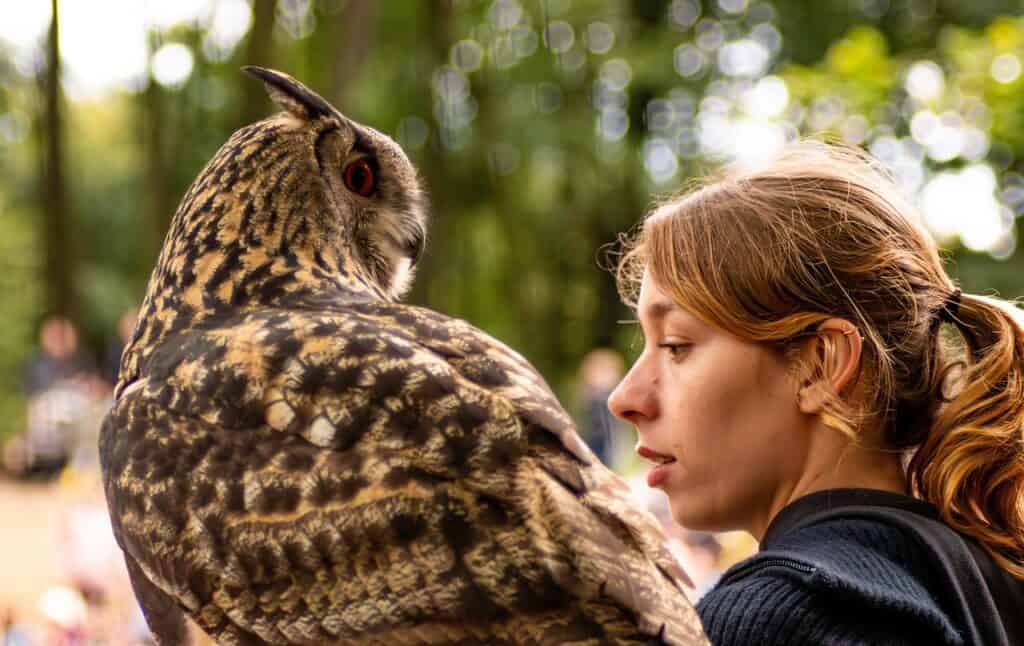
Before starting the manning process, establishing the correct weight for your bird is crucial. A bird that’s too heavy will be unresponsive and unmotivated; if it is too light, it will be stressed and aggressive.
Weigh your bird upon first receiving it to establish a baseline.
During the manning process, you’ll typically maintain the bird at a slightly higher weight than the eventual flying weight to reduce stress while still encouraging food motivation.
The Manning Process: Step by Step
Day 1: First Contact and Initial Handling
Step 1: First Transfer
When first bringing your raptor home, keep movement minimal and voices low. Transfer the bird to your glove carefully, supporting its body if needed.
Step 2: Initial Hood Training
For many species, especially falcons, immediately hooding the bird helps reduce stress. The hood eliminates visual stimuli that might trigger bating (attempting to fly from the fist while tethered).
Step 3: Extended Handling Sessions
The first day involves simply having the bird on the glove for extended periods—typically 2-3 hours at a time. During this time:
- Speak quietly and consistently
- Move slowly and deliberately
- Maintain a calm, confident demeanor
- Allow the bird to bate if it happens, but calmly return it to the fist
Remember that bating is normal and expected. The bird may bate every time you blink at first but will gradually settle as it realizes you’re not going to eat it.
Days 2-3: Building Familiarity
Step 4: Household Acclimation
Expose your bird to normal household activities while on the glove:
- Television sounds
- Family members moving about
- Normal conversation levels
- Various rooms in the house
Step 5: Introduction to Food Taking
Once the bird has calmed somewhat on the fist (usually by day 2 or 3):
- Offer small tidbits of food directly from your gloved hand
- Start with tiny pieces that can be swallowed easily
- Offer food when the bird seems most calm and steady
- Don’t force feed—let the bird decide when to accept food
When the bird takes food willingly from your hand, you’ve achieved a significant milestone in the manning process.
Days 4-7: Advancing Trust
Step 6: Step-Up Training
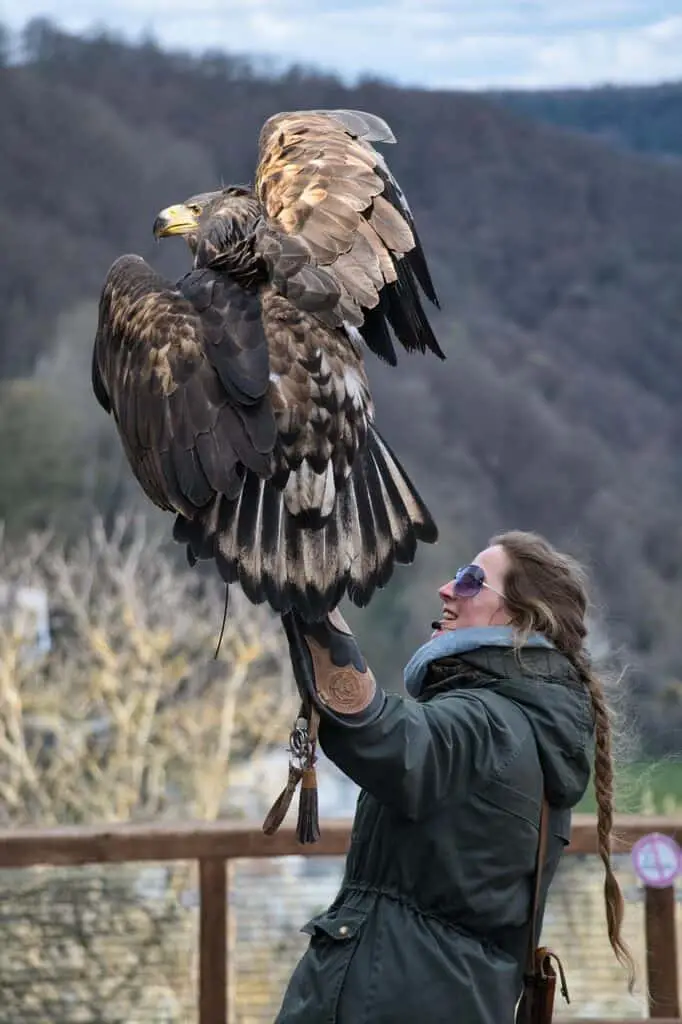
Teaching your raptor to step onto your glove voluntarily is a critical skill:
- Place the bird on a perch at chest height
- Offer food on your glove near the bird’s feet
- Allow the bird to step onto the glove to obtain the food
- Gradually increase the distance from perch to glove
This may take patience, as some birds can be remarkably flexible in trying to reach the food without actually stepping up.
Step 7: Environmental Expansion
Begin introducing additional environmental factors:
- Other household pets (at a safe distance)
- Outdoor sounds and sights
- Car rides (if needed for your hunting style)
- Various weather conditions
Week 2: Solidifying Behavior
Step 8: Routine Establishment
By now, a consistent daily routine should be established:
- Morning weighing
- Manning sessions (2-3 hours total, possibly split throughout the day)
- Food rewards for desired behaviors
- Progressive exposure to new stimuli
- Return to mews for rest periods
Step 9: Testing Steadiness
Test your bird’s comfort level with various potential stressors:
- Having strangers approach (slowly and carefully)
- Unexpected but typical noises
- Movement of objects in the bird’s field of vision
- Handling by you in different positions
Common Challenges and Solutions
Problem: Excessive Bating
If your bird continues to bate frequently after several days:
Solutions:
- Check weight (may be too low, causing stress)
- Ensure the hood fits properly if using one
- Reduce environmental stimuli temporarily
- Increase handling time in completely quiet settings first
- Use a smaller, more confined space for initial sessions
Problem: Refusing Food
Solutions:
- Check weight (maybe too high)
- Offer more appealing food items
- Ensure proper handling technique isn’t intimidating the bird
- Try offering food at different times of day
- Reduce any potential stressors during feeding attempts
When to Move Forward
The initial intensive manning process typically takes 7-14 days, though this varies by species and individual bird temperament. You’ll know you’re ready to move to the next training phase when:
- The bird sits calmly on your fist without bating for extended periods
- Food is taken readily from your hand
- The bird steps willingly to the glove from a perch
- Basic handling (like touching jesses and checking equipment) doesn’t cause stress
- The bird maintains focus on you despite mild distractions
Advanced Manning Considerations by Species
Different raptors require slightly different approaches:
Harris’s Hawks
Social by nature, Harris’s Hawks often man quickly and may benefit from meeting multiple family members early in the process.
Red-tailed Hawks
The classic falconry bird for beginners, Red-tails typically respond well to consistent, calm handling and develop trust relatively quickly.

Falcons
Often more high-strung than hawks, falcons generally benefit from more hood use during the manning process and typically require more patience.
Conclusion
The manning is a type of training forms the foundation of your relationship with your raptor. While the intensive phase may last only 1-2 weeks, manning, in a broader sense, continues throughout your partnership. Each successful hunt and each positive interaction further cements the trust between you and your bird.
Remember that every raptor is an individual—some man quickly while others require weeks of patient work. The key is consistency, calmness, and respect for the bird’s natural temperament. By following these steps and adapting them to your particular bird’s needs, you’ll develop a solid foundation for all subsequent training.
The manning process isn’t just about taming a wild creature—it’s about building a relationship of mutual trust and respect that will make all future hunting endeavors more successful and rewarding for both you and your raptor.
Master the Art of Falconry—Take Your Training to the Next Level
Manning is just the first step in building a successful partnership with your raptor. Want to learn advanced training techniques, hunting strategies, and species-specific insights?
Check Out Our Related Articles below: