In the ancient art of falconry, manning is the critical foundation upon which all successful bird-of-prey training is built. As falconers, we know that the relationship with our raptors begins the moment they come into our care, and this initial phase of acclimation determines everything that follows.
Manning isn’t simply a training stage but rather the development of a working relationship built on trust, consistency, and understanding. Let’s explore this fascinating process that transforms a naturally wary predator into a willing hunting partner.
Understanding Manning in Falconry
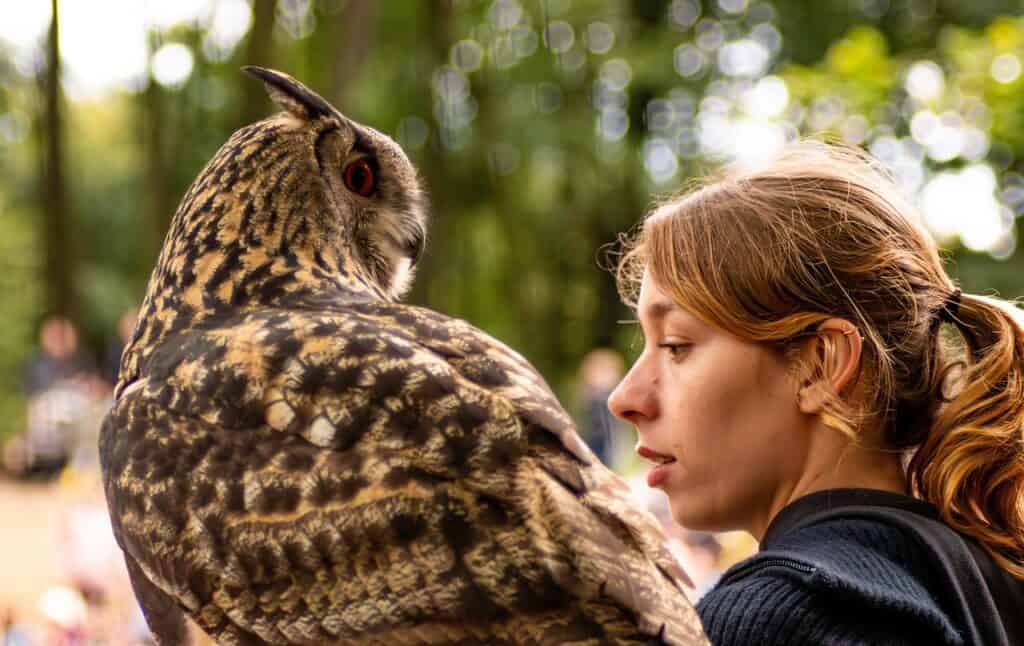
Manning is an essential part of falconry training that refers to the acclimation of a falconry bird to living and working with humans and things typically associated with humans, such as other pets, houses, or automobiles. This process is fundamentally about helping the bird overcome its natural fear of people while introducing it to its new environment.
At its core, the manning process is about building trust. The raptor must learn that we aren’t predators looking to harm it but partners who provide food and security. A well-manned bird will remain calm on the glove, accept handling without stress, and maintain composure in various situations that would normally trigger fight-or-flight responses in wild raptors.
The term “manning” directly reflects its purpose – to accustom the bird to man. This process has remained largely unchanged throughout the centuries of falconry practice, highlighting its fundamental importance to the art.
Historical Context
Traditional falconers understood that before any hunting skills could be developed, the bird needed to accept human presence without stress or fear. The process of manning has been documented in the history of falconry texts and remains one of the most consistent practices across different falconry traditions worldwide.
The Psychology Behind Manning
To approach manning effectively, it’s essential to understand raptor psychology. Whether working with a wild-caught passage bird or a captive-bred raptor, these birds possess strong survival instincts that make them naturally wary of humans.
The manning process works on principles similar to desensitization in behavioral psychology. Through repeated positive experiences with humans, particularly associated with food, the bird gradually develops tolerance and then comfort with its handler and surroundings.
A key insight: hawks return to the falconer for food, NOT for affection, and must be a little hungry when most types of training. This understanding shapes everything about the manning approach.
Key Steps in the Manning Process
Initial Handling and Trust Building
The manning process begins immediately upon receiving your bird. Those first interactions set the tone for your relationship. Speaking softly, moving slowly, and providing a consistent, quiet environment helps establish that you’re not a threat.
Early handling should involve:
- Short but frequent sessions
- Calm, predictable movements
- Gradual introduction to handling
- Consistent positioning of the gloved fist
Weight Management Considerations
Weight management is perhaps the most technical aspect of manning. A bird at its “fat” weight will have little motivation to overcome its natural wariness. Finding the proper weight for manning requires careful observation and record-keeping.
Remember this crucial principle: HAWKS KEPT AT THEIR FAT WEIGHT DO NOT MAN, and will NEVER be trained. The bird should be hungry enough to be food-motivated but not so hungry that it becomes stressed or aggressive.
Using Food as Motivation
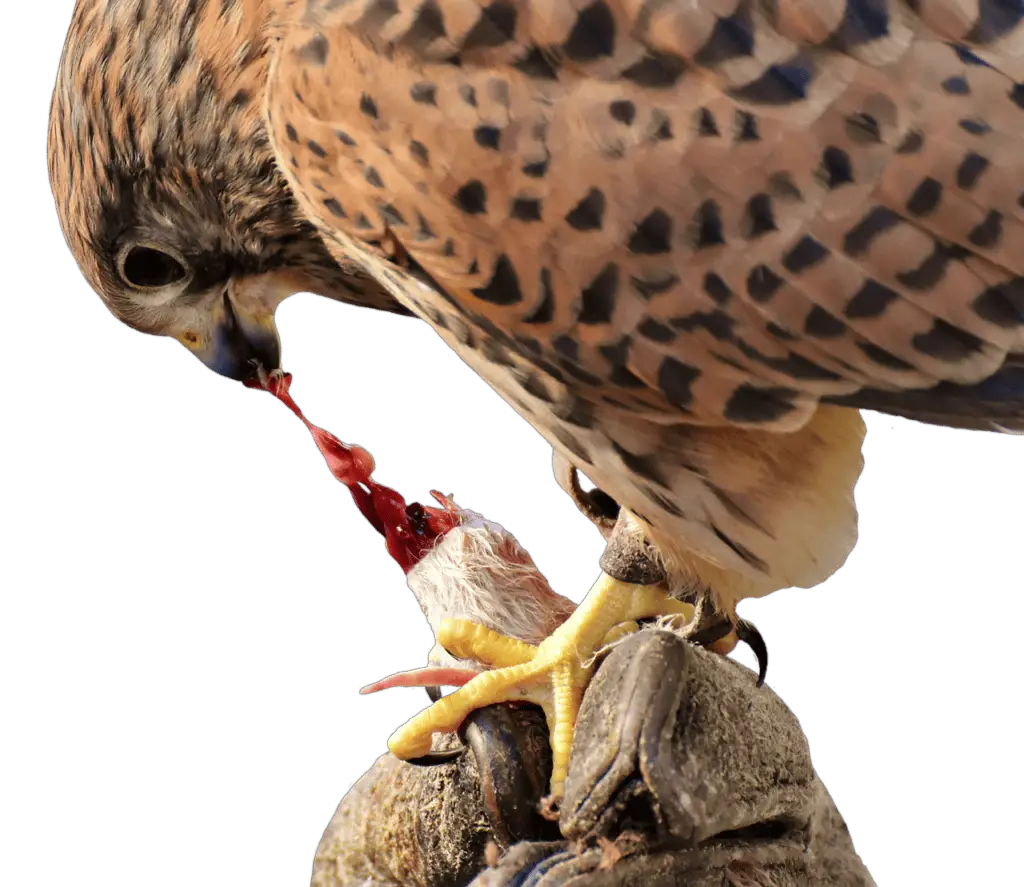
Food serves as the primary training tool during manning. Unlike companion animals that may work for praise, raptors respond most reliably to food rewards. The first major milestone in manning is often getting the bird to take food from the gloved hand.
“Tirings” are particularly valuable during this phase – these are pieces of meat with bones that take time to consume. While the bird focuses on this slow meal, it becomes accustomed to your presence, movement, and the surrounding environment.
“The longer the meal lasts, the more manning the hawk gets every day.”
A typical food progression includes:
- Accepting food dropped on the glove
- Taking food directly from gloved fingers
- Stepping onto the glove for food
- Remaining calm while eating during movement
Environmental Acclimation
Beyond human handling, manning includes introducing the bird to all aspects of its new life – household activities, other pets, vehicles, and hunting environments. This should be approached systematically, starting with quieter settings and gradually introducing more complex stimuli.
The hooded hawk can be gradually exposed to new experiences in a controlled manner. By limiting visual stimuli with the hood, you can introduce sounds, movement, and handling without overwhelming the bird.
Manning Techniques and Approaches
Traditional Manning Methods
Traditional manning often employed intensive methods that capitalized on a bird’s initial state of shock after being trapped. The “waking” method involved keeping a newly acquired bird awake for extended periods (often 24+ hours), during which time the falconer would hold the bird on the fist and expose it to various household activities.
As described in one resource: “The combination of the falconer holding the bird and letting all of the normal experiences of what will be her new life wash over her acclimates a bird very fast to the household, TV, dogs, children, other people, and more”.
This approach was based on the understanding that a sleep-deprived, hungry bird would more quickly adjust to human presence, essentially “flooding” its senses with its new environment.
Modern Manning Approaches
Contemporary manning techniques often take a more gradual approach, prioritizing stress reduction while still accomplishing the same goals. Rather than force exposure through sleep deprivation, many modern falconers use shorter, more frequent sessions with positive reinforcement.
Comparison of Manning Techniques Table
| Technique | Approach | Timeframe | Best For | Considerations |
|---|---|---|---|---|
| Traditional Waking | Intensive immersion, sleep deprivation | Very rapid (1-3 days) | Passage birds | Higher stress, requires experience |
| Progressive Manning | Gradual exposure, short sessions | Moderate (1-3 weeks) | Most birds, especially eyasses | More time-consuming but less stressful |
| Hood-Focused | Extensive use of hood during early handling | Variable | Nervous or high-strung birds | Requires good hooding skills |
| Hybrid Approach | Initial intensive period followed by progressive training | Relatively quick (3-7 days) | Adaptable to most birds | Requires reading individual responses |

Common Challenges During Manning
Persistent Bating
Bating – the bird repeatedly jumping from the fist or perch while tethered – is perhaps the most common challenge during manning. It’s defined as “the action of the bird attempting to fly from a perch or the fist while attached by a leash.”
A falconer reassuringly notes: “I promise you it does end, don’t worry. So you made it through the first day of manning. Of course, your bird bated like crazy on the glove and on the perch when you approached it on the perch just because it wanted to. Remember that this is all new to the bird. I promise the bating gets better”.
Solutions for persistent bating include:
- Ensuring proper weight management
- Using a hood more frequently during early sessions
- Manning in quieter, less stimulating environments
- Shorter sessions with more predictable routines
Trust-Building Roadblocks
Sometimes, progress stalls despite following proper techniques. These roadblocks often relate to specific fears the bird has developed. Identifying the specific trigger and systematically desensitizing the bird to it is key to overcoming these challenges.
Trust development isn’t always linear. Expect occasional setbacks and be prepared to temporarily back up to a previous stage if needed. Consistency and patience remain your most valuable tools throughout the process.
Recognizing Successful Manning
While manning is considered the first stage of training, it’s never truly “finished.” Even a well-manned bird continues to develop its relationship with the falconer throughout its career.
Successful manning is evident when the bird:
- Takes food calmly from the glove
- Steps up to the glove willingly
- Sits quietly without excessive bating
- Remains calm during routine handling and weighing
- Shows reduced startle response to normal activities
As one falconer puts it: “You are on the right track to manning your bird. You have him sitting pretty on the fist, you can weigh him, and he’s starting to respond for food”. At this point, training can progress to the next stages.

Moving Beyond Manning
The transition from manning to active training should be gradual. Once basic manning is achieved, we can begin introducing flying to the fist at progressively longer distances. Response to the lure and, eventually, hunting scenarios should continue throughout these later stages as new situations arise. The foundation built during initial manning supports all future training efforts.
Conclusion
Manning represents more than just the first step in raptor training – it’s the fundamental relationship-building process that determines the success of everything that follows. Through patient, consistent work, we transform a naturally wary predator into a willing hunting partner.
For those new to falconry, the temptation to rush through manning in eagerness to begin hunting can be strong. However, experienced falconers understand that this foundation cannot be hurried. Each bird is an individual that requires a personalized approach and appropriate time to develop trust.
The time invested in proper manning pays dividends throughout your raptor’s career. As you continue your falconry journey, remember that the respect, patience, and attentiveness developed during manning will serve you well in all aspects of this ancient art.
Manning is just the beginning of your journey in falconry. Understanding the psychology, techniques, and best practices will prepare you and your bird for long-term success. Explore more in-depth falconry training methods, expert insights, and time-tested techniques by diving into our collection of related topics below:
Enhancing Raptor Bonding: Building Trust Through Positive Reinforcement in Falconry