
As a falconer with years of experience working with these majestic birds, I’ve discovered that problem-solving training is one of the most rewarding aspects of falconry. Beyond the thrill of the hunt, developing your raptor’s cognitive abilities creates a deeper bond and a more capable hunting partner.
In this article, I’ll share my approach to problem-solving training and how it can transform your relationship with your bird of prey.
Understanding Problem-Solving Training in Falconry
Problem-solving training goes beyond basic commands and responses. It’s about developing your raptor’s ability to think critically, overcome obstacles, and adapt to new situations. While other types of training focus on specific behaviors and responses, problem-solving training nurtures the bird’s innate intelligence and decision-making capabilities.
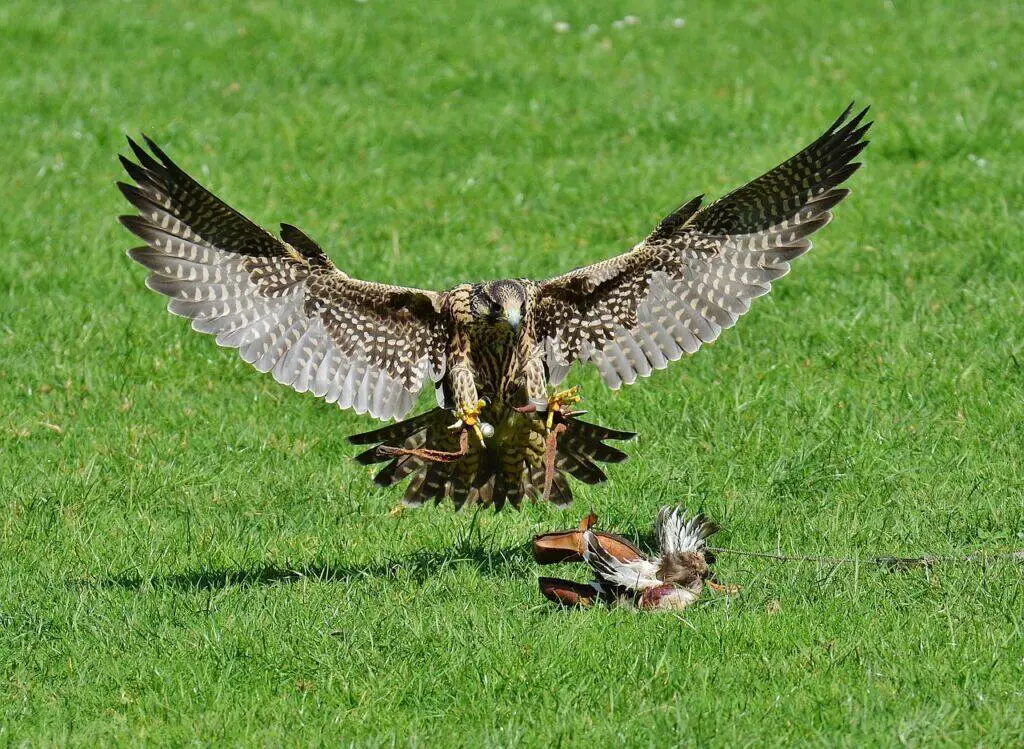
When I first began working with raptors, I focused solely on manning, weight management, and recall training. However, I quickly realized that birds of prey possess remarkable cognitive abilities that, when properly developed, can enhance every aspect of our partnership.
Problem-solving training involves bonding exercises, enrichment activities, critical thinking challenges, and interactive sessions that push the boundaries of your raptor’s intellect. These activities foster a strong bond and mutual respect that is the essence of falconry.
The Benefits of Problem-Solving Training
In my experience, the benefits of problem-solving training extend far beyond merely having a smarter bird. Here are some key advantages I’ve observed:
Cognitive Development and Mental Stimulation
Raptors are highly intelligent creatures that require mental stimulation. Problem-solving activities prevent boredom and engage their natural curiosity. I’ve found that birds who receive regular cognitive challenges are more alert, responsive, and adaptable in the field.
Overcoming Fears and Building Confidence
One of the most significant benefits I’ve witnessed is how problem-solving training helps birds overcome fears. I once worked with a Harris Hawk that had severe neophobia (fear of new things).
Through carefully designed problem-solving exercises, she gradually built confidence and became much more comfortable with novel situations and objects.
Strengthening the Falconer-Raptor Bond
The trust required for effective problem-solving training creates a profound connection between falconer and bird. When you work through challenges together, you develop a partnership based on cooperation rather than control.
| Traditional Training | Problem-Solving Training |
|---|---|
| Focus on obedience | Focus on critical thinking |
| Predictable routines | Novel challenges |
| Handler-directed | Collaborative approach |
| Fixed outcomes | Creative solutions |
| Physical skills | Mental development |
Practical Techniques for Problem-Solving Training
Over the years, I’ve developed several effective approaches to problem-solving training that you can implement with your own raptor.
Environmental Enrichment Activities
I’ve found that environmental enrichment is the foundation of problem-solving training. Here are some of my favorite activities:
- Puzzle feeders – Simple containers that require manipulation to access food
- Hidden rewards – Concealing food items that require searching and problem-solving
- Novel objects – Introducing safe but unfamiliar items for exploration
- Cognitive challenges – Creating situations that require multiple steps to solve
Progressive difficulty is key. I always start with simple challenges and gradually increase complexity as my bird develops confidence and skills.
Trust-Building Exercises
Trust is the foundation of all strong relationships in falconry. I use these trust-building exercises that incorporate problem-solving elements:
- Protected contact training – Working with a barrier between you and the bird to empower them to move away if desired
- Counter conditioning – Associating potentially fearful stimuli with positive experiences
- Systematic desensitization – Gradually exposing your bird to fear-inducing stimuli while using positive reinforcement
Modern Tools and Approaches
I’ve embraced modern technology to enhance problem-solving training. Drones, for instance, have revolutionized how I train my falcons to fly at higher altitudes. Rather than struggling with kites or balloons, I can precisely control a drone’s height and position, creating the perfect training scenario for teaching my birds to gain altitude before diving for prey.
Overcoming Common Challenges
Dealing with Neophobia
Many raptors, especially those with limited early exposure to diverse environments, develop neophobia. When I encounter this issue, I implement a gradual exposure protocol:
- Identify specific fear triggers
- Start with the trigger at a distance that doesn’t provoke fear
- Associate the trigger with positive experiences (food rewards)
- Gradually decrease distance as comfort increases
- Celebrate small victories
This approach helped transform a nervous Harris Hawk I worked with into a confident hunter, overcoming her fear of new objects and environments through patience and persistence.
Maintaining Motivation
Keeping your raptor engaged can be challenging. I’ve found these strategies particularly effective:
- Varying the types of challenges
- Using high-value rewards for complex problems
- Keeping training sessions short but frequent
- Reading body language to avoid frustration
- Ending on a positive note
My Personal Journey with Problem-Solving Training
When I first began incorporating problem-solving training with my Swainson’s hawk, I was skeptical about its practical benefits for hunting. However, I quickly noticed how these exercises translated to real-world situations.
During one memorable hunt, my hawk encountered an unexpected obstacle that would typically have ended our pursuit. Instead, drawing on his problem-solving experience, he found an alternative approach and successfully captured the prey.
This moment crystallized for me how problem-solving training isn’t just an interesting exercise—it’s a fundamental aspect of developing a truly exceptional hunting partner. Each bird is unique, with different learning styles and cognitive strengths. By tailoring my problem-solving approach to each individual raptor, I’ve seen remarkable transformations in their confidence, adaptability, and hunting success.

Conclusion
Problem-solving training has transformed my approach to falconry, creating deeper connections with my birds and enhancing their natural abilities. By incorporating cognitive challenges into your training regimen, you’ll not only develop a more capable hunting partner but also experience the profound joy of witnessing your raptor’s intelligence flourish.
Remember, falconry is not just about training a bird to hunt—it’s about forging a partnership based on mutual trust, respect, and understanding. Problem-solving training nurtures these elements, taking your falconry journey to new heights.
Check Out Our Related Articles below:
Behavioural Issues Among Birds of Prey – How to Fix It