While many beginners focus immediately on flight training or luring, establishing proper perch etiquette creates the foundation upon which all future training will rest. Having trained several raptors over the years, I can confidently say that mastering perch training can make all the difference in your falconry journey.
The Importance of Proper Perch Training
Perch training serves multiple critical functions in developing your raptor’s behavior and building your relationship. When I first started in falconry, I underestimated just how much time my bird would spend on various perches – far more than they spend flying or hunting! A well-perch-trained raptor shows:
- Greater confidence in various environments
- Reduced stress and bating (flying off the perch unnecessarily)
- Better focus during training sessions
- Improved physical conditioning through proper foot positioning
- Enhanced trust in the falconer and training equipment
Raptors that are comfortable on their perches tend to progress faster in other aspects of training. Perch training is truly the cornerstone of successful falconry.
Types of Perches for Training
Over my years working with birds of prey, I’ve used several different perch styles, each serving specific purposes in the training process. Here’s a breakdown of the most common types I recommend:
T-Perch
The T-perch is one of my go-to training perches, especially for initial training sessions. It’s simple to make and extremely portable, making it perfect for creance training in open fields3.
DIY:
- PVC pipe for the upright portion
- A wooden crosspiece covered with astroturf
- A sturdy base for stability
The beauty of a T-perch is its versatility. It can easily be picked up and repositioned during training sessions, which is invaluable when working with a new bird.
Bow Perch
For many birds, especially after basic training, a bow perch is used for longer rest periods. The curved design naturally distributes pressure on their feet.
Block Perch
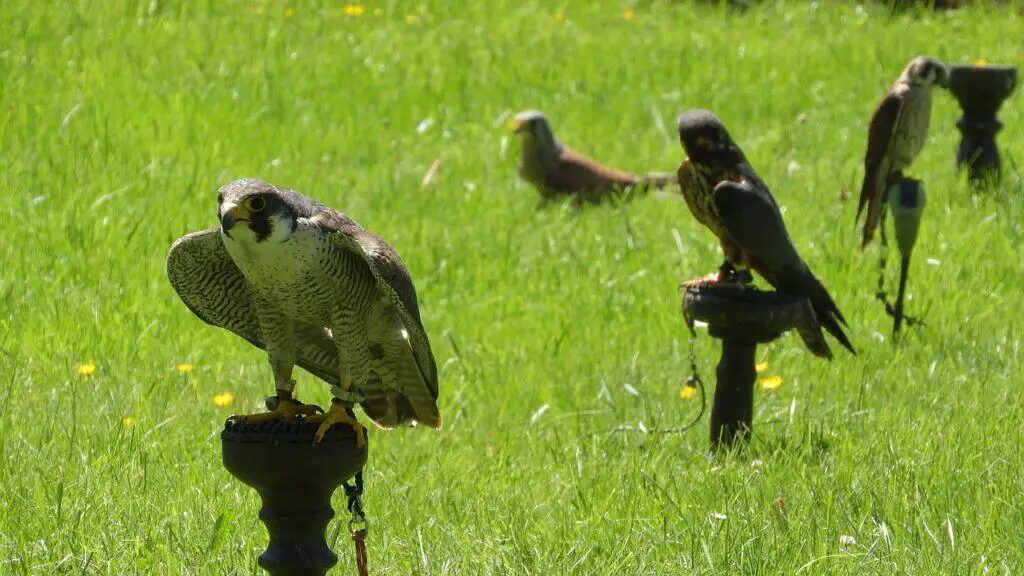
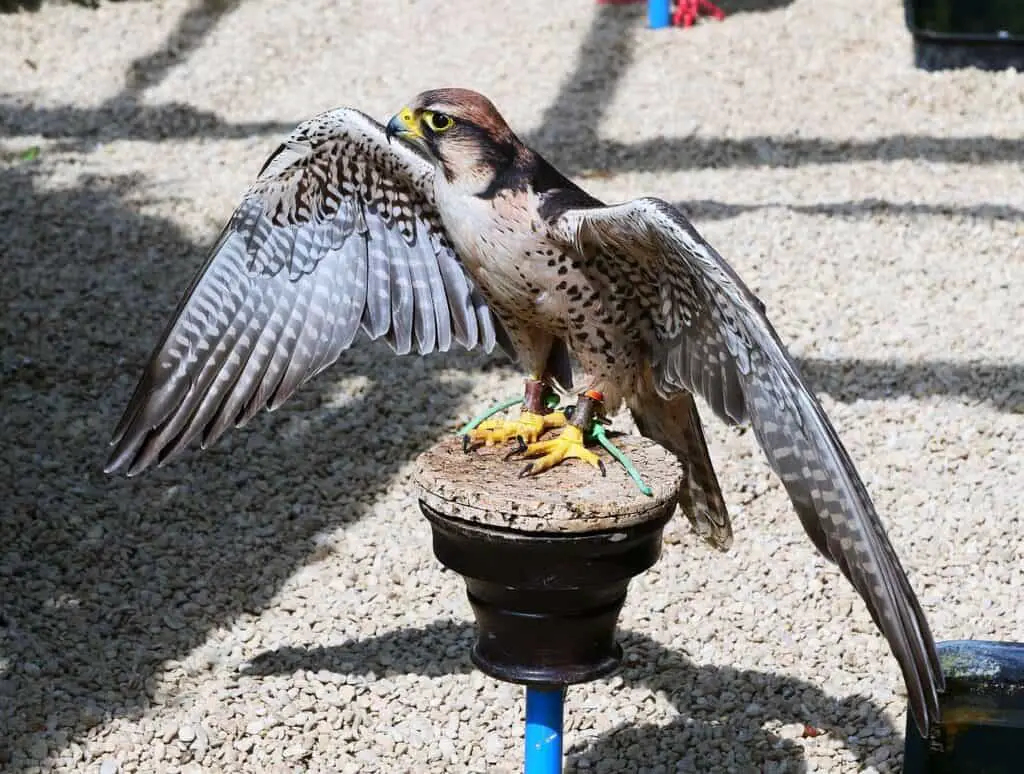
Falcons are typically tethered on a block perch, following traditional falconry practices. The long-wing family of raptors, such as falcons, are suited to block perches, while short-winged and broad-winged hawks benefit from different perch types.
Setting Up Your Perch Training Environment
Before starting any perch training session, it’s important to carefully consider the environment. Here’s what to prepare:
Location Selection
Starting perch training indoors in a controlled environment is ideal before moving outdoors. A garage can be the perfect starting ground for many birds, offering:
- Limited distractions
- Protection from weather
- Controlled lighting
- Safety from predators
Once basic types of training are established, I gradually introduce outdoor sessions, carefully selecting open spaces with minimal distractions.
Essential Equipment
For effective perch training, I always have these items ready:
| Equipment | Purpose | Importance |
|---|---|---|
| Scale | Weight monitoring | Critical for motivation levels |
| Glove/Gauntlet | Safe handling | Essential safety equipment |
| Creance line | Safety during training | Prevents losing the bird |
| Leather jesses | Secure attachment | Allows control without injury |
| Selection of perches | Different training stages | Provides variety and specific benefits |
| Tidbits/food rewards | Positive reinforcement | Motivates desired behavior |

My Step-by-Step Perch Training Process
1. Manning and Initial Trust Building
Before formal perch training, time is spent manning the bird—helping them get comfortable with human presence and handling. This usually includes:
“The first step for falconry training is training the bird to stand on the fist comfortably. With a wild-caught red-tailed hawk, this can be a few days. With a nervous sharp-shinned, it might be a week or more.”
I find that a raptor must trust me before it will trust the perch. Those early bonding sessions set the tone for all future training.
2. Introduction to the Training Perch
Once my bird is comfortable on the fist, I introduce the training perch:
- Placed the perch nearby while sitting with the bird.
- Spoke softly and kept the environment calm.
- Gently placed the bird on the perch for brief periods.
- Rewarded calm behavior with tidbits of food.
- Gradually increased perching time.
“Proper perch placement is crucial for your raptor’s development. Choose a sturdy perch at the right height, positioned to create a safe and comfortable environment for your bird.”
3. Creance Training with Perches
Once the bird is comfortable on stationary perches, the perch is incorporated into creance training. This approach has shown tremendous progress in the birds’ training:
“The pitchback perch was brought over to Ross and placed at midfield. The bal-chatri trap, built earlier, was filled with weights, tied to the creance, and set about 50 feet away from the pitchback.”
I’ve found this setup particularly effective for teaching my birds to:
- Fly between perches with increasing confidence
- Return to the perch after flying to the fist
- Navigate between multiple training station
4. Behavioral Conditioning
During perch training, close attention is given to behavioral cues:
“During perch training, watch your raptor’s behavior for signs of aggression, comfort, stress, or eagerness, and adjust the training techniques as needed.”
Reading a bird’s body language—how they grip the perch, the position of their feathers, and their eye contact—reveals their comfort level and readiness to progress.
Common Challenges Faced in Perch Training
Excessive Bating
One of the most frustrating challenges encountered is excessive bating (when the bird repeatedly flies off the perch in distress).
“To bate is to fly off the glove or perch for no good reason. Birds do this when startled, frightened, or angry.”
The solution has been patience and gradual exposure. When a bird bates frequently:
- Return to earlier training stages
- Reduce environmental stimuli
- Ensure weight management is appropriate
- Increase manning time to build trust
Perch Refusal
Sometimes a bird simply refuses a particular perch. I’ve learned this is usually due to:
- Improper height or diameter of the perch
- Uncomfortable perch covering
- Negative associations with that perch
This is solved by experimenting with various perch types and coverings to find what works best for each individual bird.
Integrating Perch Training with Other Training Methods
Perch training works best when integrated with other aspects of training:
“This design of a perch is not intended to be used for any length of unsupervised time. A great perch to use for training a bird to come to the fist on a creance or getting started jumping down to the lure.”
Use perches strategically during:
- Weight management training to build proper associations
- Recall training to establish starting and ending points
- Lure training as rest stations between flights
- Hood training for managed exposure period
My Personal Journey with Perch Training
When I first built my T-perch for creance training, I made the common mistake of using improper materials. The perch wobbled, and my red tail immediately lost confidence. I learned quickly that stability is non-negotiable in perch design.
A new perch design was created for use during creance training by taking an old pitch-back, wrapping astroturf around the top, and securing it.
Through trial and error, I’ve developed perches that my birds trust completely. This trust translates directly to their field performance and willingness to return to me when called.
Conclusion
Perch training is the cornerstone of falconry practice. Proper perch training helps build stronger bonds with the birds, leading to greater hunting and flying success.
Patience and consistency are key allies in this process. The time spent training a raptor to feel comfortable on different perches will pay off throughout the falconry journey.
For those starting their falconry journey, taking time with perch training is essential. Quiet moments with the bird on the perch create the foundation for future magnificent flights. Trust the process, observe the bird closely, and adjust the approach as needed. The bond built during this stage will shape the entire falconry experience.
Check Out Our Related Articles below:
10 Factors About Training in Falconry That Every Falconer Should Know