In my years of falconry practice, I’ve come to recognize that hood training is perhaps the most fundamental yet nuanced skill every falconer must master. This technique, which dates back thousands of years to the Middle East and spread to Europe during the Crusades, remains essential in modern falconry. A properly hood-trained bird is calmer, easier to handle, and ultimately develops a stronger bond with its falconer.
This article shares my approach to hood training—techniques I’ve refined through years of working with various birds of prey—and serves as a companion to our main guide on falconry training types.
Understanding the Purpose of Hooding
Raptors’ exceptional eyesight is both their greatest asset and, from a training perspective, sometimes their greatest challenge. Birds of prey process visual information at nearly twice the rate humans do—a peregrine falcon can process about 130 frames per second compared to our meager 60-75. This makes them constantly alert to both opportunities and threats.
When I place a hood on my bird, I’m essentially helping it manage this overwhelming visual input. The principle is beautifully simple yet profound: what a raptor cannot see, it does not fear. By temporarily removing visual stimuli, the hood creates a calm state that allows for:
- Safer transportation in vehicles
- Easier handling during maintenance (trimming talons or beak)
- Calm behavior in crowded or stressful environments
- Greater focus during certain types of training.
- Establishing a clear training rhythm and communication
I’ve found that hood training doesn’t just make my life easier—it significantly reduces stress for my birds in situations that would otherwise be overwhelming for them.
Types of Falconry Hoods and Their Characteristics (Table on Jasper)
Throughout my falconry journey, I’ve worked with several types of hoods, each with distinct advantages. Understanding these differences has been crucial for selecting the right hood for each of my birds.
| Hood Type | Construction | Best For | Advantages | Challenges |
|---|---|---|---|---|
| Anglo-Indian | Single piece, non-blocked | Beginners, smaller falcons | Simpler to make, lighter | May not fit as precisely |
| Dutch | Three-piece, blocked on mould | Most falcons and hawks | Excellent fit, durable | More complex to create |
| Arab | Decorative style | Various raptors | Beautiful aesthetics | Sometimes less practical |
| Modern | Various materials, innovations | Specific training needs | Customizable | Less traditional |
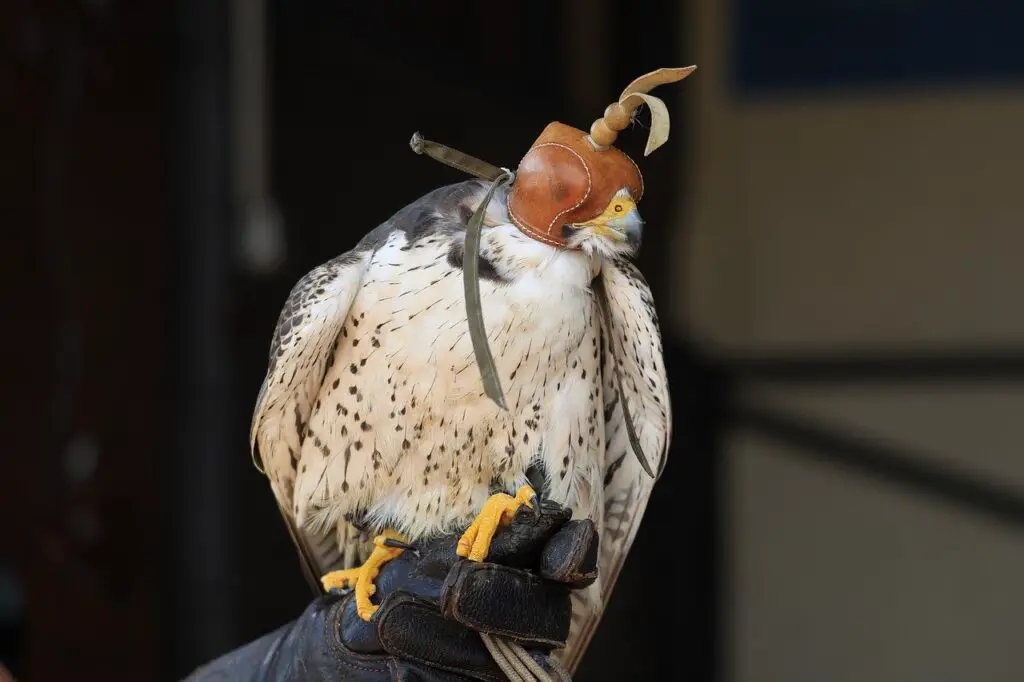
The hood I most frequently use is the Dutch style for my Falcons and a modified Anglo-Indian for my Harris Hawks. However, the style matters less than ensuring a proper fit. A well-fitted hood should cover the eyes completely without pressing on the sear (the yellow part of the bird’s face), allow room for the bird to open its beak, and leave the nostrils clear.
Essential Preparation for Hood Training
Before I begin hood training with any raptor, I ensure several key elements are in place to set us up for success.
First, I make sure the bird is at an appropriate weight—not so hungry that it’s agitated but motivated enough to be receptive to food rewards. For most birds, I aim for approximately 80-85% of their free-flying weight, though this varies by species and individual.
Second, I prepare my training space. I prefer a quiet room with dim lighting for initial hood training sessions. Removing distractions allows the bird to focus solely on the hood and the positive reinforcement I’m offering. I keep sessions short at first—typically 10-15 minutes—to prevent frustration.
Measuring Your Bird for the Perfect Hood Fit
Finding the right hood size presents a challenge: you need to measure the bird’s head to get the right hood, but you need a properly fitting hood to begin training. Here’s my approach to this paradox:
- Measure the width of your bird’s head at its widest point (usually just behind the eyes)
- Measure from the top of the head to just below the beak
- Take these measurements when the bird is calm, perhaps during feeding
- Order or make a hood slightly larger than these measurements
- Be prepared to adjust or try different sizes as training progresses
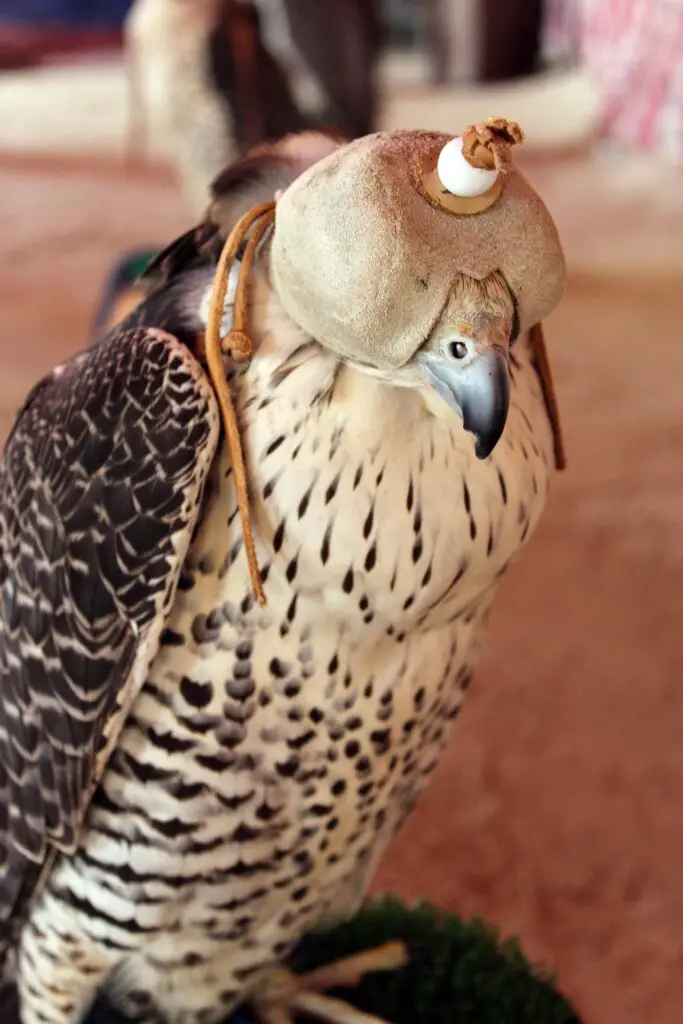
I’ve found that having several hood options available during early training helps tremendously. If you’re making your own hoods, I recommend starting with a design that allows for some adjustment, such as those with an adjustable brace or chin strap.
My Hood Training Method: A Step-by-Step Approach
After years of working with various raptors, I’ve developed a hood training method that emphasizes patience and positive association:
- Hood Familiarization: I begin by simply showing the hood to the bird from a distance, allowing it to observe without pressure. I place the hood near the bird during feeding to create positive associations.
- Touch Desensitization: Next, I gently touch the bird’s chest with the hood, allowing it to smell and become familiar with the object. I gradually move the hood closer to the head with each session.
- Positive Association: During this phase, I offer small food rewards (tidbits) each time the bird tolerates the hood near its head. This creates a strong positive connection between the hood and pleasant experiences.
- Brief Hooding: Once the bird seems comfortable, I attempt very brief hooding—perhaps just a second or two—followed immediately by a food reward. I don’t secure the braces at this stage, just gently place and remove.
- Extended Wear: Gradually, I increase the time the hood stays on, from seconds to minutes, always following with positive reinforcement. I begin to secure the braces and ensure the bird can breathe and open its beak comfortably.
- Environmental Variation: Finally, I practice hooding in different environments, ensuring the bird remains calm regardless of surroundings.
This process can take anywhere from a few hours to several weeks. My female Harris hawk accepted the hood on the first day, while my Red-Tailed required nearly three weeks of consistent training. Patience is absolutely essential—rushing creates setbacks that take far longer to overcome.
Common Challenges and Solutions
Throughout my hood training journey, I’ve encountered several common challenges:
Hood Shyness: Some birds develop a strong aversion to the hood. When I notice this happening, I take a step back in the training process and spend more time on hood familiarization and positive association. Sometimes using a different style or color of hood can help.
Hood Removal: Clever birds sometimes learn to shake off their hoods. To prevent this, I ensure proper fit and also train the bird to wear the hood with the braces open for periods of time without attempting removal. If they try to remove it, I immediately close the braces and try again later.
Stress Responses: Occasionally, a bird will show stress when hooded, such as rapid breathing or mantling. I address this by ensuring the hood fits properly and by keeping hooding sessions very short until the bird becomes more comfortable.
Advanced Hood Training Techniques
Once a bird accepts basic hooding, I work on more advanced aspects of hood training:
Dark Room Training: For particularly difficult birds, I’ve found training in a darkened room exceptionally effective. In low light conditions, birds are naturally less visual and more receptive to gentle hood introduction. As they become comfortable with the hood in darkness, I gradually increase light levels until they accept hooding in normal conditions.
Field Readiness: I practice hooding and unhooding in field conditions, ensuring the bird remains calm during the excitement of a hunt. This is particularly important for falcons that will be flown from the hood.
Hood Maintenance: I always clean my bird’s beak after feeding to prevent meat from rotting inside the hood, which can cause health issues and damage the leather. Regular cleaning and conditioning of the hood itself ensures longevity.
One technique I’ve found particularly useful with challenging birds is what I call the “tread” method. In a darkened room, I gently roll my gloved hand back and forth so the bird needs to pump its wings slightly to maintain balance. Once the bird is slightly winded, I quickly and carefully slip the hood on. This method can be effective when other approaches have failed.
The Psychological Bond of Hood Training
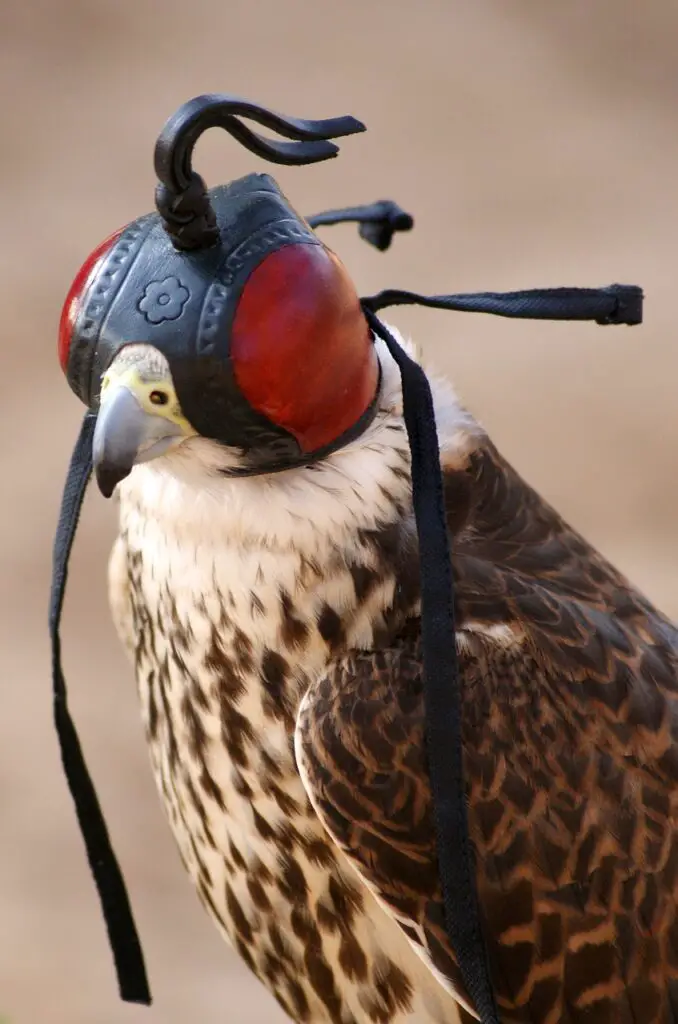
Perhaps the most rewarding aspect of hood training is the profound psychological connection it builds between falconer and bird. When a raptor accepts the hood from my hand, it demonstrates a level of trust that transcends the natural wariness these wild hunters normally maintain.
I view hood training not as imposing control, but as establishing communication. The hood becomes a silent language between us—when I hood my bird, I’m saying “rest now,” and when I remove it, I’m saying “time to focus.” This clear communication reduces stress for the bird and strengthens our working partnership.
In my experience, birds that accept the hood well tend to advance more quickly in other aspects of training. The trust established creates a foundation for the challenging work of developing hunting behaviors and recall.
Conclusion
Hood training represents one of the most fundamental yet nuanced aspects of falconry. Through this process, I’ve learned as much about myself—my patience, consistency, and empathy—as I have about my birds. When done correctly, hood training becomes not just a practical necessity but a beautiful dance of trust.
Remember that each bird is an individual. What works for one may not work for another, and the timeline for successful training varies widely. Trust your instincts, observe your bird closely, and be willing to adapt your approach based on their responses.
As you continue your falconry journey, I encourage you to see hood training not as a hurdle to overcome but as an opportunity to deepen your relationship with your raptor. The time invested in proper hood training pays dividends throughout your partnership, creating a calmer, more confident bird and a more effective hunting team.
For more insights on other aspects of falconry training, be sure to explore our Related topics below:
Behavioural Issues Among Birds of Prey – How to Fix It