
Free flight training is a crucial and exhilarating aspect of Falconry, requiring patience, skill, and a deep understanding of raptor behavior. This practice involves teaching a bird of prey to fly freely and return to the falconer on command, a process that demands dedication and expertise.
The Foundations of Free Flight Training
Building Trust
The journey of free flight training begins with developing a deep and trusting bond between the falconer and the bird. In my experience, this foundational step, known as “manning,” is one of the most important and rewarding parts of working with raptors.
Manning involves gradually acclimating the bird to human presence, daily activities, and various environments. This process takes patience, consistency, and a lot of time. I spend hours sitting quietly with the bird, allowing it to learn that I am not a threat. Every movement and every interaction is deliberate and gentle, building trust one moment at a time.
For me, manning goes beyond simple conditioning—it’s about forming a partnership with the bird. The goal is to create a calm, cooperative raptor that feels secure and confident around people, reducing the instinctive fight-or-flight responses that these magnificent creatures naturally possess.
I’ve found that a well-manned bird is more receptive to training and more comfortable in unpredictable situations during any type of training. This bond we establish lays the foundation for everything that follows in our journey together.
Weight Management
Careful weight control is a critical aspect of falconry training, as a bird’s weight has a direct impact on its behaviour, hunting drive, and overall well-being. Falconers monitor and measure their bird’s diet to maintain an optimal weight, a state often referred to as “yarak” in falconry terms.
In this ideal condition, the bird is energetic, focused, and ready to hunt. If a bird becomes overweight, it may exhibit laziness, reduced responsiveness to the falconer, and a lack of interest in hunting. On the other hand, an underweight bird may become overly aggressive, exhibit signs of restlessness, or even face serious health complications.
Achieving and maintaining this delicate balance requires a deep understanding of the bird’s natural habits, individual needs, and daily energy expenditure, making weight management a cornerstone of successful Falconry.
The Training Process
Early Stages
The initial phase of free flight training, in my experience, always begins with the use of a creance—a long, lightweight line securely attached to the bird’s jesses or swivel. This is an essential safety measure, particularly with a bird that is new to free flight.
It allows me to train to recall flights between a perch and my gloved fist without the risk of the bird flying off and potentially getting lost. At this stage, building trust is critical. I focus on creating a routine, rewarding the bird consistently with food and positive reinforcement to establish a strong bond. As the bird becomes more confident and responsive, the distance of these flights gradually increases, allowing the bird to stretch its wings while still under control.
This step-by-step approach ensures that the bird develops its flying and hunting skills in a safe and controlled environment, fostering both its independence and our partnership. Over time, this process lays the foundation for the rewarding experience of free flight.
Introducing the Lure
A crucial tool in falconry training is the lure, which is often made to resemble the bird’s prey, such as a small mammal or bird. This tool serves an essential purpose in helping the falconer teach the raptor to associate returning to its handler with a food reward. The process begins with the lure being presented at short distances to familiarize the bird with the practice gradually.
During these early stages, the bird is typically hooded, keeping it calm and focused until the moment of release. Once the bird is accustomed to the lure, training advances to longer distances, where the bird must learn to zero in on the lure and actively pursue it.
Over time, the bird develops greater focus, speed, and intensity, honing its hunting skills while strengthening its bond with the falconer. This gradual process is vital for building trust and ensuring the bird’s reliability during hunts in the wild.

Developing Flight Skills
As the raptor becomes more proficient in its training, the falconer can gradually introduce more realistic hunting scenarios to refine its skills. For falcons being trained for “waiting on” flights, this involves encouraging the bird to reach its optimal pitch, or flying height, before the lure is presented.
This process teaches the falcon to climb to a high vantage point, scanning the ground below and circling patiently while waiting for prey to be flushed out by the falconer or a trained dog. With consistent practice, the falcon learns to anticipate this sequence, becoming an effective and agile hunter in simulated and real hunting situations.
Mastering the Recall
Training a bird to respond promptly to a whistle or call is one of the most important aspects of being a falconer. From my experience, this skill is absolutely critical—not just for hunting but also as a safety measure. If your bird were to ever escape or fly off unexpectedly, a reliable recall could make all the difference in getting them back safely.
I’ve spent countless hours working on recall training with my birds, practising in different environments to make sure they respond no matter what distractions might be around. Whether it’s a park, an open field with other wildlife, or even a windy day, repetition and consistency are key.
It’s incredibly rewarding to see your bird respond instantly to your call, knowing that the bond and trust you’ve built together are what make that possible.
Advanced Techniques
Tailoring Training to Species
Different raptor species require specialized training approaches to account for their unique behaviours and instincts. For instance, Harris’s Hawks, known for their sociability and cooperative nature, often adapt more quickly to working with humans and even hunting in groups. This makes them ideal for beginner falconers or those interested in group hunting experiences.
Meanwhile, solitary hunters like falcons, who are highly independent by nature, may require more intensive, one-on-one training sessions to build trust and refine their skills. Patience and consistency are key when working with these birds, as their training often requires a deeper understanding of their instinctive hunting behaviours.
Using Technology
Modern Falconry has come a long way, and I’ve seen firsthand how advanced technology has made training more efficient and safer for the birds. One tool I rely on is the telemetry transmitter, which helps me track my birds over long distances using a portable receiver. It’s a lifesaver when a bird flies out of sight during training or hunting in open areas.
I also use GPS trackers to get real-time data on my bird’s location, speed, and altitude. This helps me recover a bird if it gets lost and gives me valuable insights into its performance and behaviour during flights.
Simulating Prey Behavior
To prepare raptors for actual hunting, falconers often rely on tools that mimic the movement and behaviour of prey animals. Mechanized lures, such as the “rocrow,” are designed to replicate the erratic flight patterns of prey birds, challenging the raptors to develop their hunting skills in a controlled environment.
These lures are typically flown on a long line or operated remotely, allowing the falconer to control the speed and direction of the simulated prey. The goal is to build the raptor’s confidence and sharpen its instincts, ensuring it feels capable of catching real prey.
Care must be taken to balance the difficulty of the training, as overly challenging scenarios can discourage the bird, while too-easy tasks may not adequately prepare it for real-world hunting. By gradually increasing the complexity of the prey simulation, falconers can help their raptors reach peak performance.
Challenges and Considerations
Environmental Factors
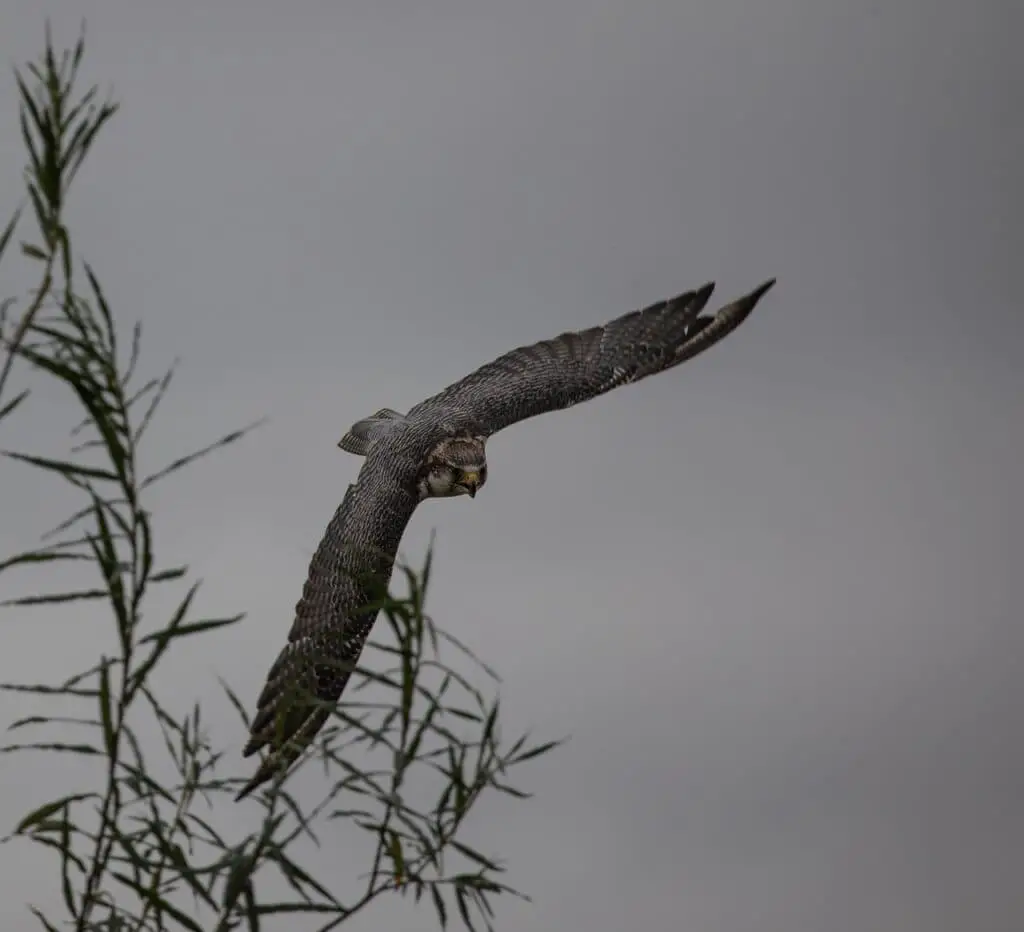
Free flight training must carefully account for a wide range of environmental factors that can influence the bird’s performance and safety. Wind direction and strength are critical elements, as strong gusts can make it difficult for birds to maintain control during flight while still, air may limit their ability to soar effectively.
Terrain also plays a significant role—mountainous areas, open fields, or densely forested regions present unique challenges requiring different strategies. Additionally, the presence of other wildlife, such as competing birds or potential prey, can distract or endanger the bird. Falconers must develop a keen ability to assess and adapt to these conditions, ensuring safe and successful training sessions.
Predator Awareness
Training sessions must always be conducted with a heightened awareness of potential avian and terrestrial predators. Larger birds of prey, such as hawks or eagles, can pose a significant threat to smaller falconry birds during free flight.
On the ground, predators like foxes, coyotes, or even domestic dogs can endanger the bird as it lands or rests. Falconers need to remain vigilant throughout the session, often keeping an eye on the sky and surrounding environment. Quick decision-making and readiness to intervene are essential to protect the bird from harm, ensuring that every flight ends safely.
Legal and Ethical Considerations
Falconry is one of the most heavily regulated practices involving animals, particularly in countries like the United States. Practitioners must complete a detailed and often multi-year apprenticeship, pass rigorous exams, and obtain proper licensing to engage in the practice legally.
These measures are designed to ensure that falconers have the necessary skills and knowledge to care for their birds responsibly. Ethical considerations have also become a cornerstone of modern Falconry.
Many falconers today prioritize conservation efforts, using their skills to rehabilitate injured birds or educate the public about raptor ecology rather than focusing solely on hunting. This shift highlights the evolving role of Falconry in promoting environmental awareness and preserving wildlife for future generations.
Conclusion
Free flight training in Falconry is a complex and rewarding endeavour that requires dedication, patience, and a deep respect for the natural abilities of birds of prey. It is a practice that combines ancient traditions with modern techniques, offering a unique way to connect with nature and experience the thrill of working in partnership with one of nature’s most impressive hunters.
As Falconry continues to evolve, the art of free flight training remains at its heart, challenging falconers to hone their skills and deepen their understanding of these remarkable birds.
Ready to take the next step into your Falconry journey?
Whether you’re just starting to explore the fascinating world of Falconry or you’re looking to refine your free flight training techniques, we have resources below to help you every step of the way
The Art of Hood Training: A Falconer’s Guide to Building Trust and Calm
10 Factors About Training in Falconry That Every Falconer Should Know