
Recall training is one of the most rewarding yet challenging aspects of falconry. When a raptor responds to a call and swiftly returns to the glove from hundreds of yards away, it reflects a deep bond built on trust, consistency, and mutual respect.
As a supporting guide to our main article on training types for falconry raptors, I want to share my personal experiences and strategies for developing rock-solid recall with your bird of prey. Through patience and proper technique, you’ll create a foundation of trust that will serve you throughout your falconry journey.

The Foundations of Recall Training
Before diving into techniques, it’s important to emphasize that successful recall training doesn’t happen in isolation. It relies on other fundamental aspects of falconry training and the strength of the relationship established with the bird.
Building Trust Through Manning
Recall training starts well before a bird’s first free flight. The trust developed during manning sessions is the foundation of reliable recall. With a new bird, spending hours simply being present, speaking softly, and fostering positive associations helps build that trust. This early effort lays the groundwork for successful recall training later on.
Through consistent manning sessions, my raptors learn that returning to me means safety, comfort, and food rewards. This positive reinforcement creates a pattern that becomes instinctual over time.
Weight Management Considerations
I can’t overstate how critical proper weight management is to successful recall training. A bird that’s too heavy will lack motivation to return, while one that’s too light may be anxious or weak. I maintain detailed weight records for each of my birds and know their optimal “working weight” for training precisely.
For recall specifically, I typically aim for the bird to be:
| Bird Type | Weight Management for Recall |
|---|---|
| Harris Hawk | Slightly higher than hunting weight to ensure sufficient strength for flight but enough hunger motivation |
| Peregrine Falcon | Precise weight management crucial – typically 5-10% below free weight |
| Red-tailed Hawk | Moderate hunger state – enough to ensure responsiveness without compromising stamina |
| Goshawk | Requires extremely precise weight control due to their independent nature |
Essential Recall Training Equipment
Before starting recall training sessions, it’s important to have the right equipment ready:
My Essential Recall Training Kit:
- Creance line: A lightweight, strong line for initial training sessions
- Telemetry equipment: I never conduct free-flight recall without reliable tracking
- Quality whistle: I prefer acme thunderer whistles for their consistent tone
- Lure: Both as a backup and training aid
- Rewards: Varied, high-value food items (quail, day-old chicks, etc.)
- Glove: A comfortable, well-fitted glove that the bird associates with positive experiences
Having these items properly prepared before training has saved me countless headaches and frustrations.
The Step-by-Step Recall Training Process
Starting with Controlled Environments
When you begin recall training with a new bird, you should always follow a methodical progression:
- Indoor recalls: start in an enclosed space like a barn or garage
- Short distance recalls: Initially just a few feet away using the creance line
- Variable distance training: Gradually increasing distance while maintaining success
- Height variation: Introducing recalls from different elevations
- Outdoor controlled area: Moving to a garden or enclosed field
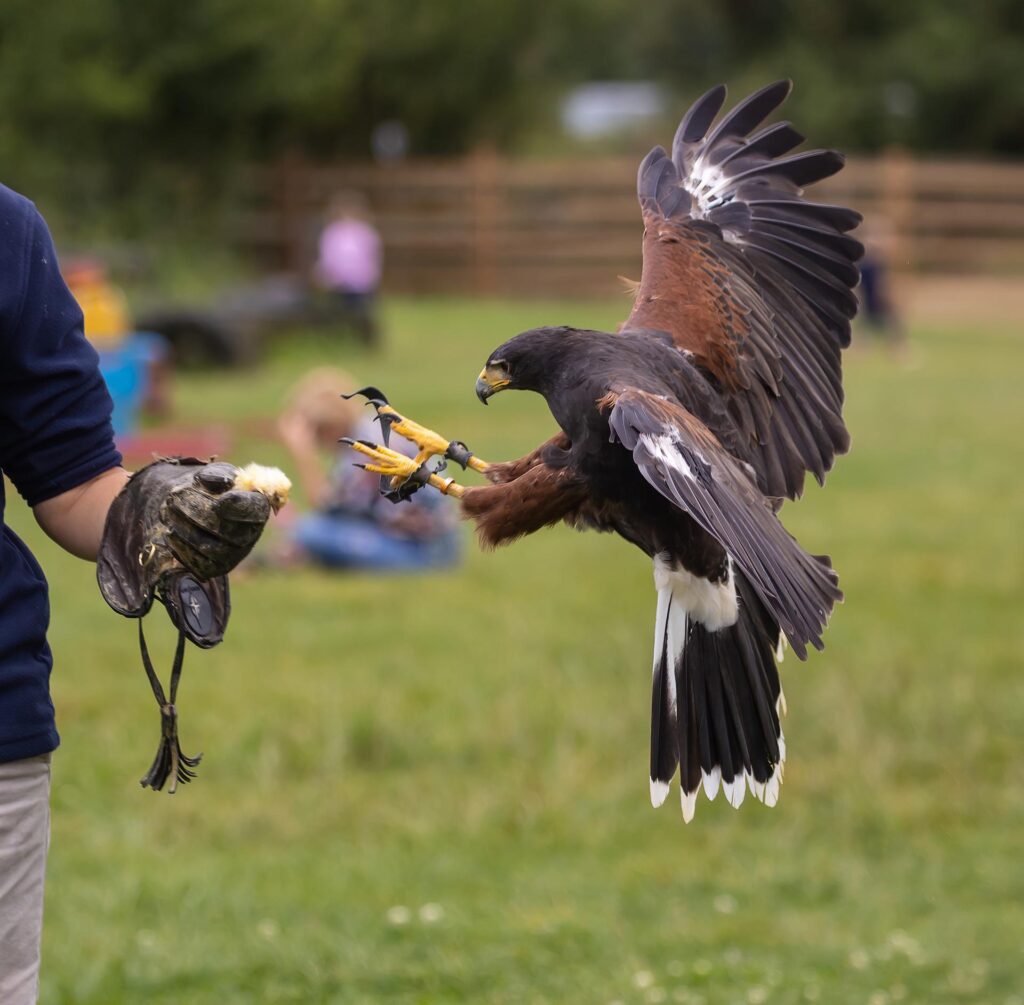
Absolute consistency is maintained with the recall signal, using a combination of a whistle pattern, a verbal cue, and the display of a glove or lure. This specific combination helps the bird quickly associate it with returning for a reward.
Progressing to Free Flight
The transition to free flight is a significant milestone in the training journey. Before reaching this step, the bird must show consistent and eager recalls on the creance across various distances and heights.
For the first free flight recall:
- Choose a wide-open area with few distractions
- Ensure the bird is at optimal training weight
- Have telemetry securely attached
- Prepare high-value rewards
- Begin with very short distances
- Maintain visual contact at all times
The first time my Harris hawk returned to me from true free flight, the sense of partnership and accomplishment was indescribable. This moment represents the fruition of all the trust-building exercises and careful preparation.
Advanced Recall Techniques
Environmental Conditioning
Once the basic recall is established, systematically introduce environmental challenges:
- Weather variations: Training in light wind, mild precipitation, different temperatures
- Terrain complexity: Recalls across varied landscapes (fields, woodland edges, slopes)
- Time of day variations: Morning, afternoon, and evening sessions to build adaptability
- Distraction introduction: Gradual exposure to dogs, vehicles, and other potential distractions
Each new variable is introduced individually and only after the bird demonstrates confidence in previously mastered conditions.
Flight Command Diversification
With advanced birds, develop multiple recall commands for different situations:
- Standard recall: Basic return to the glove
- Emergency recall: High-priority return signal for potential danger situations
- Positioning recall: Calling the bird to a specific location rather than directly to me
- Hunting recall: Used specifically when transitioning from hunting to return
This command differentiation creates remarkable versatility in the field and enhances the hunting partnership tremendously.
Troubleshooting Common Recall Challenges
Despite careful training, every falconer faces recall difficulties. Here’s how I address common issues:
When My Bird Refuses to Return
If your raptor shows reluctance to return, first examine these factors:
- Weight management: Is the bird too heavy or showing signs of being too well-fed?
- Environmental distractions: Has something in the environment captured its attention?
- Negative associations: Has the bird experienced something unpleasant when returning recently?
- Health concerns: Is the bird displaying any signs of illness or discomfort?
I’ve found that most recall refusals stem from weight management issues. A small adjustment of 10-20 grams can make a remarkable difference in responsiveness.

Building Confidence After Refusals
After experiencing recall refusals, always return to more structured training:
- Return to creance work temporarily
- Shorten distances dramatically
- Increase reward value
- Create a series of guaranteed success experiences
- Gradually rebuild distance and difficulty
This “reset” approach prevents reinforcing negative patterns and rebuilds the bird’s confidence in the recall process.
Integrating Recall with Other Training Elements
Recall and Lure Work Synergy
Recall and lure training work beautifully together. Incorporating the lure into recall sessions allows:
- Increase motivation for difficult recalls
- Create more dynamic training sessions
- Build distance control skills
- Reinforce the desire to return to the falconer
My lure technique during recall training focuses on mimicking natural prey movements while always leading the bird back toward me. This creates a powerful association between hunting success and returning to the falconer.
From Creance to Field Hunting
The ultimate purpose of recall training is reliable field performance. As we transition to actual hunting scenarios, maintain consistency in signals while adapting to the real-world environment:
- Begin with simple quarry in open areas
- Ensure early successful returns after flushing game
- Gradually introduce more challenging hunting scenarios
- Always maintain positive associations with returns, even during unsuccessful hunts
- Never create negative associations with the end of a hunting session
The Emotional Rewards of Strong Recall
Beyond the practical benefits, reliable recall adds tremendous emotional depth to falconry. There’s something profoundly moving about a wild predator choosing to return based on trust and positive association. It embodies the essence of the ancient partnership between humans and birds of prey.
When the peregrine falcon returns from hundreds of feet in the air, choosing partnership over freedom, it highlights the dedication to this ancient art. Each successful recall reflects countless hours of patient training and building a strong bond.
Conclusion: Patience Creates Partnership
Developing reliable recall with your raptor requires time, consistency, and an understanding of your bird’s individual temperament. Through positive reinforcement, clear communication, and trust-building exercises, you’ll create a recall response that forms the foundation of successful falconry experiences.
Remember that each bird is unique in its motivation and learning style. What works for my Harris hawk may require adjustment for your red-tail or peregrine. Be willing to adapt your approach while maintaining consistent core principles of positive association and clear communication.
Above all, enjoy the journey of developing this remarkable partnership. Few experiences in falconry are more rewarding than watching your bird respond to your call and return willingly to your glove from free flight.
For more comprehensive information on other essential falconry training techniques, be sure to explore our related articles below:
Behavioural Issues Among Birds of Prey – How to Fix It
Manning in Falconry: The Key to Building Trust and Training Success
The Art of Hood Training: A Falconer’s Guide to Building Trust and Calm