
Falconry, the ancient art of hunting with trained birds of prey, has captivated humans for thousands of years. Among its various techniques, dart hawking stands out as a unique and effective method that showcases the remarkable abilities of raptors. This article delves into the intricacies of dart hawking, exploring its history, application, and the birds best suited for this technique.
What is dart hawking, and how does it work?
Dart hawking is an ancient falconry hunting technique that involves launching a bird of prey directly at its quarry, much like throwing a dart. This method takes advantage of the raptor’s quick reaction time and natural hunting instincts, allowing it to catch prey with remarkable efficiency.
The process of dart hawking begins with the falconer holding the bird in a specific manner, facing the direction of the intended target. When the opportune moment arises, typically when prey is flushed or spotted, the falconer literally throws the bird towards the quarry. This action gives the raptor a significant head start and an initial burst of speed, which can be crucial in successful hunts.

One of the key advantages of dart-hawking is that it capitalizes on the element of surprise. When a bird is launched in this manner, it doesn’t produce the telltale wing beats that prey species typically associate with approaching raptors. This “invisibility” in the first few seconds of flight gives the hunting bird a distinct advantage, as the prey may not immediately recognize the threat.
Dart hawking is particularly effective with small accipiters, kestrels, and even Harris’s hawks. These birds, known for their agility and quick reflexes, are well-suited to this hunting style. The technique is especially useful in scenarios where multiple potential targets might confuse a bird, allowing the falconer to direct the raptor’s attention to a specific prey item.
Historical context and geographical spread
The practice of dart hawking has a rich history that spans across continents. It has been documented in early falconry traditions throughout Asia, the Middle East, and Europe. Historically, European sparrowhawks, members of the accipiter family, were commonly used for this technique.
In medieval falconry, a wider range of birds was employed for various hunting styles.
Falcons, also known as “longwings,” were prized for their ability to hunt in open areas. Species such as the gyrfalcon, peregrine falcon, and saker falcon were highly valued. However, the art of falconry has evolved, and modern practitioners have access to a broader selection of raptors, including some that are particularly well-suited to dart hawking.
Birds used in dart hawking
While traditionally associated with smaller accipiters like sparrowhawks, dart-hawking has been successfully adapted for use with other species. Some of the birds commonly used in modern dart hawking include:
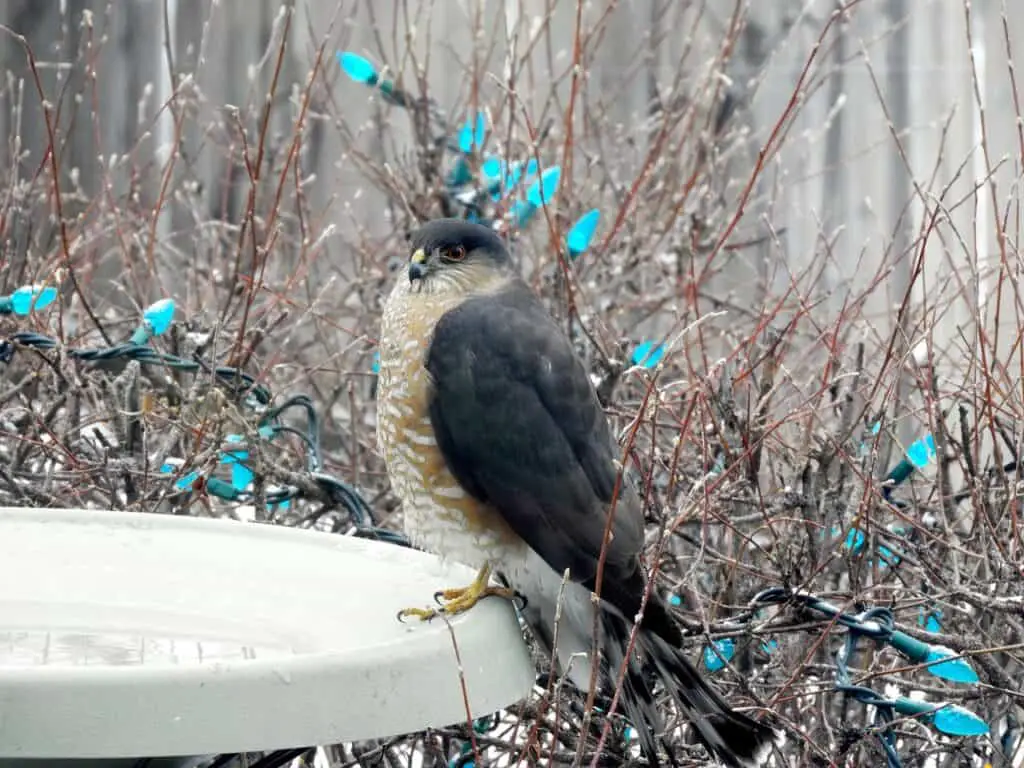
- Sharp-shinned hawks: These small accipiters are ideal for dart-hawking due to their agility and quick reactions.
- Cooper’s hawks: Slightly larger than sharp-shinned hawks, Cooper’s hawks have also been used effectively in dart hawking.
- Harris’s hawks, although not accipiters, have proven to be excellent candidates for dart hawking, especially when hunting ducks in canal environments.
- Kestrels: These small falcons can be effectively used in dart-hawking scenarios.
It’s worth noting that while larger birds like goshawks or golden eagles could theoretically be used for dart hawking, this technique is more commonly and effectively employed with smaller, more agile species.
Advantages and applications of dart hawking
Dart hawking offers several advantages over traditional falconry techniques:
- Quick start: By launching the bird directly, it gains an initial burst of speed that can be crucial in catching fast-moving prey.
- Element of surprise: The lack of visible wing beats in the initial moments of flight can catch prey off guard.
- Directed focus: The falconer can guide the bird’s attention to a specific prey item in situations with multiple potential targets.
- Versatility: Dart hawking can be adapted to various hunting scenarios, from flushing birds from bushes to targeting ducks in canals.
Training and considerations
Training a bird for dart hawking requires patience and a deep understanding of the raptor’s behavior. It’s crucial to introduce the technique gradually, ensuring the bird associates the action with positive outcomes and food rewards. Falconers must be mindful of the bird’s comfort and never force the technique if the raptor shows signs of stress or discomfort.
It’s important to note that while dart hawking can be highly effective, it should not be the only technique in a falconer’s repertoire. Different hunting scenarios may call for various approaches, and a well-rounded falconry practice incorporates multiple techniques to suit different birds and prey.
Conclusion
Dart hawking represents a fascinating aspect of falconry that combines ancient wisdom with a deep understanding of raptor behavior. By leveraging the natural instincts and abilities of birds of prey, falconers can create a unique and effective hunting partnership. As with all aspects of falconry, the key to successful dart hawking lies in the strong bond between the falconer and the bird, built on trust, patience, and mutual respect.
Curious About Falconry and Its Modern Techniques?
Dart hawking is just one of the many exciting and innovative approaches in the world of falconry. If you’re new to the art of falconry or just fascinated by how ancient techniques are adapting to modern challenges, there’s much more to explore.
Check out these fascinating topics to learn more about falconry:
Handling and Safety Tips For Birds Of Prey In Falconry
Precision and Speed: Advanced Lure Techniques for the Modern Falconer
Dive deeper into the world of falconry and discover how these majestic birds continue to captivate and inspire!