
Direct pursuit is a falconry technique where a trained bird of prey, typically a falcon, is released to chase and capture prey in a straight, direct flight path. This method differs from other falconry techniques, such as the “waiting-on” style, where falcons circle high above before diving on prey. In Direct Pursuit, the falcon is often released from the falconer’s fist or a hood, flying directly toward the target prey without first gaining altitude.
How Direct Pursuit Works
In Direct Pursuit, the falconer and falcon work as a team to locate and flush out prey. Once a potential quarry is spotted, the falconer releases the falcon, which then flies straight toward the prey. This technique relies on the falcon’s speed, agility, and ability to quickly close the distance between itself and its target.

The success of Direct Pursuit depends on several factors:
- Terrain: Open areas are ideal locations for this technique, allowing the falcon to maintain visual contact with the prey and providing enough space for the chase.
- Momentum: Falcons need some distance to build up speed and momentum. The initial release point should give the falcon enough room to accelerate before reaching the prey.
- Prey Selection: This technique is particularly effective for certain types of prey, such as rabbits, partridges, and crows.
- Falcon Species: Some falcon species are better suited for Direct Pursuit than others. Saker falcons and gyrfalcons are often used for this style of hunting.
Advantages of Direct Pursuit
- Excitement: This technique provides a thrilling, fast-paced hunting experience for both the falconer and observers.
- Visibility: The falconer can closely observe the entire hunt, from release to capture, as the falcon remains at a lower altitude compared to other techniques.
- Versatility: Direct Pursuit can be adapted for various prey and environments, making it a flexible hunting method.
Challenges and Considerations
- Safety: The falconer must be aware of potential hazards in the flight path, such as trees, power lines, or fences that could injure the falcon during pursuit.
- Range: The falconer needs to ensure there’s sufficient open space for the falcon to complete its pursuit without encountering obstacles.
- Prey Escape: Some prey may have nearby cover, making it challenging for the falcon to complete the capture before the quarry reaches safety.
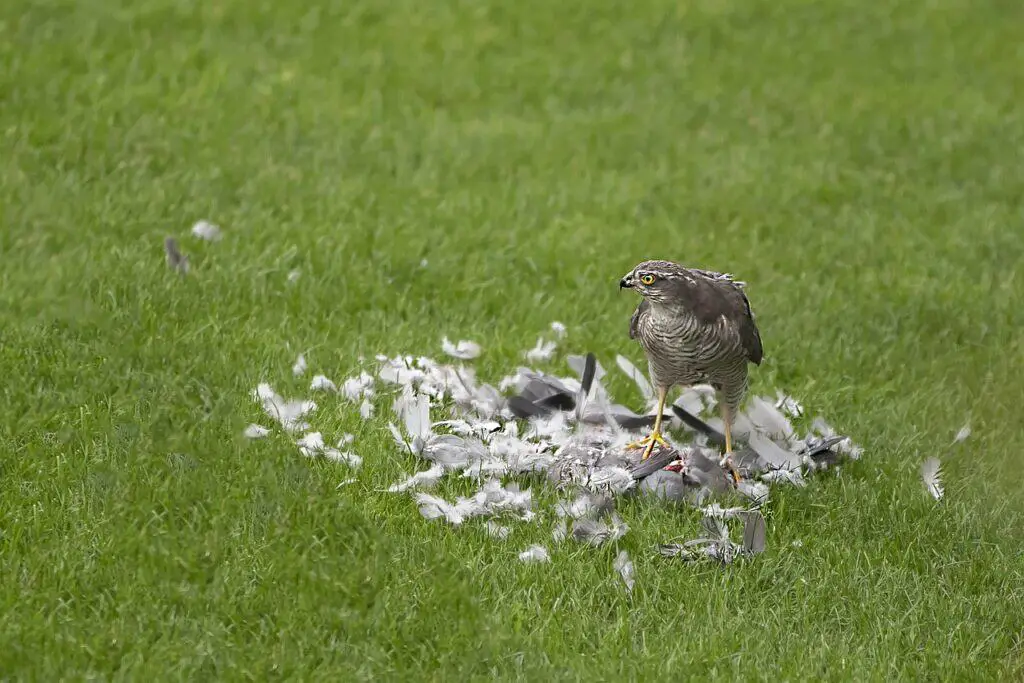
Falcon Species for Direct Pursuit
While various falcon species can be trained for Direct Pursuit, some are particularly well-suited to this technique:
- Saker Falcons: These falcons are historically associated with Direct Pursuit, especially in Arabian falconry for hunting bustards.
- Gyrfalcons: Known for their power and speed, they can excel in direct pursuit flights.
- Lanner Falcons: These falcons and their hybrids are well-suited for a hybrid style of Direct Pursuit due to their buoyant wings, allowing them to gain altitude and push through the air quickly.
Training for Direct Pursuit
Training a falcon for Direct Pursuit requires patience, skill, and a deep understanding of raptor behavior. The process typically involves:
- Basic Training: The falcon must first be trained to respond to commands and return to the falconer’s glove reliably.
- Lure Training: The falcon is taught to chase a lure that simulates the type of prey it will be hunting.
- Introducing Live Prey: Once the falcon responds well to the lure, it is gradually introduced to live prey in a controlled environment, a process known as “entering.”
- Weight Management: Falconers carefully monitor and control their bird’s weight to maintain optimal hunting conditions and ensure the falcon’s motivation to hunt.
- Field Training: The falcon is taken to suitable hunting grounds and allowed to pursue live quarry under the falconer’s supervision.
Equipment for Direct Pursuit
Falconers use specialized equipment to ensure the safety and effectiveness of their birds during Direct Pursuit:
- Jesses: Thin straps attached to the falcon’s legs for control when perched.
- Hoods: These are used to cover the falcon’s eyes, keeping them calm before release.
- Telemetry Devices: Small transmitters attached to the falcon allow the falconer to track the bird if it flies out of sight.
- Lures: Used in training and to recall the falcon after a flight.

Conclusion
Direct pursuit is a dynamic and exciting falconry technique that showcases the speed, agility, and hunting prowess of falcons. While it presents unique challenges, it offers falconers a thrilling and intimate hunting experience; as with all aspects of falconry, success in Direct Pursuit requires dedication, skill, and a deep respect for both the trained raptors and their prey. Whether used in its traditional form or adapted into hybrid techniques, Direct Pursuit remains an important part of the rich tapestry of falconry practices around the world.
Want to Learn More About Falconry Techniques? Explore Further!
If Direct Pursuit has sparked your interest, there’s even more to discover! Explore our in-depth articles on other falconry techniques like Stooping or Cooperative Hunting, or check out training tips and videos to help you master the art of falconry. The more you learn, the better your understanding of these majestic birds becomes.